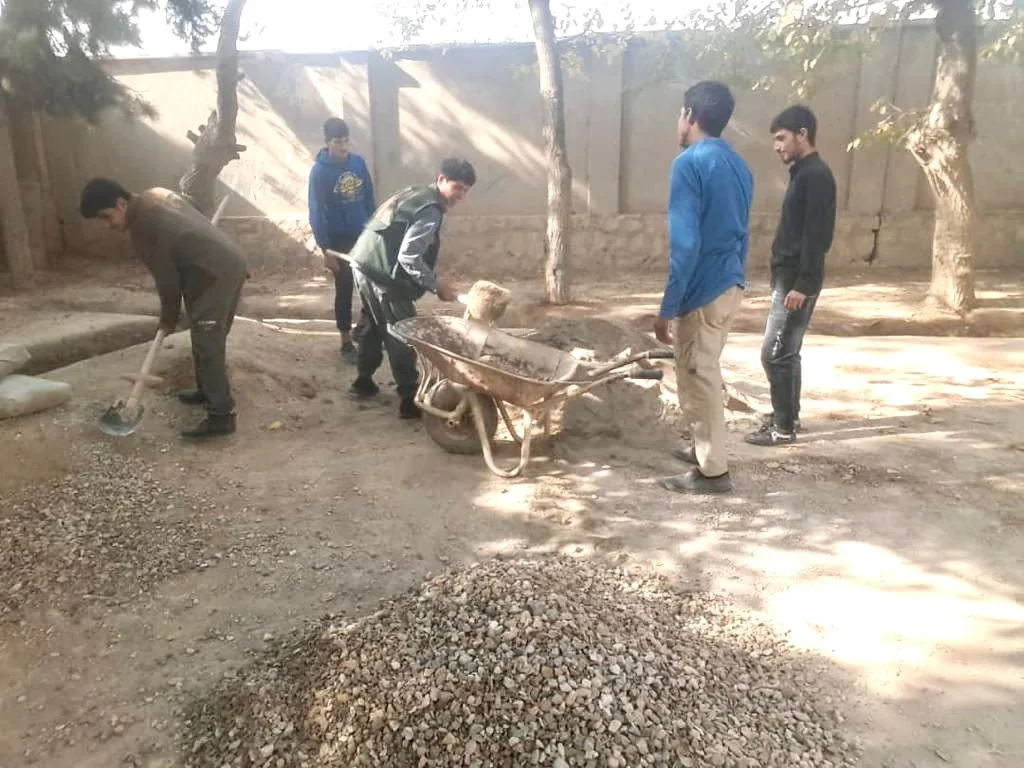
Young Afghan men stepped up as builders of their own future — shoveling gravel, mixing concrete, and laying the foundations of community infrastructure as part of Gate of Hope's youth development initiative.
Youth Community Construction Project: Hands-On Infrastructure Development
In communities across Afghanistan, young men are stepping forward to rebuild their neighborhoods through hands-on labor and shared responsibility. Under Gate of Hope's youth development initiatives, participants engage directly in local infrastructure projects—shoveling gravel, mixing concrete, and laying foundations. This youth community construction project pairs immediate livelihood support with essential physical improvements, transforming neglected pathways, schools, and public spaces into functional community assets. Rather than viewing youth merely as passive aid recipients, the initiative recognizes them as active leaders in local neighborhood restoration and economic recovery.
The impact of these practical work sites is visible in every completed pathway, reinforced boundary wall, and cleared building footprint. Participants work under technical supervision using basic construction tools and locally sourced materials to address persistent physical deficits. These efforts focus on essential shared assets, including neighborhood access routes, school grounds, and gathering spaces. By organizing local youth into structured construction teams, Gate of Hope turns physical labor into a vehicle for community enhancement, ensuring projects respond directly to residents' daily safety, mobility, and accessibility requirements.
Practical Logistics and On-Site Execution
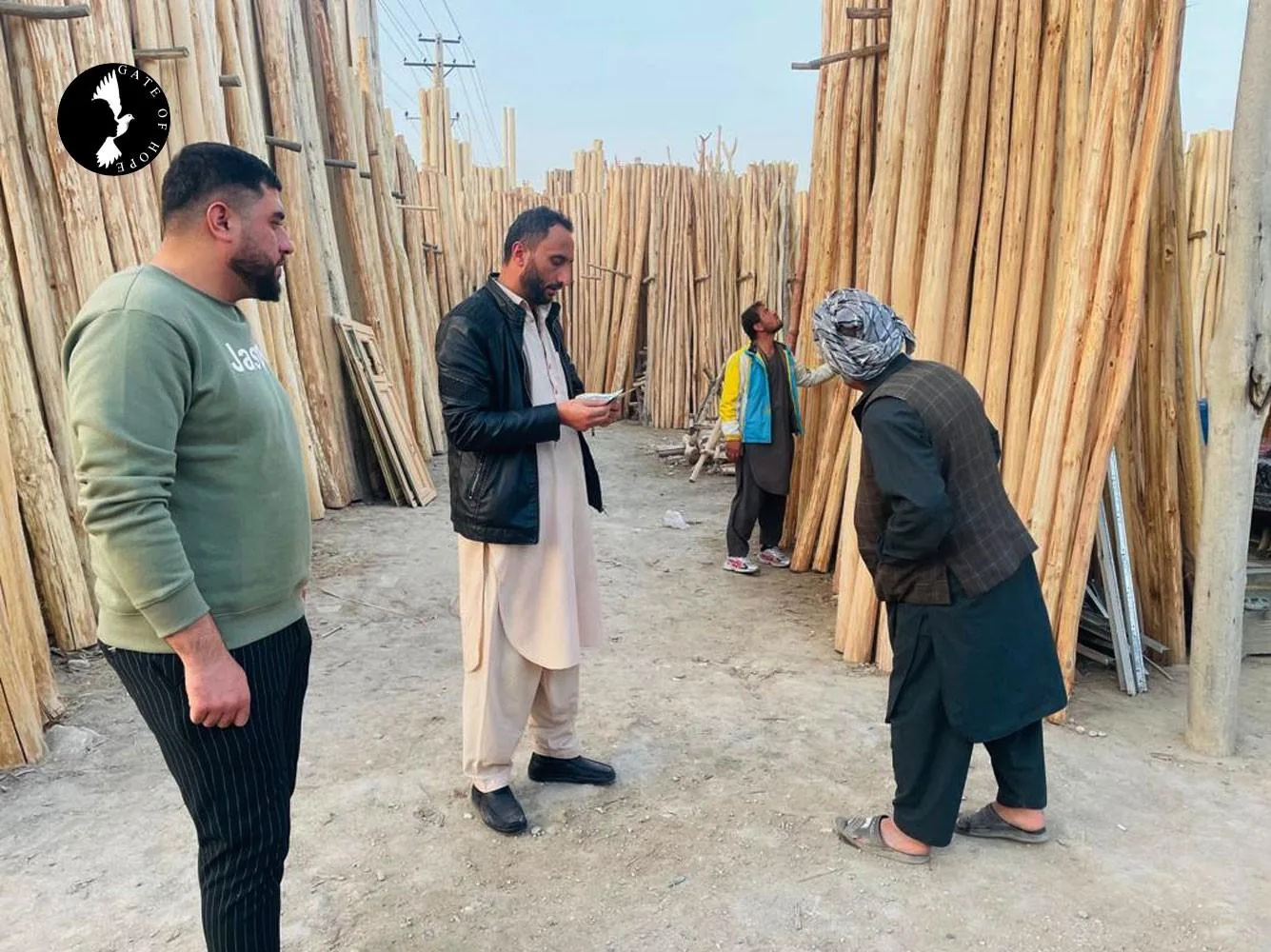
Executing local infrastructure projects requires staging materials, managing site safety, and organizing daily work operations. Gate of Hope procures essential construction supplies—such as cement, gravel, sand, and hand tools—from local vendors to support neighborhood markets whenever possible. On site, work crews handle ground excavation, concrete mixing, and structural masonry. Technical supervisors ensure foundations are built to lasting safety standards, while project leads manage safety protocols, tool distribution, daily work schedules, and participant stipends. This systematic approach maintains site efficiency and worker safety throughout construction.
Socio-Economic Context and Youth Opportunities
The broader economic landscape in Afghanistan presents severe hurdles for youth seeking steady employment or practical skills training. High youth unemployment leaves many young men without reliable income, structured daily routine, or clear economic prospects. According to international development analyses, including policy reports by the World Bank, targeted active labor market interventions and practical skills training are vital to improve employability in fragile settings. Without constructive opportunities to earn income, young people face prolonged instability. Local construction initiatives address this challenge by offering immediate paid work alongside practical building skills.
Neighborhood infrastructure across many districts suffers from severe deterioration after years of economic strain and minimal maintenance. As highlighted in UN-Habitat reports on settlement upgrading, investing in public spaces, drainage, and access roads is essential for stabilizing vulnerable communities. Poor infrastructure impairs daily mobility, school access, and local commerce. By engaging young men in public works repairs, Gate of Hope addresses two urgent issues simultaneously: reducing youth unemployment and restoring degraded public facilities that surrounding families depend upon for daily life.
Reframing Employment as Community Ownership
While direct financial aid provides brief emergency relief, active participation in physical construction projects fosters enduring community pride. Engaging young men as paid participants shifts the narrative from passive assistance to active civic stewardship. When participants lay concrete foundations for local schools or rebuild shared walkways, they gain a deep sense of personal accomplishment and collective ownership. This personal investment strengthens community connections and encourages long-term care of built assets, ensuring facilities remain well-maintained by the residents who built them.
Dignity, Practical Skills, and Honest Reporting
Beyond constructing physical assets, youth gain valuable experience in site preparation, basic masonry, and construction team management. Mastering hand tools, adhering to structural standards, and working cooperatively develop practical competencies that support future employment options in the local labor market. Gate of Hope emphasizes the dignity of productive labor. Earning a steady stipend through honest construction work empowers young men to provide for their families with self-reliance, building confidence and purpose during a time of widespread economic hardship.
Gate of Hope maintains detailed records regarding project scope, operational limits, and community outcomes. While localized construction creates immediate stability and improved public facilities, long-term national recovery requires sustained economic development and institutional support. Gate of Hope does not present temporary construction projects as a comprehensive solution to systemic poverty, but as practical, verified interventions delivering tangible local benefits. Documented activities—laying foundations, shoveling gravel, and compensating young workers—represent clear, measurable progress grounded in rigorous operational monitoring.
Sustainability, Verification, and Support Opportunities
Sustained project benefits depend on regular monitoring, structural inspections, and active community collaboration. Gate of Hope conducts routine site evaluations to inspect the structural durability of completed walkways, walls, and public areas. Local community leaders and neighborhood development committees participate in long-term maintenance planning to ensure facilities remain safe, functional, and accessible over time. Combining structured youth labor with community oversight establishes a practical framework for durable local infrastructure management that extends far beyond the initial construction phase.
Expanding these youth construction initiatives depends on continuous donor support and collaborative partnerships. All financial contributions to Gate of Hope are pooled across active program areas to address critical operational needs. Donated funds support construction materials, daily labor stipends, basic tools, supervisory oversight, safety gear, and post-project monitoring evaluations. Your contribution helps engage more young Afghan men in dignified work while restoring vital community infrastructure. We invite you to partner with Gate of Hope to expand these essential community projects today.
Ways to contribute
All gifts are pooled across the supplies, training, delivery, equipment, follow-up, and maintenance needed to run this work responsibly.
Examples describe pooled program support; they do not guarantee that a specific gift purchases a specific item or produces a fixed result.