The recent visit of the Leadership Council through Gate of Hope to Afghanistan marked a significant milestone — distributing essential ID cards, supporting vulnerable populations, and celebrating the creativity and resilience of Afghan communities.
Leadership Council Visit to Afghanistan: Advancing Identity and Livelihoods
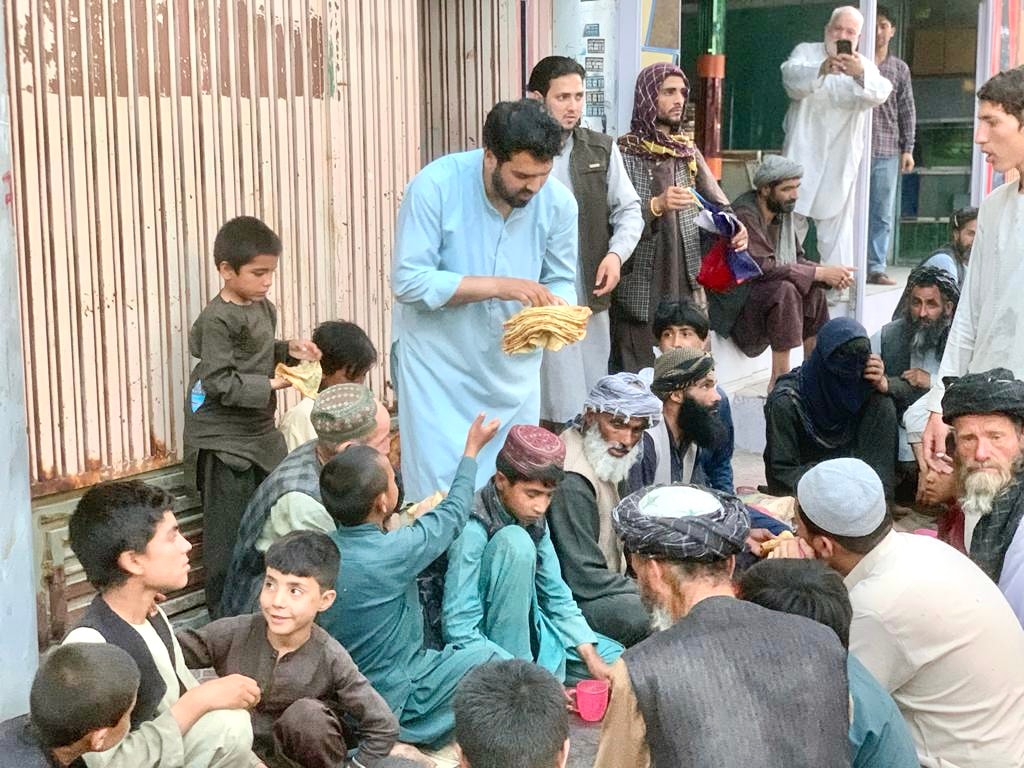
The recent Leadership Council visit to Afghanistan marked an important operational milestone in Gate of Hope's ongoing efforts to deliver dignified humanitarian support to communities enduring the long-term consequences of conflict and displacement. During this field visit, council members engaged directly with local initiatives, oversaw the distribution of essential identity documentation, and reviewed community-led economic projects designed to strengthen family stability. The presence of organizational leadership on the ground provided operational oversight while reinforcing Gate of Hope's core mission: walking alongside Afghan families as they strive to rebuild their lives with autonomy.
Across many regions of Afghanistan, families displaced by conflict and economic disruption face severe barriers to accessing fundamental services and formal employment. Without formal identification cards, internally displaced persons frequently find themselves excluded from official assistance structures and market activities. Gate of Hope's recent initiative focused on bridging this structural gap by facilitating the issuance and distribution of essential ID cards for vulnerable individuals, ensuring that displaced households acquire recognized legal standing within their host communities.
Securing Essential Identity Documentation for Vulnerable Families
Obtaining civil documentation in Afghanistan often presents complex logistical and financial hurdles for impoverished families. Many displaced households lack the resources or institutional familiarity required to navigate administrative channels. By coordinating documentation efforts directly within affected communities, Gate of Hope helps streamline this vital procedure. Possessing valid identification restores basic civil visibility to individuals who have lived on the margins of society, enabling head-of-household verification, enrollment in aid rosters, and greater mobility for family members seeking legitimate work.
Furthermore, securing legal identification forms the bedrock of long-term social stability. When displaced populations are properly documented, local governance structures can better assess community demographics, plan resource distribution, and integrate arriving families into local economic networks. This initial administrative baseline lays a necessary foundation upon which subsequent humanitarian interventions—such as vocational training, food security support, and health access—can effectively build.
Economic Context and Livelihood Challenges in Afghanistan
The humanitarian landscape in Afghanistan remains profoundly defined by systemic economic hardship, widespread unemployment, and severe constraints on household self-reliance. According to assessments by the United Nations Development Programme, female labor force participation outside the home has stagnated at roughly 7 percent, reflecting extremely constrained economic pathways for women across the country. Concurrently, human rights and international monitoring bodies note that millions of Afghan households rely on precarious daily labor or emergency assistance to meet their most immediate survival needs.
In addition to economic stagnation, widespread internal displacement continues to strain local resources in provincial urban centers. Families migrating from rural districts or conflict-affected provinces often arrive in new regions without financial reserves, toolsets, or local support networks. United Nations humanitarian assessments indicate that nearly half of the nation's population requires humanitarian assistance to cope with compounding challenges, including reduced public services and limited formal employment. In this context, initiatives that pair identity registration with practical economic skill development are vital to preventing household collapse.
The Creative Women's Workshop in Balkh Province
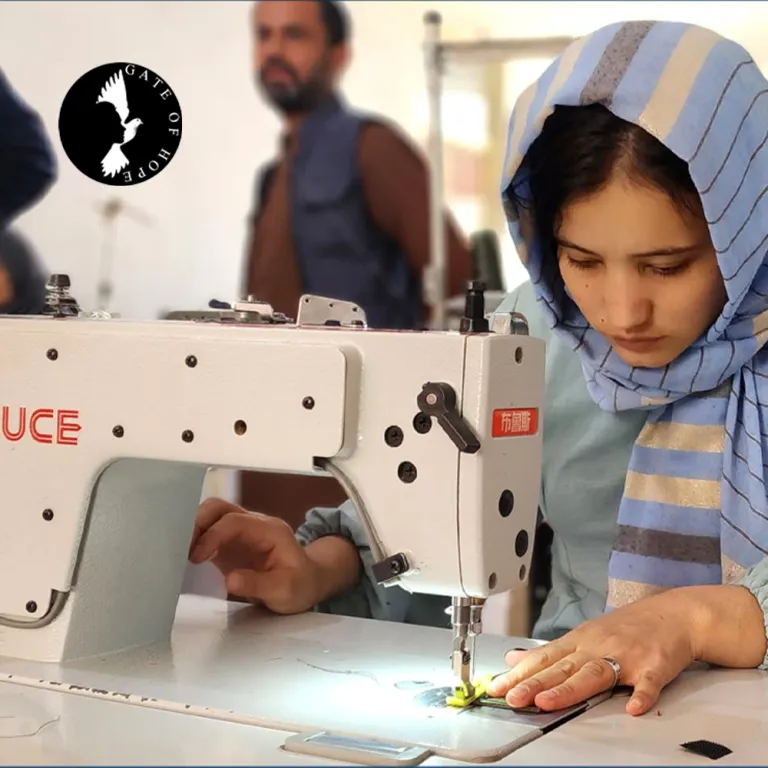
A central focus of the Leadership Council's visit was the review of a creative women's workshop situated in Balkh province. Supported through Gate of Hope's program network, this workshop operates as a vibrant community hub for more than 60 individuals—comprising both women and men—who have migrated to Balkh from various provinces across Afghanistan. Operating structured day and night shifts, the workshop provides a productive space where displaced community members apply their creative skills, manufacture practical handicrafts, and generate income to support their destitute families.
The workshop demonstrates the significant human potential present within displaced populations when given access to workspace, raw materials, and organizational backing. Rather than remaining passive recipients of aid, participating artisans actively contribute to local production while learning craft techniques and collective management. The enterprise's dual-shift structure reflects both the high community demand for income-generating opportunities and the determination of displaced families to maximize their daily earnings under difficult economic conditions.
Collaborative Partnerships for Long-Term Self-Sufficiency
The supervisor of the Balkh province workshop, operating under the sponsorship of Gate of Hope, highlights the severe economic vulnerability of participating households. Describing the enrolled families as destitute, the workshop leadership emphasizes that sustained operational success requires broader collaboration across the social and commercial sectors. To ensure that these craft producers can transition from basic relief to lasting financial stability, there is an urgent need for increased engagement from national and international traders, commercial buyers, and non-governmental partner organizations.
Establishing reliable commercial links and market access is critical for the workshop's long-term viability. While initial support from Gate of Hope provides essential equipment, material inventory, and facility space, long-term self-sufficiency depends on connecting these creative producers with broader supply chains. By cultivating partnerships with regional merchants and ethical trade networks, community enterprises can secure consistent purchase orders, fair wages, and steady revenue streams that endure well beyond emergency grant cycles.
Our Commitment to Accountable Action and Community-Led Support
Gate of Hope remains firmly dedicated to expanding its operational presence across Afghanistan through accountable and community-centered programming. The Leadership Council's recent field visit underscores our organizational practice of direct field monitoring, ensuring that every project is evaluated against rigorous standards of community utility, fiscal integrity, and dignified service delivery. By maintaining close communication with local leaders, workshop supervisors, and program participants, Gate of Hope adapts its interventions to address the evolving practical needs of vulnerable populations.
Sustainable progress in Afghanistan cannot be achieved in isolation. We recognize that true community empowerment requires continuous collaboration among humanitarian actors, local enterprise leaders, civic partners, and generous donors. Gate of Hope invites national and international stakeholders, business owners, and individual supporters to join us in expanding these vital initiatives. Your involvement helps strengthen community resilience, protect human dignity, and build practical pathways toward economic independence for families navigating extraordinary hardship.
Ways to contribute
All gifts are pooled across the supplies, training, delivery, equipment, follow-up, and maintenance needed to run this work responsibly.
Examples describe pooled program support; they do not guarantee that a specific gift purchases a specific item or produces a fixed result.