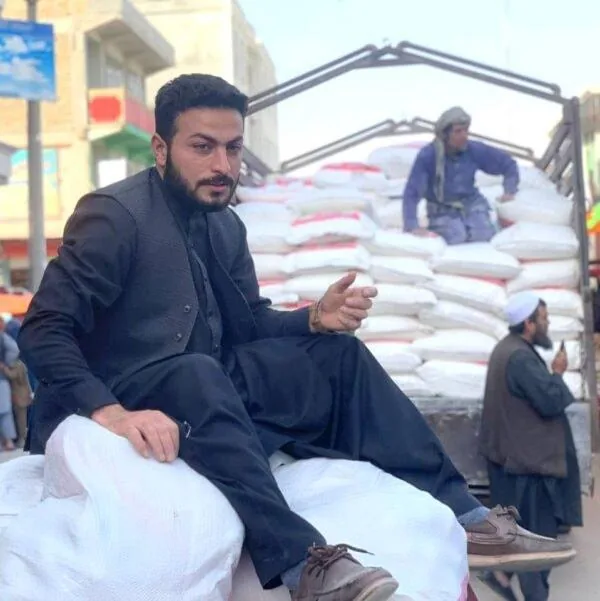
Seated on sacks of flour in the back of a loaded truck in an Afghan market, a Gate of Hope representative oversaw a large food aid shipment — tonnes of staples sourced and ready to reach families facing acute food insecurity.
Direct Sourcing and Delivery of Flour Staples Across Afghanistan
Wheat flour serves as the primary staple across households in Afghanistan, forming the foundation of daily meals for millions. When basic grain reserves run low or vanish entirely, household food security collapses, leaving families exposed to severe nutritional hardship. In response, Gate of Hope conducts food assistance initiatives that transport bulk essential commodities directly into communities facing critical shortages. Before departure, bulk flour is inspected and loaded at regional market centers.
Humanitarian food aid logistics rely on rigorous physical oversight. In busy local markets, trucks are loaded by hand with hundreds of heavy flour sacks. Gate of Hope representatives remain present throughout this process, sitting among the loaded sacks in the vehicle bed to monitor inventory and verify counts prior to departure. No shipment leaves the market without designated field staff present to manage logistics and oversee loading.
Direct Hands-On Presence in Local Procurement
Sourcing food staples from regional market centers secures essential goods quickly while supporting local merchants within the regional economy. Gate of Hope prioritizes direct market procurement to acquire bulk commodities efficiently. Stationing personnel directly on transport vehicles establishes operational accountability from the moment goods leave suppliers. This direct involvement minimizes transit delays and prevents loss or inventory discrepancies during regional transit.
Bulk shipments of flour provide immediate, practical support to households navigating severe economic strain. A single truck loaded with flour delivers sufficient supplies to help sustain dozens of families for multiple weeks. By delivering fundamental ingredients directly into community kitchens, these distributions protect households from extreme food shortfalls and ease the daily burden of securing survival basics.
The Compounding Hunger Crisis Facing Afghan Communities
The delivery of bulk food staples occurs against a backdrop of prolonged hardship across Afghanistan. Millions of people face persistent food insecurity caused by compounding factors, including recurring droughts, regional economic disruption, widespread unemployment, and population displacement. Humanitarian reporting from international agencies indicates that nearly half of the total population, approximately 21.9 million people, requires humanitarian assistance to meet basic daily living needs.
United Nations assessments reveal that approximately 14 million Afghans experience acute hunger, with only a portion receiving regular emergency assistance due to global funding limitations and operational challenges. Across rural and urban areas, economic opportunities remain severely limited, forcing families to rely on precarious coping mechanisms. Rising prices for basic commodities place essential food items far beyond the reach of low-income households.
Climate shocks, including extended dry spells and erratic crop yields, have reduced local agricultural outputs, leaving regional markets reliant on central grain stocks. For families living without savings, sudden price increases translate directly into missed meals. Transporting bulk flour directly into communities struggling with acute shortages addresses the immediate consequences of these broader economic and environmental pressures facing Afghan families.
Practical Logistics, Field Assessments, and Program Accountability
Delivering food aid effectively across multiple provinces requires clear operational structure and objective community assessment. Gate of Hope operates across several Afghan regions, utilizing field assessments to identify localities where food shortages are most severe. Field staff evaluate supply levels, household vulnerability, and access, ensuring bulk food shipments are directed where needs are most urgent rather than relying on informal estimates.
Once priority areas are designated, logistics teams coordinate procurement and transport of bulk staples. Sourcing from regional vendors reduces transit times and maintains operational links within domestic supply chains. Managing delivery schedules directly ensures distributions occur systematically, reducing the risk of transport bottlenecks or supply interruptions when reaching remote or underserved community distribution sites.
Rigorous Verification and Responsible Stewardship
Accountability to recipient communities and supporters forms the foundation of field operations. Sacks of flour loaded onto transport trucks are tracked from market vendors to local distribution points. Representatives supervise unloading alongside community leaders, verifying that distribution lists accurately reflect identified families. This direct verification process deters inventory diversion and guarantees that food assistance reaches households without intermediate interference.
Post-distribution monitoring allows field teams to evaluate the operational performance of each delivery cycle. Gathering feedback from local leaders and recipient households helps refine transport schedules, procurement choices, and community coordination. This continuous feedback loop ensures future relief shipments remain efficient, dignified, and responsive to changing conditions across the various provinces where food aid programs operate.
Sustaining Essential Relief Operations Through Pooled Support
Maintaining Gate of Hope's bulk food distribution program relies on collective contributions from individuals choosing to support Afghan families. Sourcing tonnes of flour, securing transport vehicles, compensating local haulers, and maintaining on-site supervision require steady funding. Every loaded truck represents a coordinated operational effort funded by people dedicated to alleviating acute hunger in crisis-affected regions across the country.
Contributions made to Gate of Hope are pooled across essential program requirements rather than allocated to isolated items. This flexible funding structure enables operational teams to respond dynamically to fluctuating market prices, vehicle transport costs, and urgent community requests. Pooled resources ensure procurement teams can secure bulk pricing while maintaining capacity for fuel, logistical staff, and verification field visits.
Sustaining an active, accountable food aid supply chain requires ongoing community partnership and steady financial support. As economic strain and food insecurity continue affecting millions of lives, expanding the frequency and reach of bulk food deliveries remains a priority. By contributing to Gate of Hope's pooled food assistance fund, supporters help ensure trucks continue to be loaded, dispatched, and supervised directly.
Ways to contribute
All gifts are pooled across the supplies, training, delivery, equipment, follow-up, and maintenance needed to run this work responsibly.
Examples describe pooled program support; they do not guarantee that a specific gift purchases a specific item or produces a fixed result.