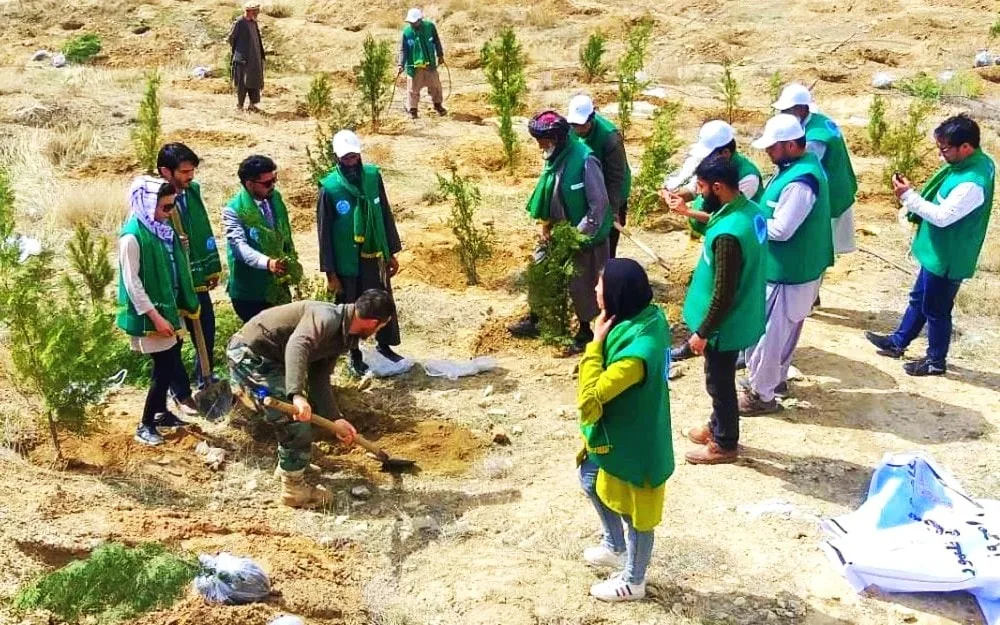
Dozens of Gate of Hope volunteers in green vests took to the hillsides of Afghanistan to plant young saplings — a collective act of environmental restoration and community pride that grows long after the cameras are gone.
Mobilizing Communities for Tree Planting in Afghanistan
Across arid hillsides in Afghanistan, Gate of Hope volunteers wearing green vests have come together to undertake a vital environmental effort: planting young saplings in soil that urgently needs restoration. Moving methodically across dry terrain, men and women of varying ages dig planting holes, position fragile saplings, and carefully water each row under the open sky. This initiative represents far more than an isolated conservation effort. It stands as a clear statement of civic responsibility, demonstrating that local communities remain deeply committed to restoring the land they rely upon for survival and nurturing a sustainable future for coming generations.
Tree planting in Afghanistan offers a practical, community-driven response to interconnected environmental and social challenges. By mobilizing local volunteers, the campaign transforms bare slopes into spaces of active stewardship. Participants bring shovels, water containers, saplings, and shared determination, channeling collective energy into hands-on land restoration. In regions where economic hardship and climate pressures frequently dominate daily life, gathering as a community to plant trees fosters dignity and shared purpose, reaffirming that long-term ecological health is fundamental to community wellbeing.
Restoring Degraded Slopes and Public Lands
Decades of deforestation, prolonged drought, and unmanaged land use have severely degraded Afghanistan's natural landscapes. Slopes that once held lush vegetation now suffer from acute topsoil erosion, which strips essential nutrients from the land and diminishes the earth's natural capacity to absorb and retain water. When heavy seasonal rains occur, deforested hillsides face heightened risks of flash flooding and destructive mudslides, further endangering nearby residential areas and agricultural plots. Planting saplings on vulnerable public lands and slopes establishes root networks that bind the soil together, mitigating erosion risks and slowing water runoff so moisture can rehydrate local aquifers.
Environmental Challenges and Sustainable Natural Resource Management
The ecological pressures facing Afghanistan are closely linked to the country's broader humanitarian and economic stability. According to reports from UN Women and international development partners, effective natural resource management and environmental adaptation are critical pillars for building sustainable livelihoods and resilient communities across the region. When natural landscapes are depleted, rural populations lose essential buffers against severe weather events, leading to declining agricultural productivity, increased water scarcity, and greater vulnerability to climate-induced shocks.
Environmental restoration initiatives help counter this compounding vulnerability by re-establishing ecological balance over time. Healthy tree stands perform critical ecological services: they create natural canopy shade that reduces surface temperatures, improve ambient air quality, support localized microclimates, and provide habitats for local wildlife and biodiversity. Integrating sustainable land management into community development efforts reinforces regional stability, ensuring that ecological recovery proceeds hand-in-hand with humanitarian assistance and infrastructure development. As highlighted in UN-Habitat climate adaptation frameworks, upgrading community environments through resilient, nature-based solutions is indispensable for establishing durable living conditions.
Practical Delivery, Volunteer Coordination, and Local Stewardship
Executing a volunteer-led tree planting campaign across rugged Afghan terrain requires organized logistics, site preparation, and strong community engagement. Gate of Hope coordinates directly with local leaders and residents to identify suitable planting sites, prioritizing degraded public spaces and hillsides where trees can deliver maximum environmental benefit. Procuring hardy sapling species adapted to local soil composition and climate conditions is essential to ensure high survival rates. Operational planning involves securing hand tools such as shovels and buckets, organizing reliable water transport to remote or dry locations, and providing participants with basic instructions on proper planting depths and sapling orientation.
Ensuring Long-Term Sapling Survival and Care
Planting a sapling is only the initial step in a multi-year effort toward environmental recovery. To ensure that newly planted trees mature into thriving green spaces, long-term stewardship protocols are established within participating communities. Local volunteer committees coordinate initial watering schedules, particularly during critical dry months following planting. Community agreements also help protect young growth from premature damage caused by free-grazing livestock or timber gathering. Through periodic monitoring, volunteers inspect root stability, assess growth progress, and clear competing weeds, safeguarding the collective investment made by the community.
Sustaining Ecological Renewal and How Your Support Helps
Gate of Hope views environmental restoration as an integral component of comprehensive community revitalization in Afghanistan. Rebuilding a resilient society requires not only supporting immediate humanitarian needs, but also protecting and restoring the natural ecosystems that sustain human life. Every sapling taking root in Afghan soil represents a durable investment in clean air, soil stability, and climate resilience that will continue to yield benefits for decades to come. Sustaining and expanding these grassroots initiatives depends on continuous solidarity and financial support from global donors.
All financial contributions to Gate of Hope are pooled across our environmental, educational, and community development programs to ensure flexible, effective delivery where needs are greatest. Donations at varying tiers directly enable ongoing operations: $10 contributes toward pooled hand tools, shovels, and basic digging equipment for volunteer teams; $15 helps fund the procurement and transport of hearty young saplings to designated planting sites; $25 supports local volunteer coordination, site safety guidance, and field training; and $50 contributes to post-planting care, watering logistics, and ongoing sapling survival monitoring. We invite you to support this vital work today, joining Afghan volunteers as they cultivate environmental resilience, protect fragile landscapes, and root lasting hope in Afghan soil.
Ways to contribute
All gifts are pooled across the supplies, training, delivery, equipment, follow-up, and maintenance needed to run this work responsibly.
Examples describe pooled program support; they do not guarantee that a specific gift purchases a specific item or produces a fixed result.