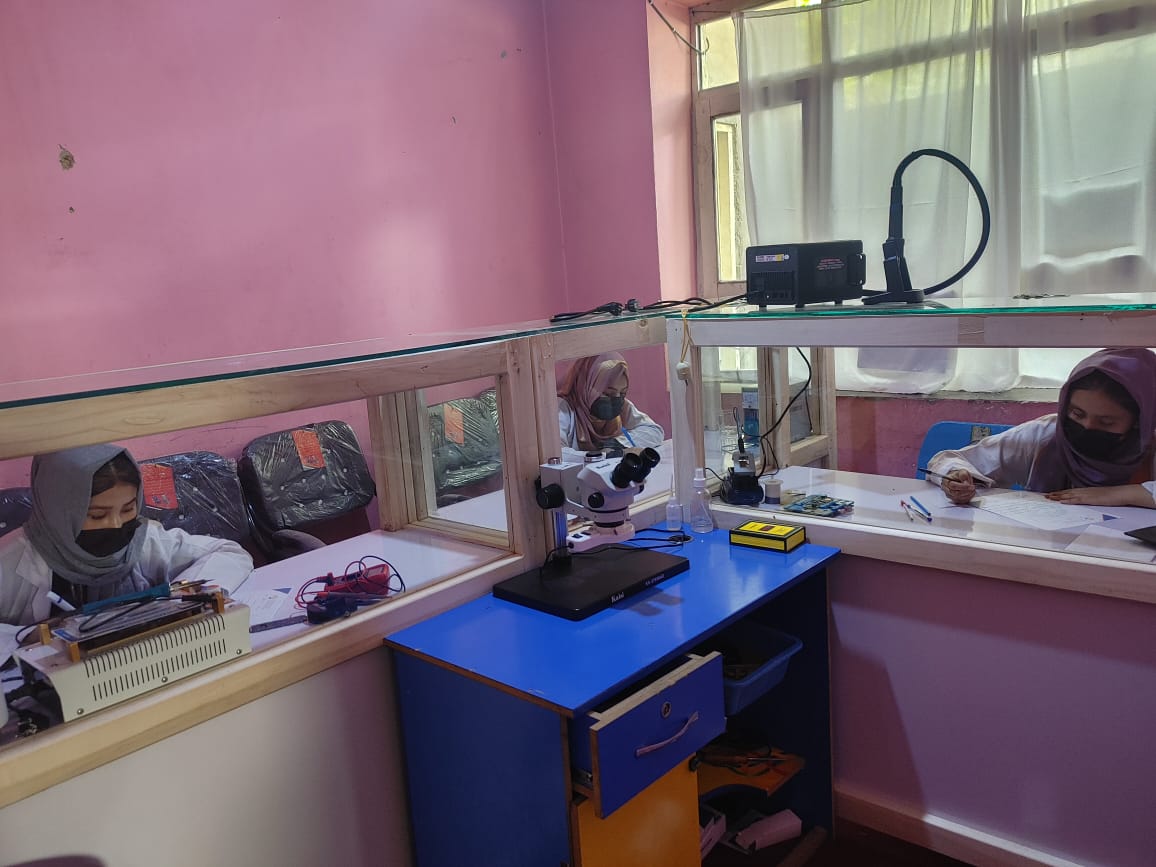
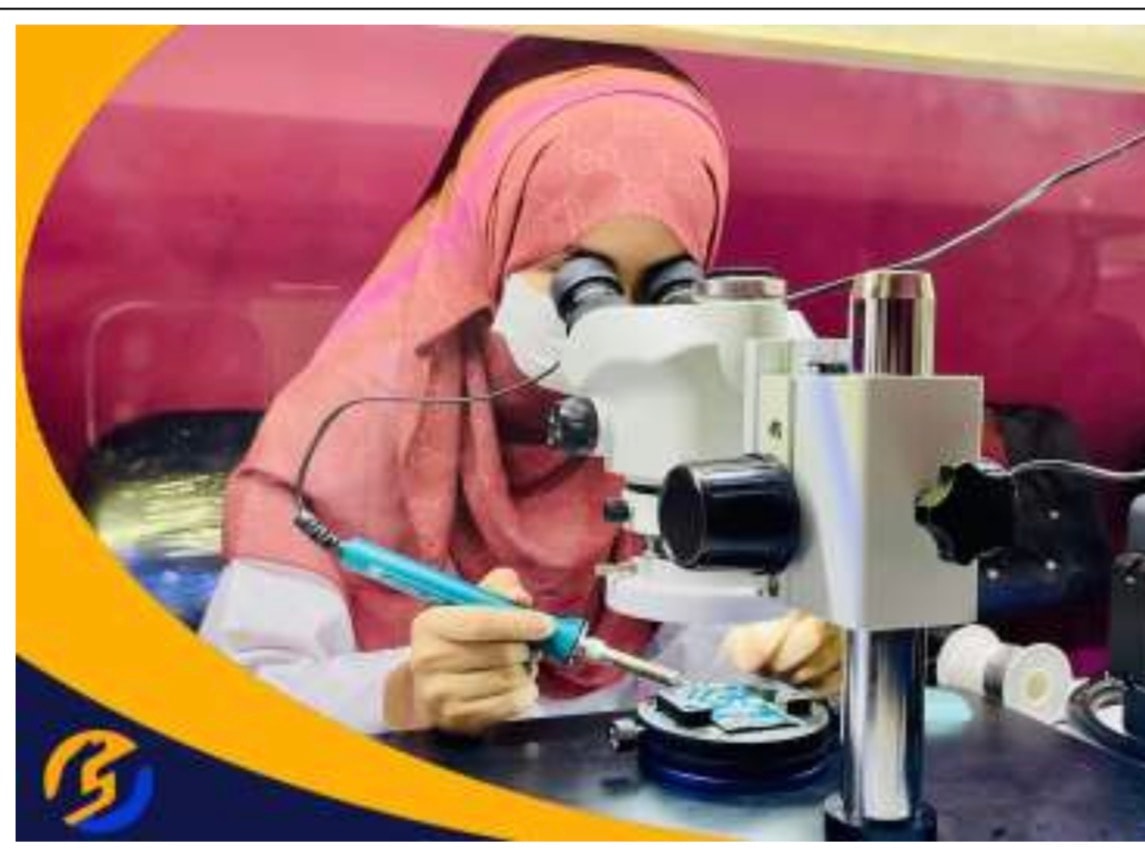
A mobile phone repair student develops advanced hands-on skills by using a microscope and precision soldering tools to inspect and repair delicate electronic components.
Practical Technical Training in Precision Mobile Phone Repair
In modern electronics repair, precision is an essential technical requirement. Modern mobile devices contain complex multi-layer circuit boards, micro-passives, integrated circuits, and delicate copper traces that cannot be adequately inspected or serviced with the unaided eye alone. During a dedicated practical training session supported by Gate of Hope, a student works directly with a specialist microscope and micro-soldering instruments to examine and repair a mobile phone circuit board. Magnification makes it possible to see the tiny components and subtle board faults that are invisible without optical aid. By illuminating microscopic solder bridges, hairline trace fractures, and delicate connection pins, optical magnification allows the learner to perform detailed diagnostic and soldering tasks with improved physical control and manual steady accuracy.
Hands-on practical execution provides a critical bridge connecting theoretical concepts with the practical demands of electronic repair work. Rather than relying solely on abstract diagrams, students manipulate physical tools, evaluate real-time diagnostic indicators, and apply carefully controlled heat to minute surface-mount solder joints. Operating specialist diagnostic equipment like optical magnification tools demands systematic focus, manual dexterity, and mechanical patience. As students learn to adjust optical focus depth, position auxiliary illumination, and manage temperature thresholds safely, they build the technical discipline required in a professional repair workshop. Working directly with circuit boards, precision hand tools, and diagnostic equipment strengthens student confidence and develops practical capabilities that can support future employment or an independent repair business.
Economic Context and the Role of Technical Vocational Skills
Across regional context, developing practical vocational skills serves as an important pathway toward individual economic resilience and community self-reliance. When formal employment channels remain constrained, market-aligned technical capabilities empower individuals to establish independent micro-enterprises or secure skilled technical roles within existing commercial repair workshops. Mobile communication technology plays a vital role in contemporary daily life, enabling family communication, market trading, educational access, and critical community connections. Ensuring local technicians possess the practical competence required to service and repair delicate mobile hardware helps communities maintain access to the devices they rely on for daily communication, education, and economic activity.
Expanding Practical Employability in Local Markets
According to international policy analysis regarding active labor market interventions in low-income settings, supply-side initiatives focusing on practical human capital development—such as targeted skills training, technical vocational education, and entrepreneurship support—are vital mechanisms for enhancing individual employability. Micro-soldering and microscope-assisted electronic repair represent specialized technical capabilities that command real value in local commercial marketplaces. By gaining expertise in systematic diagnostic evaluation, circuit fault isolation, and component replacement, vocational trainees acquire viable economic tools that help reduce reliance on costly imported replacement assemblies, providing households with accessible solutions to maintain their essential devices over time.
Practical Workshop Delivery, Tools, and Safety Discipline
Delivering effective technical training requires structured instructional environments equipped with appropriate physical tools, diagnostic instruments, and clear operational protocols. In Gate of Hope's vocational learning framework, practical sessions are structured to prioritize participant safety, equipment care, and methodical troubleshooting techniques. Students are taught to inspect circuit boards systematically, identifying structural damage, liquid corrosion, or thermal degradation before applying diagnostic power or soldering heat. This structured methodology prevents accidental component damage and instills professional workshop habits from the very beginning of practical instruction.
The inclusion of optical magnification instruments in workshop training fundamentally enhances the diagnostic and repair workflow. Working under high magnification requires coordinated fine motor skills, proper ergonomic posture, and precise thermal management to prevent circuit board warping or heat damage to sensitive adjacent components. By combining direct instructor supervision with extensive physical board practice, trainees develop the confidence required to approach delicate mobile phone assemblies safely. Workshops also emphasize critical safety standards, including proper fume ventilation during soldering, electrostatic discharge prevention, and the careful handling of delicate diagnostic laboratory equipment.
Long-Term Skill Maintenance, Accountability, and How to Support
Ensuring that technical education initiatives yield meaningful community benefits requires careful program management, routine workshop maintenance, and systematic tracking of training outcomes. Gate of Hope maintains operational accountability by routinely assessing workshop equipment functionality, ensuring essential consumables such as flux, solder wire, and cleaning reagents remain adequately supplied, and monitoring how graduates utilize their technical instruction following completion. Sustainable technical education relies upon the continuous upkeep of precision instruments like microscopes and regulated soldering stations so that every incoming student receives equitable access to high-quality learning resources.
Directing Pooled Support Toward Livelihood Programs
Sustaining practical technical education across local communities requires reliable, well-structured financial resources. Contributions made to Gate of Hope are pooled across relevant program areas to address broad educational and livelihood priorities. Rather than funding isolated purchases, pooled donor support enables the continuous provision of workshop consumables, repair tool maintenance, instructional delivery transport, personal protective equipment, and post-training follow-up evaluations. This collective funding model ensures operational flexibility and maximizes the long-term stability of ongoing technical training initiatives across diverse communities.
By contributing to pooled educational and training funds, supporters directly reinforce Gate of Hope's mission to foster dignity, technical competency, and sustained economic self-sufficiency. With every student who masters precision micro-soldering and electronic diagnosis, local communities gain valuable technical capacity that supports long-term economic independence, household stability, and community resilience.
Ways to contribute
All gifts are pooled across the supplies, training, delivery, equipment, follow-up, and maintenance needed to run this work responsibly.
Examples describe pooled program support; they do not guarantee that a specific gift purchases a specific item or produces a fixed result.