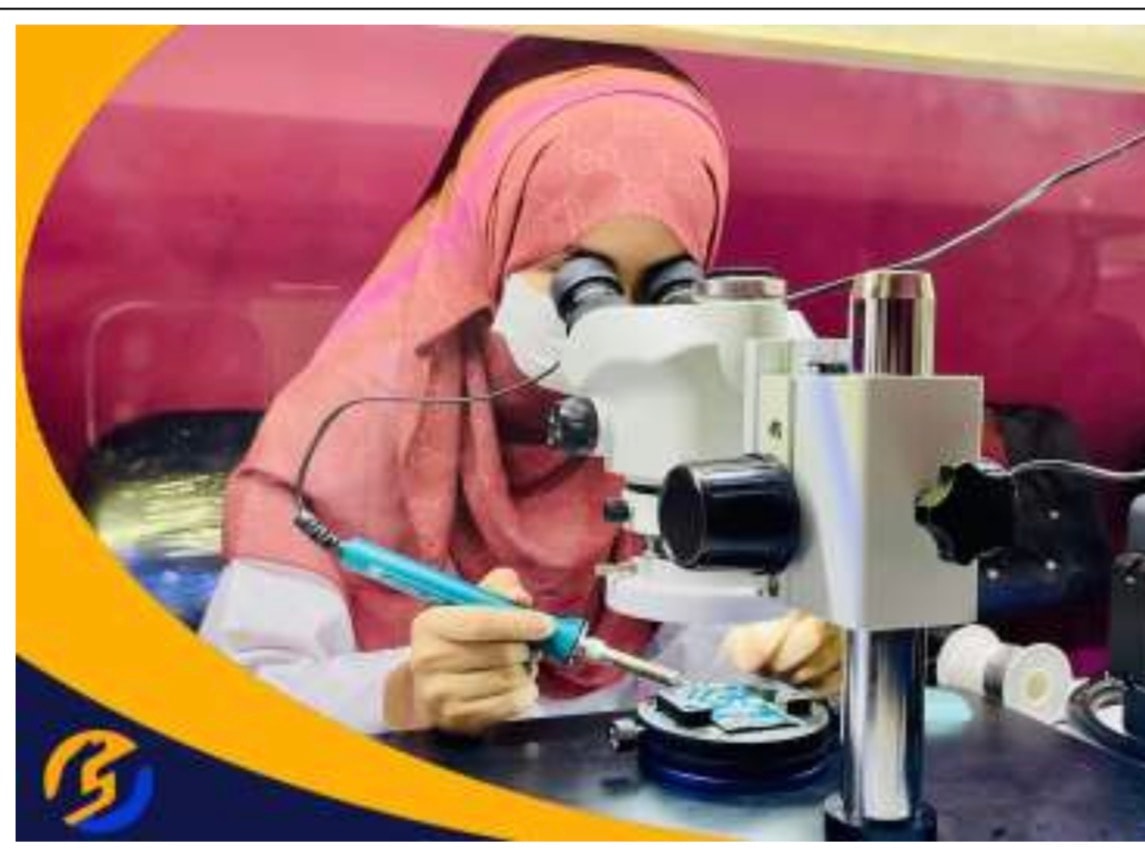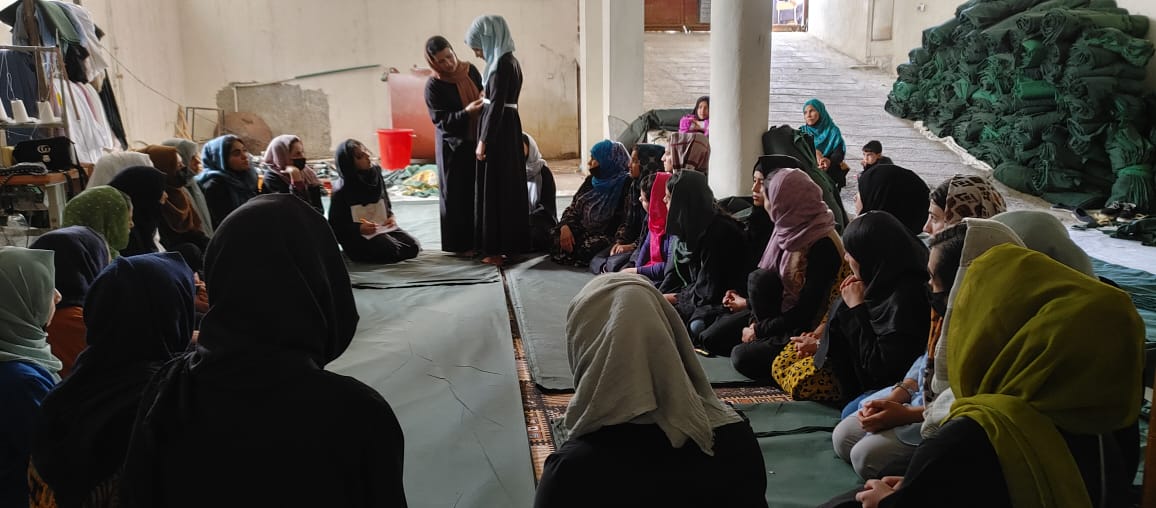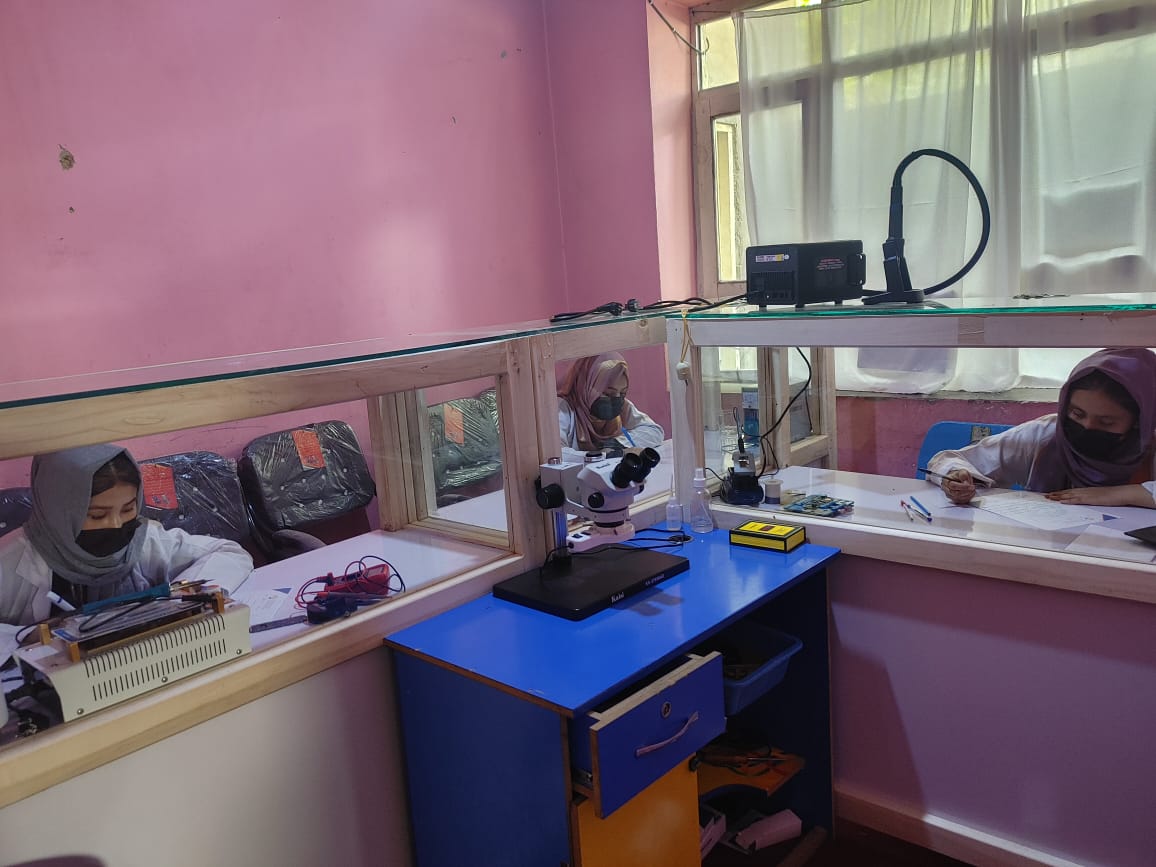
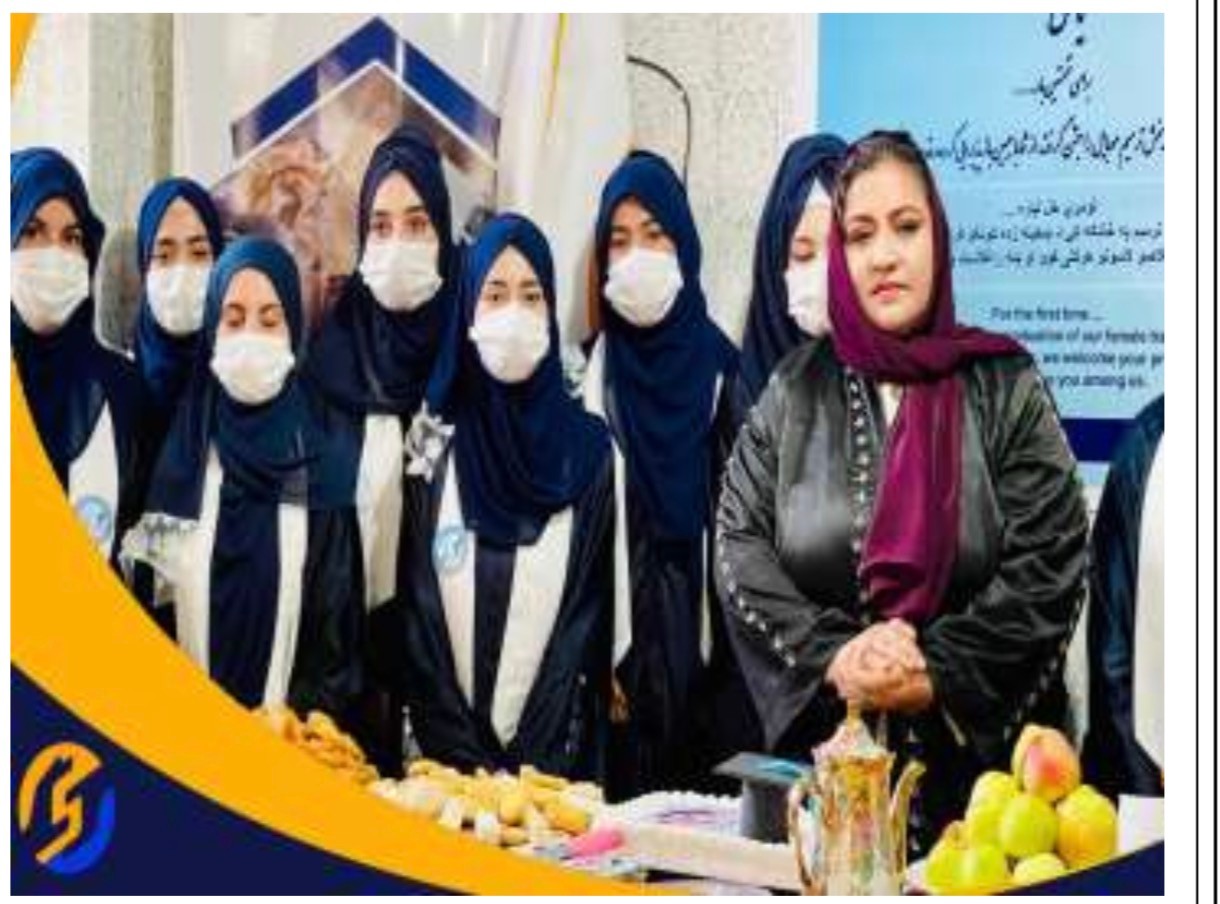
Gate of Hope Charity Foundation and Shafaq Social Service & Welfare Organization officially opened a mobile phone repair training course for 45 female trainees, guided by six highly experienced instructors.
Official Launch of the Mobile Phone Repair Training Course
Gate of Hope Charity Foundation, in close collaboration with Shafaq Social Service & Welfare Organization, has officially launched a specialized mobile phone repair training course designed to create accessible learning and practical livelihood opportunities for women. The inaugural event marked the formal beginning of a structured technical program for 45 female trainees who are embarking on a skill-building journey in a growing technical discipline. In an environment where formal educational pathways and formal employment opportunities for Afghan women remain severely constrained, this program establishes a safe, organized, and focused learning space dedicated to practical technical skill development and professional growth.
The launch ceremony served as an essential orientation for participants, bringing together trainees, program organizers, and community representatives to set practical learning goals and distribute baseline instructional materials. By working in partnership with local community organizations like Shafaq Social Service & Welfare Organization, Gate of Hope Charity Foundation ensures that the training program is adapted to local economic needs while maintaining high standards of vocational training. The program is structured to bridge the gap between basic technical awareness and professional hardware repair expertise, offering participants a supportive environment to build confidence in technical capabilities.
Technical Curriculum and Workshop Mechanics
To guarantee a high standard of practical education, six highly experienced instructors have been selected to lead the training program. These instructors bring deep technical background in consumer electronics, micro-circuitry, and hardware troubleshooting. Throughout the course, they will guide the 45 trainees through a comprehensive curriculum that establishes a solid theoretical foundation before progressing into complex repair techniques. Key instruction areas include mobile phone architecture, circuit diagram interpretation, safe handling of high-voltage equipment, systematically identifying fault codes, and diagnosing internal electrical failures across various device models.
Hands-On Training and Tool Utilization
Hands-on practical application is central to the design of the mobile phone repair training course. As participants move beyond introductory concepts, they will work directly with specialized diagnostic equipment and micro-repair tools under the direct supervision of the instructional team. Trainees will learn to operate stereoscopic microscopes for high-precision micro-soldering, use electronic multimeters to test voltage and resistance across circuit boards, and apply thermal heat guns safely to replace delicate components without damaging surrounding circuitry.
Workshop protocols emphasize safety, precision, and order from the very first day. Trainees are taught proper electrostatic discharge precautions, tool care, chemical handling for board cleaning, and workstation organization. By practicing routine repairs—such as replacing cracked display modules, soldering broken charge ports, repairing damaged ribbon cables, and restoring battery contacts—trainees develop the fine motor control and analytical diagnostic thinking necessary for real-world electronic repair settings.
National Context and Livelihood Rationale
The launch of this mobile phone repair training course responds directly to the acute socio-economic pressure facing Afghan households today. Comprehensive statistical reviews by international agencies, such as the United Nations Development Programme, confirm that female employment outside the household remains extraordinarily restricted, remaining at approximately 6 to 7 percent nationwide. Concurrently, severe bans on secondary and higher education leave millions of young women without mainstream routes to obtain recognized qualifications or earn sustained income, aggravating household poverty across the country.
Fostering Sustainable Livelihoods and Self-Reliance
Mobile phone repair represents a uniquely viable vocational avenue within the current economic context. Mobile technology is deeply integrated into daily life across both urban centers and rural communities in Afghanistan, creating a continuous demand for affordable repair services, maintenance, and device troubleshooting. Acquiring technical repair skills offers Afghan women a flexible, practical means of generating income. Graduates can establish home-based micro-enterprises, form cooperative repair collectives, or offer dedicated repair services to female clients within their local neighborhoods where access to public commercial markets may be restricted.
Investing in practical technical capabilities empowers women to contribute directly to their family budgets and build long-term economic dignity. Gate of Hope Charity Foundation and Shafaq Social Service & Welfare Organization view this vocational program not merely as emergency relief, but as a strategic contribution toward long-term community resilience. By equipping female trainees with marketable skills, the program helps build localized economic autonomy and fosters self-reliance for participants and their households.
Accountability, Program Monitoring, and Future Commitments
Rigorous oversight and detailed tracking are essential components of Gate of Hope Charity Foundation’s project management framework. Throughout the training cycle, program staff and the six technical instructors will conduct systematic assessments to track each trainee's attendance, practical skill acquisition, diagnostic accuracy, and tool proficiency. Workshop facilities and electronic testing equipment are monitored continuously to verify safety standards and ensure that trainees have uninterrupted access to functional, high-quality diagnostic devices.
While the official opening marks a major milestone for the 45 female trainees, sustaining the impact of vocational programs requires ongoing commitment, resource allocation, and follow-up support. As this cohort progresses toward course completion, Gate of Hope Charity Foundation will evaluate opportunities to provide alumni support, business skill workshops, or advanced technical refresher modules. We invite individual supporters, donor partners, and international advocates to support our ongoing vocational initiatives. Your contribution directly strengthens pooled educational resources, maintains workshop infrastructure, and expands practical learning opportunities for Afghan women seeking self-reliance.
Ways to contribute
All gifts are pooled across the supplies, training, delivery, equipment, follow-up, and maintenance needed to run this work responsibly.
Examples describe pooled program support; they do not guarantee that a specific gift purchases a specific item or produces a fixed result.