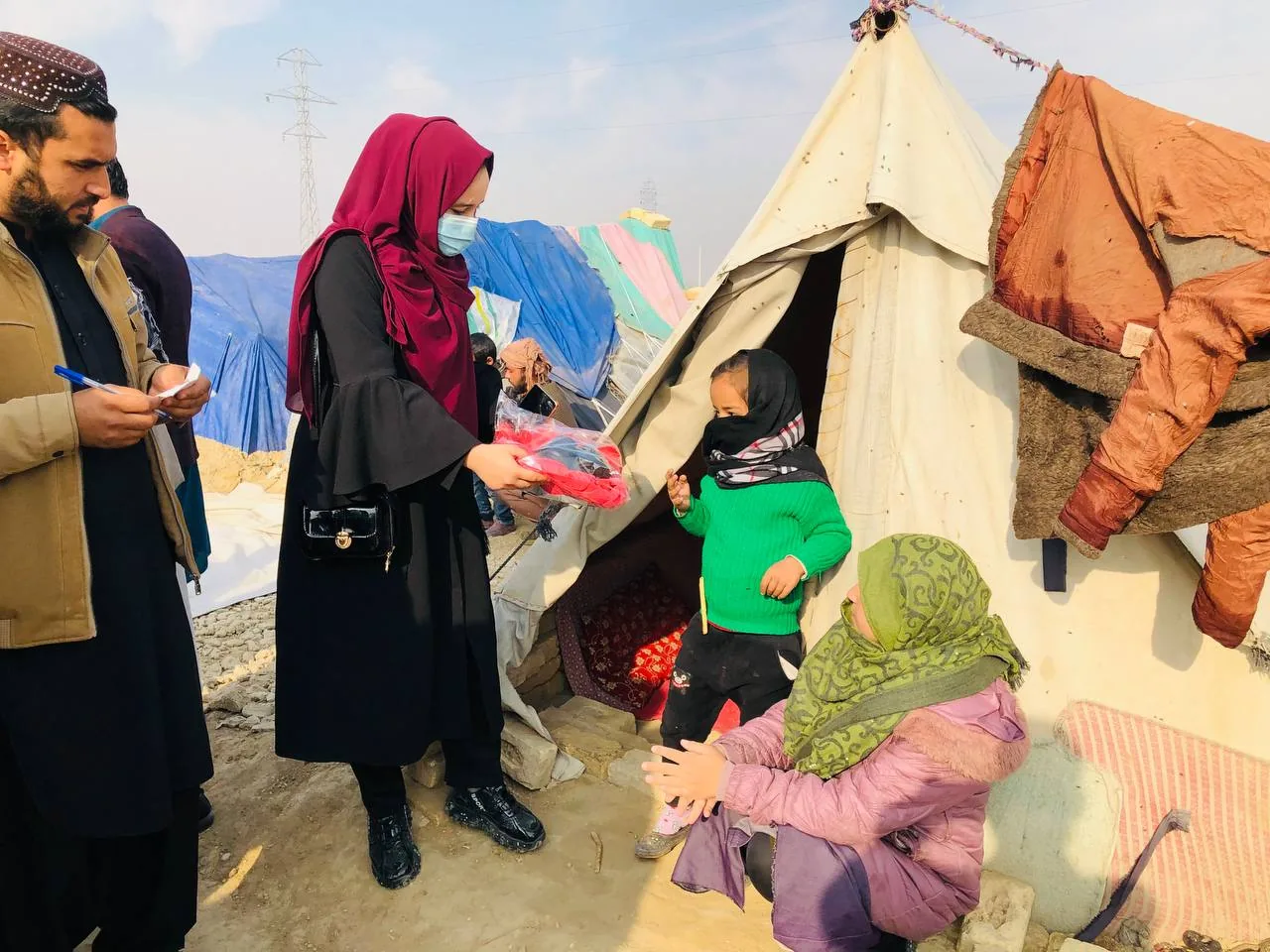
A Gate of Hope field worker walked tent to tent through an IDP camp, placing warm clothing into the hands of young children — a small act of care that meant everything to families with nowhere else to turn.
Direct Aid Distribution to Displaced Children in Afghan IDP Camps
In the makeshift settlements sprawling across the outskirts of an Afghan city, internally displaced families construct temporary shelters from canvas, tarps, and salvaged materials. Within these informal camps, thousands of young children face harsh seasonal conditions without adequate protection or access to basic domestic commodities. Gate of Hope field workers recently moved through one such settlement, carrying clipboards and loads of warm clothing directly to shelter entrances. Tent by tent, team members delivered essential garments into the hands of young children, executing a targeted outreach effort designed to address immediate physical hardship while maintaining personal respect for every household.
For families enduring prolonged displacement, an organized visit from field teams represents a rare moment of tangible assistance amid widespread structural neglect. Deliberate hand-to-hand delivery ensures that children receive properly fitted clothing designed to protect against dropping temperatures. Rather than dropping bulk inventory at central camp points where vulnerable households might be overlooked, field workers navigated narrow camp pathways to hand items directly to young residents. This face-to-face approach ensures that aid reaches those who might otherwise be isolated inside makeshift shelters due to age, mobility, or family circumstance.
The Broader Humanitarian Crisis Facing Internally Displaced Families
The operational imperative for direct field intervention is rooted in Afghanistan’s severe, ongoing humanitarian emergency. According to United Nations assessments, an estimated 21.9 million individuals across the country require humanitarian assistance, a figure that includes more than 11.6 million children. Years of intense economic instability, recurring droughts, and regional conflict have driven hundreds of thousands of people from their rural home villages into urban peripheries. These displaced populations frequently cluster in informal encampments where municipal infrastructure, sanitation services, and winterized housing do not exist.
In these dense tent communities, families struggle to secure daily meals, clean heating fuel, and cold-weather apparel. Children are especially vulnerable to respiratory illnesses and health complications brought on by exposure to cold winds and damp living quarters. Humanitarian agencies estimate that millions of Afghans face acute food insecurity alongside shelter shortages, creating overlapping pressures that threaten child health and survival. When families are forced to choose between purchasing food or warm clothing, essential garments often become unattainable luxuries.
Challenges in Informal Settlement Conditions
Informal settlements on the margins of urban centers present unique logistical and environmental hazards. Shelters made of thin fabric provide negligible insulation against harsh seasonal wind and drop temperatures significantly during night hours. Unpaved pathways turn into thick mud during rains, making internal camp transit difficult for young children and elderly residents. Without formal municipal representation or recognized property rights, families in these camps rely almost entirely on independent humanitarian initiatives to bridge gaps in clothing, hygiene supplies, and winter survival equipment.
Accountability and Dignified Household Needs Assessments
To maximize the impact of limited resources and prevent haphazard aid delivery, Gate of Hope emphasizes rigorous, respectful field assessments prior to any distribution event. Before supplies enter a settlement, field teams conduct comprehensive pre-distribution household surveys across camp sectors. Team members visit individual shelters with detailed assessment forms, documenting household counts, demographic breakdowns, children's ages, and primary survival gaps. This methodical logging ensures that aid packages reflect verified family sizes and real physical needs rather than arbitrary estimates.
Maintaining detailed inventory records and verified recipient logs serves a dual operational purpose. First, it ensures dignity for displaced parents, who engage directly with field staff to explain their household's specific situation. Second, it enforces strict internal accountability. Every item dispatched from storage is tracked through distribution logs, matching inventory figures with confirmed household sign-offs. By documenting household compositions and item allocations, Gate of Hope verifies that aid reaches intended families while gathering vital field data to inform future program planning.
Ensuring Methodical Distribution in Field Operations
Executing structured distributions within high-density displaced person camps demands meticulous team coordination and operational discipline. Field workers walk designated camp sectors in small teams, cross-referencing completed clipboard survey sheets against current shelter occupancy. This disciplined approach eliminates duplicate allocations while guaranteeing that quietly situated families living on the outer boundaries of camps receive equal consideration. By combining thorough record-keeping with compassionate door-to-door delivery, Gate of Hope establishes a reliable framework for aid distribution in unstable informal environments.
Sustaining Ongoing Field Operations and Community Support
The distribution of warm garments to displaced children represents one essential component of a broader, sustained effort to preserve health and dignity in Afghan IDP settlements. Gate of Hope remains committed to maintaining an active presence in vulnerable communities, continuing direct household assessments, and expanding distribution efforts as resource availability permits. While physical garments address immediate environmental exposure, sustained monitoring and operational continuity are necessary to support families through multi-year displacement challenges.
Sustained humanitarian response relies entirely on public solidarity and shared operational resources. Gate of Hope invites donors and global partners to support these continuous field operations across Afghan displacement camps. Financial contributions are pooled across core aid categories to support comprehensive program requirements, including supply procurement, pre-distribution survey logistics, field worker transport, and follow-up monitoring. By backing systematic, verified aid distributions, supporters help maintain vital lifelines for children and families navigating extreme displacement across Afghanistan.
Ways to contribute
All gifts are pooled across the supplies, training, delivery, equipment, follow-up, and maintenance needed to run this work responsibly.
Examples describe pooled program support; they do not guarantee that a specific gift purchases a specific item or produces a fixed result.