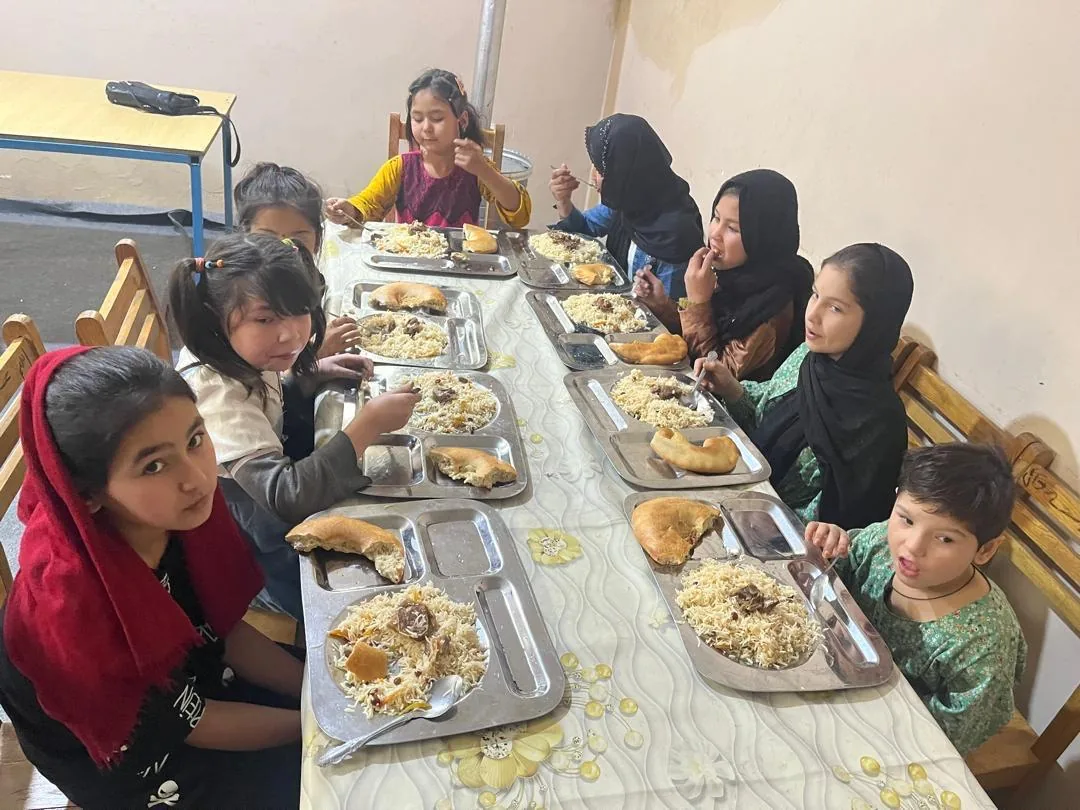
Around a long table lined with metal trays of rice and bread, Afghan girls sat together and ate — a simple, nourishing meal provided by Gate of Hope that makes it possible for them to stay in school, stay healthy, and keep going.
Hot Meal Program for Afghan Girls: Sustaining Attendance and Health
Around a simple wooden table covered with a tablecloth, Afghan girls of various ages sit together during the middle of the school day. On metal trays before them lie warm rice and freshly baked bread. This quietly executed initiative represents Gate of Hope's hot meal program for Afghan girls in its most direct form—a practical, compassionate effort delivering daily nourishment without ceremonial display or unnecessary fanfare. In a quiet room, the act of sharing a meal serves a fundamental operational goal: providing children with the physical sustenance necessary to stay in school, preserve their health, and pursue their education.
When families face severe economic stress and food insecurity, difficult choices frequently alter a child's access to learning. In many households, girls face heightened risks of being kept home to assist with household burdens or conserve scarce family resources. By establishing a reliable daily meal service directly within the educational setting, Gate of Hope aims to address this obstacle directly. The provision of regular food offers a practical reason for families to maintain their daughters' attendance while ensuring that students have the physical energy required to focus on their studies.
Understanding the Daily Reality in the Classroom
The relationship between childhood nutrition and cognitive engagement is well recognized by educators and humanitarian workers alike. A child who attends class on an empty stomach inevitably struggles to concentrate, retain basic lessons, or actively participate in classroom activities. Prolonged hunger creates an added layer of fatigue that degrades learning outcomes over time. By serving warm rice and fresh bread, the program seeks to alleviate immediate physical distress, enabling students to engage more fully with their lessons and peers throughout the afternoon.
The Broader Context of Hunger and Education in Afghanistan
The operational necessity of school-based food support is underscored by the severe humanitarian and educational challenges currently facing Afghanistan. According to reports by UNESCO and UNICEF, more than 2.13 million primary school-aged children in Afghanistan are out of school, with girls representing approximately 60 percent of this group. Educational institutions across the country also face severe infrastructure deficits, with nearly half of all schools lacking safe buildings and a vast majority operating without basic utilities such as electricity, clean water, or adequate sanitation facilities.
Simultaneously, the wider population struggles under a profound acute food security crisis. United Nations reports indicate that 14 million people across Afghanistan face acute hunger, yet humanitarian assistance operations are capable of reaching only a fraction of those in need due to severe resource shortfalls. In communities where household food security has broken down, school meal initiatives serve as vital stabilization measures. They provide a predictable source of caloric intake for vulnerable children who might otherwise experience severe nutritional deficits at home.
Practical Delivery and Operational Accountability
Delivering fresh meals within a school setting requires continuous local coordination, responsible resource management, and disciplined logistical execution. The operation relies on a multi-stage process involving local food procurement, careful food preparation, and organized daily meal distribution. In practice, every quiet serving of warm food reflects a chain of dedicated effort: donors contributing funds, local staff procuring fresh ingredients, cooks preparing wholesale quantities of rice and bread, and program coordinators overseeing the clean and orderly distribution of metal trays.
Gate of Hope prioritizes straightforward, unpretentious execution over high-profile public displays. Rather than relying on public ceremonies or temporary promotional events, the meal program focuses entirely on consistency and local accountability. Ensuring that meals are served regularly requires routine monitoring of ingredient quality, hygiene standards in preparation areas, and reliable transport of bulk items to participating sites. This methodical approach ensures that resources directly benefit the intended recipients day after day.
Ensuring Program Continuity and Responsible Stewardship
Responsible stewardship requires drawing a clear line between documented past deliveries and ongoing operational commitments. While Gate of Hope has successfully served warm meals of rice and bread to young girls in these documented school sessions, maintaining this service requires constant organizational oversight and dependable financial planning. Program monitoring includes regular visits to meal sites, reviewing food preparation protocols, and gathering feedback from local partners to ensure that distribution remains efficient, dignified, and responsive to community needs.
Sustaining Nourishment: A Call for Shared Support
Sustaining and expanding Gate of Hope's hot meal program for Afghan girls remains a core humanitarian priority. Hunger continues to threaten both childhood health and educational continuity across the region. Gate of Hope remains committed to maintaining these essential meal services for current participants while systematically evaluating opportunities to extend support to additional underserved classrooms as operational capacity and funding allow. Every effort is grounded in the belief that basic food security is essential for any meaningful educational progress.
Achieving long-term program continuity depends on collective support from donors who share this vision of practical humanitarian assistance. Financial contributions toward this work are pooled across Gate of Hope's food assistance initiatives to cover the comprehensive costs of operation. Rather than funding isolated items, pooled donations support the entire operational ecosystem—including bulk ingredient purchases, kitchen supplies, transport logistics, cook stipends, and program monitoring. We invite individuals and organizations to join us in securing predictable, dignified meals for young learners across Afghanistan.
Ways to contribute
All gifts are pooled across the supplies, training, delivery, equipment, follow-up, and maintenance needed to run this work responsibly.
Examples describe pooled program support; they do not guarantee that a specific gift purchases a specific item or produces a fixed result.