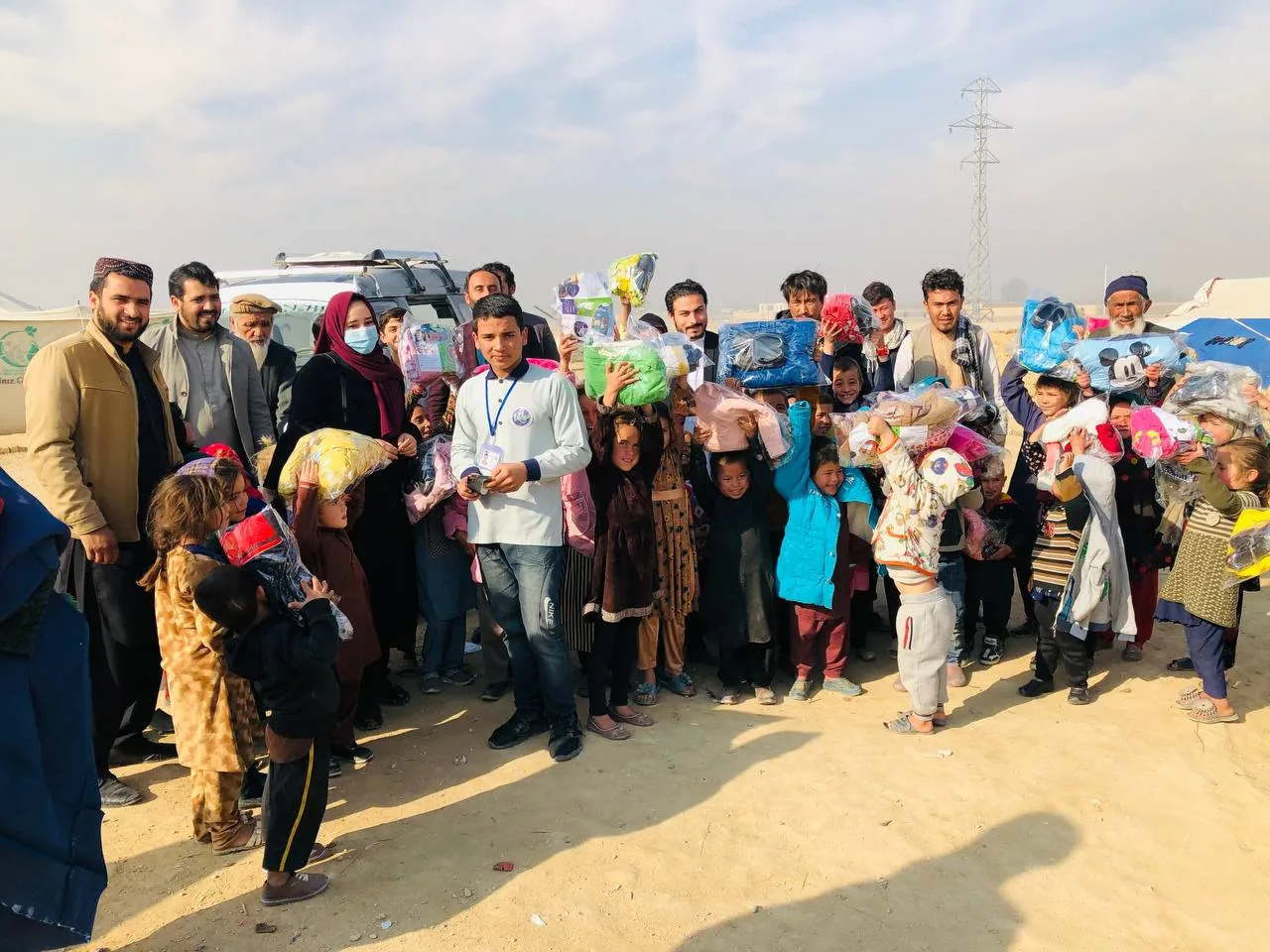
Children raised colourful blankets and bundles of clothing above their heads with wide smiles — a moment of genuine joy captured at an open-air distribution where Gate of Hope brought warmth to families living without shelter or security.
Bringing Warmth through Blanket and Clothing Distributions
In an open field adjacent to an informal displacement camp, children raised bright, colourful blankets and packaged clothing bundles high above their heads, displaying moments of genuine relief and pride during a Gate of Hope humanitarian distribution. Field workers unloaded trucks loaded with heavy blankets, warm children's outerwear, and protective winter garments, converting an open outdoor area into an active aid delivery site. Displaced families pressed forward with outstretched hands as field personnel handed out supplies engineered to protect household members against severe environmental conditions.
For displaced Afghan families living in lightweight canvas tents or makeshift shelters, receiving clean blankets and warm clothing is a vital necessity rather than a basic comfort. Exposure to freezing temperatures, sharp winds, and damp ground poses serious threats to human health, particularly for small children, pregnant women, and the elderly. Gate of Hope’s distribution brings essential thermal aid directly to communities that lack access to formal retail markets or municipal heating, ensuring that displaced households receive vital physical protection and dignified assistance during periods of acute hardship.
Addressing Immediate Cold Exposure in Temporary Camps
Temporary shelters in Afghan displacement camps offer minimal structural insulation against ambient weather. Unpaved camp soil rapidly turns into cold mud or freezing slush during seasonal transitions, soaking thin floor mats and canvas tent walls. Without thick blankets and proper cold-weather garments, young children face heightened vulnerability to severe respiratory infections and hypothermia. Providing specialized warm clothing bundles and heavy blankets helps directly mitigate these winter health risks, equipping families with basic physical protection inside their temporary shelters.
The Broad Scope of Displacement and Need in Afghanistan
The critical need for emergency blankets and protective winter garments reflects the broader humanitarian reality affecting millions across Afghanistan. According to official UN statistics, an estimated 21.9 million people require humanitarian assistance in 2026, including more than 11.6 million children. Ongoing economic stagnation, recurrent climate disasters like severe drought, and long-standing regional instability have stripped millions of households of stable income, pushing families into informal settlements where basic living supplies are unaffordable.
Humanitarian situation reports from UNICEF emphasize that nearly half of Afghanistan's entire population experiences acute severe vulnerabilities, with children bearing the heaviest burden of health disruptions, poor nutrition, and substandard shelter. In informal displacement settings where municipal heating infrastructure and power grids are entirely absent, adequate clothing and heavy blankets serve as the primary line of defense against severe cold weather. The operational demand for protective garments and blankets remains extraordinarily urgent across camps in multiple provinces.
Ensuring Fair Access for Vulnerable Households
Delivering humanitarian aid effectively and equitably requires identifying the most vulnerable households before distribution day arrives. Gate of Hope field personnel conduct thorough pre-distribution assessments in close partnership with community elders and local camp committees. Roster lists are compiled based on criteria such as household size, physical vulnerability, income level, and shelter quality. Priority status is extended to widow-headed households, families caring for individuals with chronic illnesses or disabilities, and children living in degraded canvas tents.
Community Assessment and Field Logistics
Executing an open-air aid distribution within an informal camp demands organized logistics, secure regional transit, and disciplined crowd management. Gate of Hope field teams source high-quality blankets and winter garments in bulk, choosing durable fabrics that withstand harsh environmental wear. Supplies are sorted and packaged into standardized household bundles adjusted for family size, ensuring equitable allocation across all registered recipient households.
On distribution day, field personnel establish defined distribution zones equipped with separate entry and exit points to ensure safe and orderly community movement. Volunteers check recipient vouchers against registered rosters, hand out heavy blanket packages, and assist parents in carrying bulky aid bundles back to their shelter entrances. This structured operational process reduces waiting times and maintains an environment centered on safety, dignity, and mutual respect for every participating household.
Field distributions must also account for unpredictable operational conditions, including severe road conditions and rapid shifts in weather that can delay transport vehicles. By maintaining adaptable field routes and close communication with camp representatives, distribution operations can navigate localized transport obstacles while maintaining clear safety standards. Honest non-profit operational practice recognizes that emergency relief distributions address immediate thermal protection rather than structural poverty, underscoring the ongoing necessity of broader humanitarian aid for displaced populations.
Careful Stewardship and Long-Term Engagement
Gate of Hope maintains comprehensive administrative accountability for every blanket and clothing distribution, tracking supplies from initial procurement through final field delivery. Field teams maintain rigorous inventory logs, verify household receipts, and record post-distribution feedback to monitor program quality and recipient satisfaction. This commitment to careful reporting ensures that donor funds are utilized effectively to deliver high-quality, tangible assistance directly to displaced Afghan families.
Providing blankets and warm clothing represents one crucial element of Gate of Hope's ongoing commitment to displaced populations across Afghanistan. While seasonal distributions alleviate immediate suffering, field staff continue to assess broader requirements for shelter winterization, clean water access, and educational continuity. Supported by generous international donors, Gate of Hope will sustain its direct emergency response operations, bringing warmth, dignity, and practical aid to families living in displacement camps.
Ethical stewardship requires continuous dialogue with aid recipients and ongoing evaluation of distribution practices to uphold community trust. Recognizing the limits of short-term material aid, Gate of Hope emphasizes human dignity and respectful community partnership in every interaction. Careful administrative structures and clear reporting mechanisms ensure that donor contributions remain directly aligned with the core humanitarian priority of providing vital relief to vulnerable communities facing severe displacement.
Ways to contribute
All gifts are pooled across the supplies, training, delivery, equipment, follow-up, and maintenance needed to run this work responsibly.
Examples describe pooled program support; they do not guarantee that a specific gift purchases a specific item or produces a fixed result.