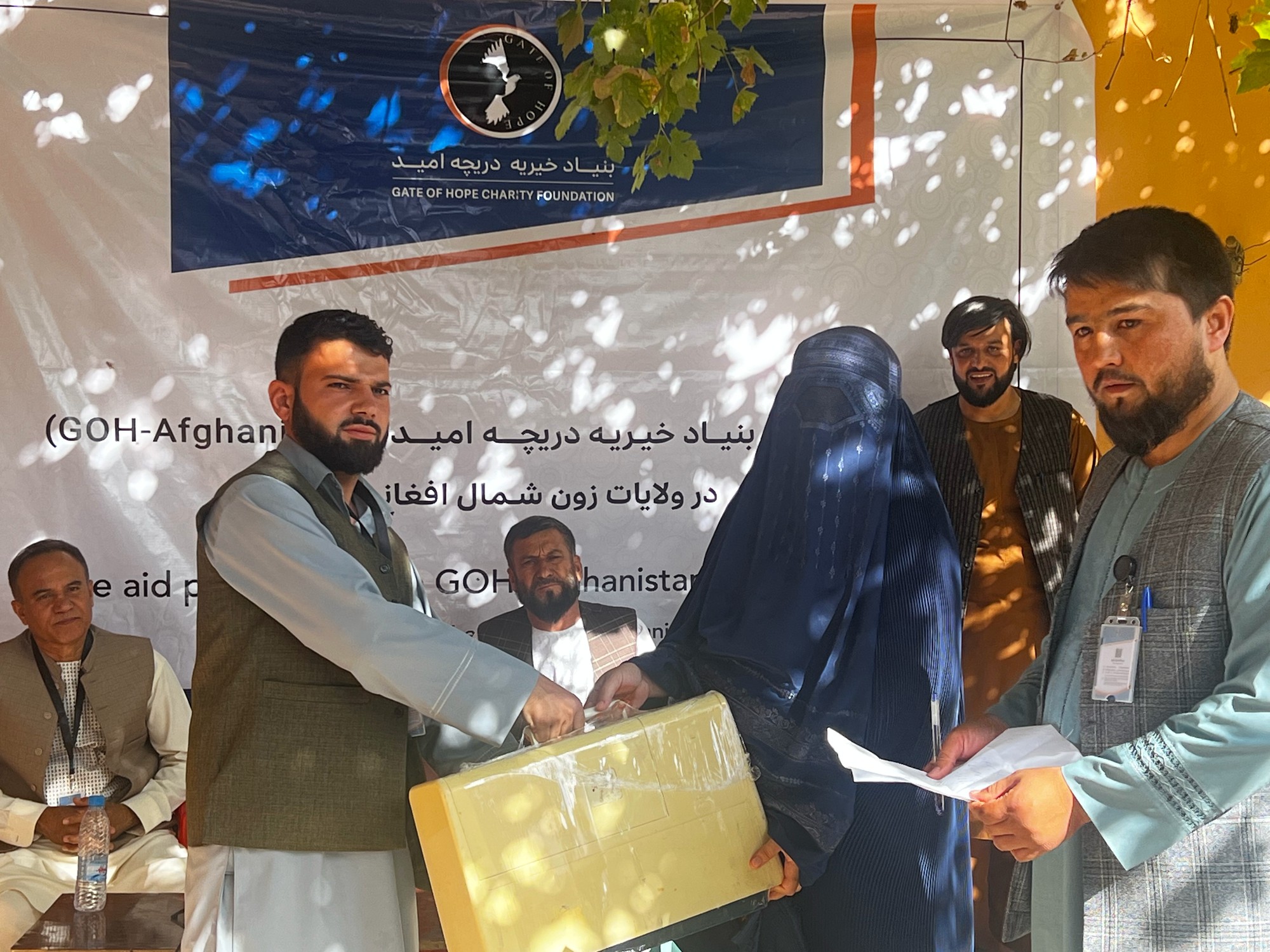
Gate of Hope delivered new sewing machines to a tailoring workshop in Jawzjan province, equipping Afghan women with the tools to build livelihoods, support their families, and move toward economic self-sufficiency.
Distribution of Sewing Machines to a Tailoring Workshop in Jawzjan
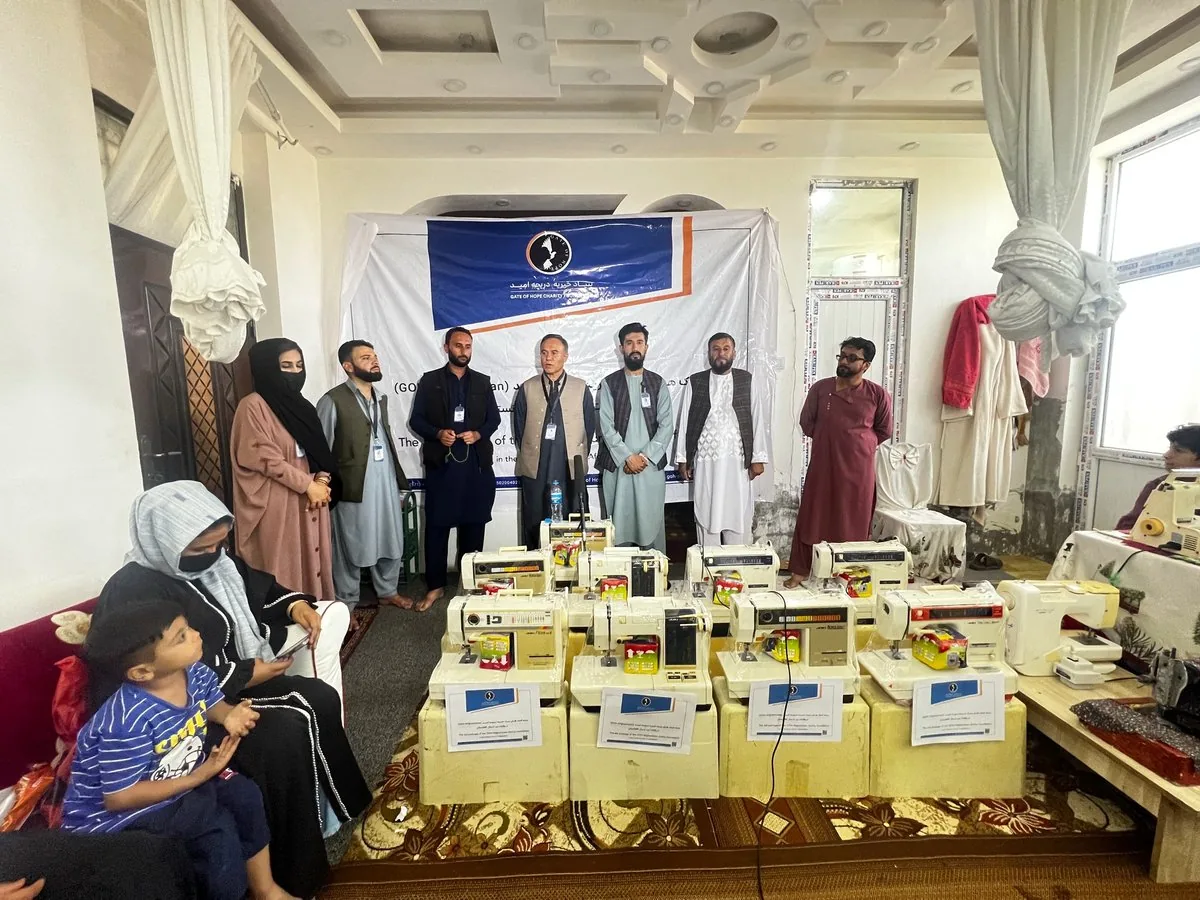
In a well-lit room in Jawzjan province, community leaders, local participants, and Gate of Hope staff assembled for a formal distribution ceremony centered around rows of brand-new sewing machines. Each unit, carefully arranged in front of the organizational banner and placed atop its original packaging, was prepared for distribution to local women who participated in the initiative. This event marks a concrete operational milestone in northern Afghanistan, delivering essential trade equipment directly into the hands of women seeking to establish independent livelihoods. In regions where economic hardship is acute, equipping individuals with functioning vocational tools offers a tangible foundation for household stability, enabling families to rely on self-generated income rather than total dependence on emergency humanitarian assistance.
The physical gathering served as both an official handover and an orientation for the recipients who took these machines to their households or shared working spaces. Jawzjan province, situated in the northern region of Afghanistan, presents specific economic realities where opportunities for formal employment remain limited, particularly for female heads of household. By establishing a direct supply link for tailoring equipment, Gate of Hope aims to bridge the gap between initial vocational training and active micro-enterprise production. Each machine delivered is intended to serve as a functional workstation, giving women the physical capacity to mend garments, construct original attire, and supply custom clothing to neighbors and local markets.
Economic Context and Livelihoods for Afghan Women
The necessity for localized vocational projects like a tailoring workshop in Jawzjan is underscored by broader national socio-economic data across Afghanistan. According to reports from international bodies such as the United Nations Development Programme, female employment outside the household has stagnated at roughly seven percent. Widespread restrictions on formal workplace access, coupled with broader economic contractions, have severely curtailed conventional employment routes for women across urban and rural provinces alike. In this constrained environment, home-based and neighborhood-level economic activities have become some of the few viable avenues for women to generate household revenue, cover basic living expenses, and support their children.
Flexible Home-Based Income Options
Tailoring represents a uniquely adaptable trade in the Afghan socio-cultural landscape because it can be conducted within home settings or small community co-operatives. Women who manage domestic responsibilities, child care, and elderly family support can integrate garment production into their daily routines without needing to commute to centralized commercial centers. Furthermore, local demand for garment repair, seasonal clothing, and traditional attire remains constant across Afghan communities. Providing practical equipment enables craftswomen to tap into existing domestic supply chains, offering affordable services to their immediate neighbors while generating steady, dignified earnings that directly benefit their immediate households.
Operational Logistics, Training, and Sustainable Follow-Up
Executing a successful equipment distribution in northern Afghanistan requires careful logistical planning, transparent community coordination, and robust follow-up mechanisms. Gate of Hope coordinates the procurement and transport of durable, heavy-duty sewing equipment capable of enduring continuous household use. Transporting delicate machinery across provincial routes involves secure packaging and verified delivery protocols to ensure all items arrive in operational condition. Beyond the physical distribution day in Jawzjan, project teams work to align equipment handovers with structured instruction, ensuring that recipients possess the technical skill, maintenance knowledge, and material supplies needed to operate the machinery effectively.
Post-Distribution Monitoring and Mentorship
To ensure that handed-over equipment translates into sustained economic productivity rather than temporary relief, Gate of Hope embeds post-distribution monitoring into its operational model. Program officers conduct periodic follow-up visits to assess machine performance, track household production levels, and offer supplementary mentorship in basic business bookkeeping and market linkage. If a machine requires mechanical adjustment or replacement parts, local technical support pathways are identified to keep the equipment operational. This continuous engagement helps prevent equipment from falling into disuse, ensuring that donor investments yield persistent, long-term economic utility for the recipient families and their surrounding neighborhoods.
Community Impact, Financial Stewardship, and How You Can Help
The human significance of providing sewing machines to a tailoring workshop in Jawzjan extends far beyond the mechanical value of the equipment. For the recipient women, acquiring professional tailoring tools represents renewed agency, dignity, and economic purpose amidst challenging circumstances. Rather than viewing beneficiaries merely as passive recipients of aid, Gate of Hope recognizes them as active entrepreneurs, primary caregivers, and vital contributors to their local village economies. Strengthening a mother’s ability to earn an independent income directly correlates with improved household nutrition, better stability for children, and enhanced community resilience against economic shocks.
Sustaining these vocational and economic empowerment programs requires consistent, accountable financial stewardship. Gate of Hope pools financial contributions across relevant project needs to ensure that funding is allocated dynamically where it is needed most—whether for equipment procurement, transport logistics, workshop materials, or follow-up site assessments. A gift of $10 contributes toward pooled workshop supplies such as thread, scissors, and measuring tools. A $15 contribution supports logistics and safe transport of machinery to remote northern provinces. A $25 contribution aids in funding technical training sessions and practical mentorship modules. A $50 contribution helps back broader equipment procurement, post-distribution monitoring visits, and long-term maintenance support across our livelihood programs.
Every contribution directly strengthens our ongoing effort to provide Afghan women with the tools, training, and operational support necessary to build sustainable livelihoods. By supporting Gate of Hope's pooled vocational funds, donors help transform community-level challenges into opportunities for lasting self-reliance and dignity across Jawzjan province and beyond.
Ways to contribute
All gifts are pooled across the supplies, training, delivery, equipment, follow-up, and maintenance needed to run this work responsibly.
Examples describe pooled program support; they do not guarantee that a specific gift purchases a specific item or produces a fixed result.