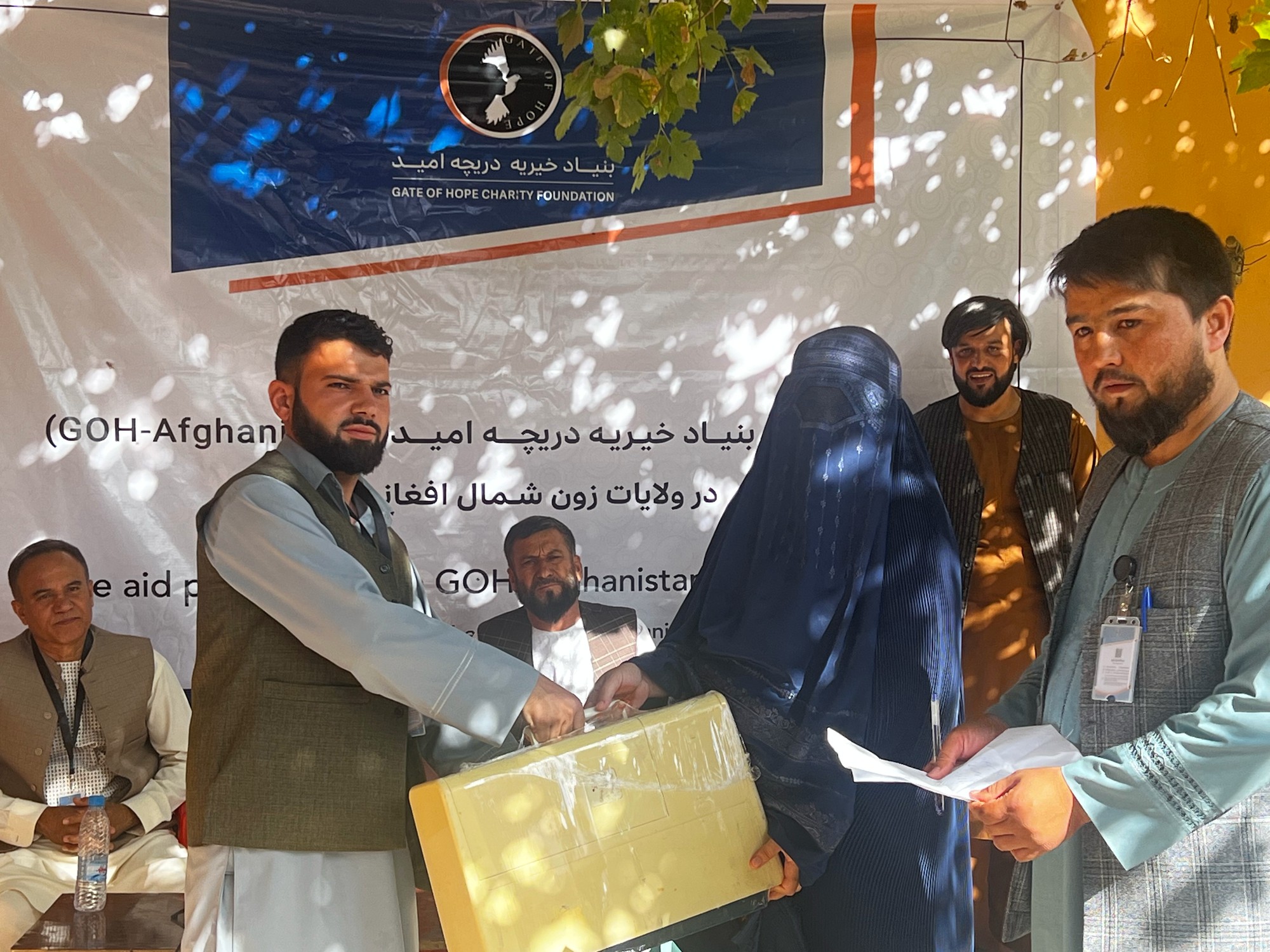
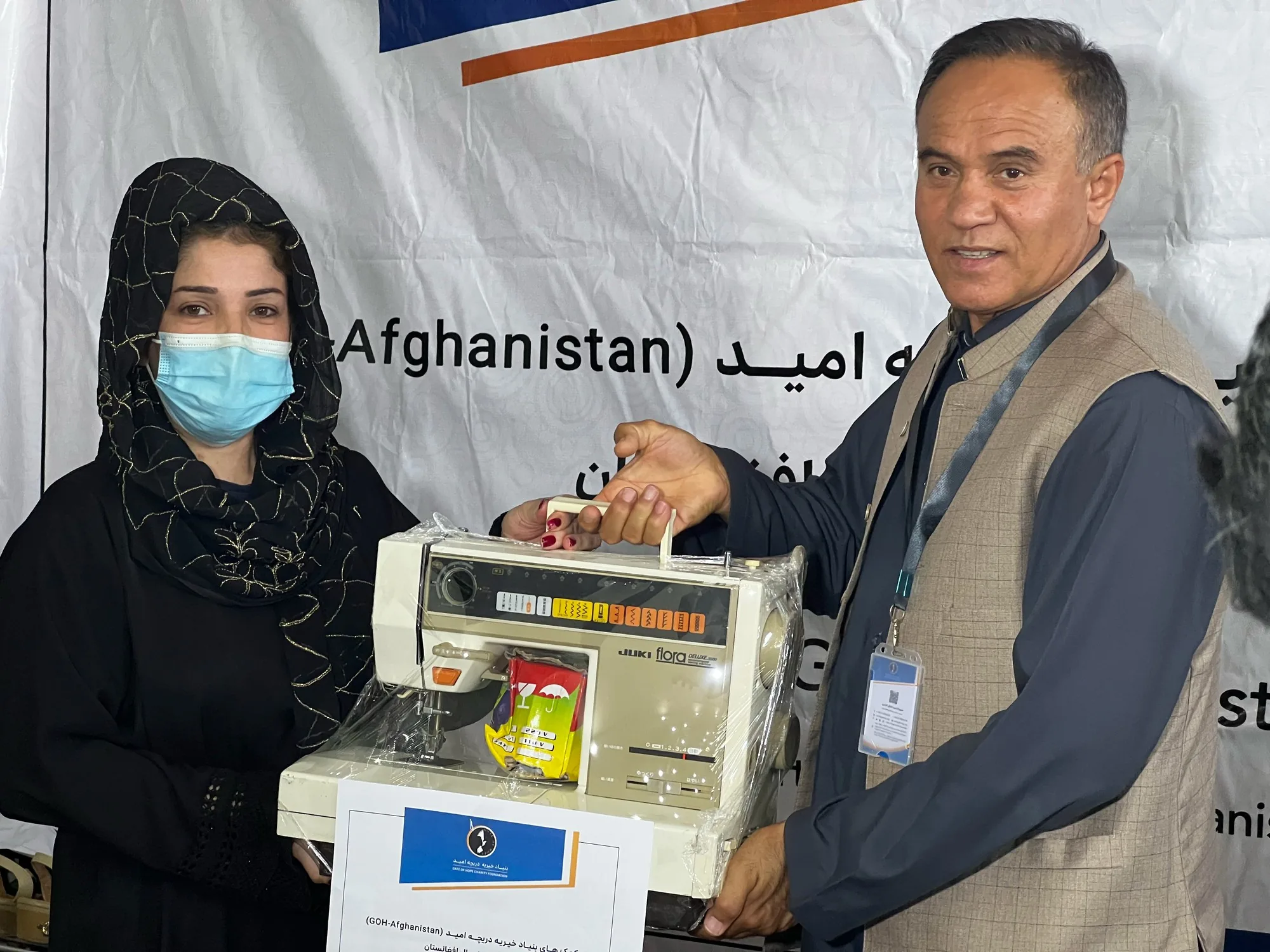
Gate of Hope provided professional sewing machines to Afghan women, giving them the tools to build livelihoods, support their families, and reclaim independence in the face of ongoing hardship.
Practical Livelihood Support: Sewing Machines for Afghan Women
In an ongoing initiative to support home-based vocational opportunities, Gate of Hope recently completed the distribution of professional sewing machines for Afghan women. This direct intervention addresses the urgent need for practical income-generating tools among households experiencing severe economic hardship. By equipping women with durable, industry-standard tailoring equipment, the initiative seeks to establish a foundation for sustainable self-sufficiency. Rather than relying solely on short-term relief assistance, recipients are provided with functional assets that enable them to generate personal earnings through garment construction, repair work, and textile production tailored to local market demand.
Each professional sewing machine delivered through this program represents a vital mechanism for restoring dignity and financial stability. For families struggling under widespread poverty, an independent source of household income can directly improve access to food, health services, and essential domestic supplies. The distributed units are specifically chosen for their mechanical reliability and suitability for home production or small-scale community workshop environments. This focus on functional quality ensures that beneficiaries receive tools capable of enduring daily commercial use without immediate maintenance failures.
Economic Realities and Economic Barriers in Afghanistan
The distribution of tailoring equipment takes place against a backdrop of severe economic contraction and restricted access to public employment. Documented reporting by the United Nations Development Programme indicates that formal female employment outside the household remains extraordinarily low, hovering at approximately six to seven percent nationwide. Broad societal constraints, coupled with limited formal labor market access, have left millions of households without secondary income streams. In many communities, families led by sole breadwinners or widowed mothers face acute financial instability, making home-based vocational work one of the few remaining viable avenues for economic survival.
Structural Constraints on Female Livelihoods
National socio-economic assessments further highlight how restrictions on formal education and institutional employment have compounded household vulnerability across rural and urban provinces alike. According to UN Women tracking metrics, diminished economic opportunities force many families into extreme coping strategies to meet basic survival needs. Within this restrictive framework, establishing home-based textile workshops allows women to utilize their existing tailoring skills safely and effectively. Generating localized income directly addresses household food insecurity while fostering economic resilience within fragile neighborhood markets.
Vocational interventions must be carefully adapted to regional socio-economic realities to ensure sustained utility. By focusing on essential goods such as traditional attire, clothing repairs, and practical textiles, home-based entrepreneurs fulfill constant local consumer demand. This micro-level economic activity not only supplements household revenue but also circulates capital within local trade networks, contributing to community-level stability in times of broad economic stress.
Implementation and Community-Based Distribution Logistics
Operational execution relies on rigorous community outreach and local coordination to identify participants with the highest level of need and operational capacity. Gate of Hope leverages a community outreach network to engage local leaders and conduct objective household assessments. Priority is assigned to vulnerable households, including widows, female heads of household, and individuals who have experienced conflict-induced displacement. Candidate selection evaluates both economic vulnerability and a clear, documented intent to maintain an active home-based sewing enterprise.
Delivering Tools to Vulnerable Households
Procurement and transport logistics are organized to ensure that standard, high-performance machinery reaches beneficiaries efficiently and safely. Before distribution events take place, equipment is inspected to verify operational readiness and structural integrity. Recipients gather at designated local community hubs to receive their machinery, basic accessory sets, and technical guidance on proper machine operation and routine maintenance. This direct handover model minimizes administrative overhead and ensures delivery accountable to both donors and community partners.
Beyond the physical distribution, operational planning incorporates basic setup verification to confirm that recipients can immediately integrate the equipment into their living spaces. By establishing clear logistics channels and verifying each recipient's ability to operate the equipment, the program minimizes operational delays and maximizes the immediate utility of the provided assets.
Accountability, Sustainable Outcomes, and Invitation to Support
Gate of Hope maintains a long-term commitment to responsible stewardship and meaningful community impact by looking beyond initial distribution events. Program monitoring framework involves regular follow-up contacts to assess machine performance, track household income trends, and identify technical or operational challenges faced by participants. By maintaining ongoing communication with beneficiaries, program managers can adjust future outreach strategies, evaluate long-term outcomes, and refine vocational support models to better address evolving community requirements.
Sustainable progress requires continuous investment in community-driven empowerment initiatives. While distribution projects provide critical practical tools, long-term impact depends on the ongoing availability of resources for supply procurement, equipment maintenance, and field logistics. Gate of Hope manages donor contributions to ensure maximum efficiency across all operational stages. Contributions are never assigned to isolated single outcomes but are pooled to support essential program components, ensuring that every project receives stable funding for logistics, participant outreach, and technical follow-up.
We invite supporters worldwide to join us in supporting self-reliance and economic dignity for Afghan families. Your contributions directly strengthen vocational programs, fund transport and distribution networks, and provide vital training materials for vulnerable communities. By contributing to our pooled program funds today, you help ensure that Afghan women receive the practical equipment, ongoing encouragement, and technical support needed to build resilient futures for their families.
Ways to contribute
All gifts are pooled across the supplies, training, delivery, equipment, follow-up, and maintenance needed to run this work responsibly.
Examples describe pooled program support; they do not guarantee that a specific gift purchases a specific item or produces a fixed result.