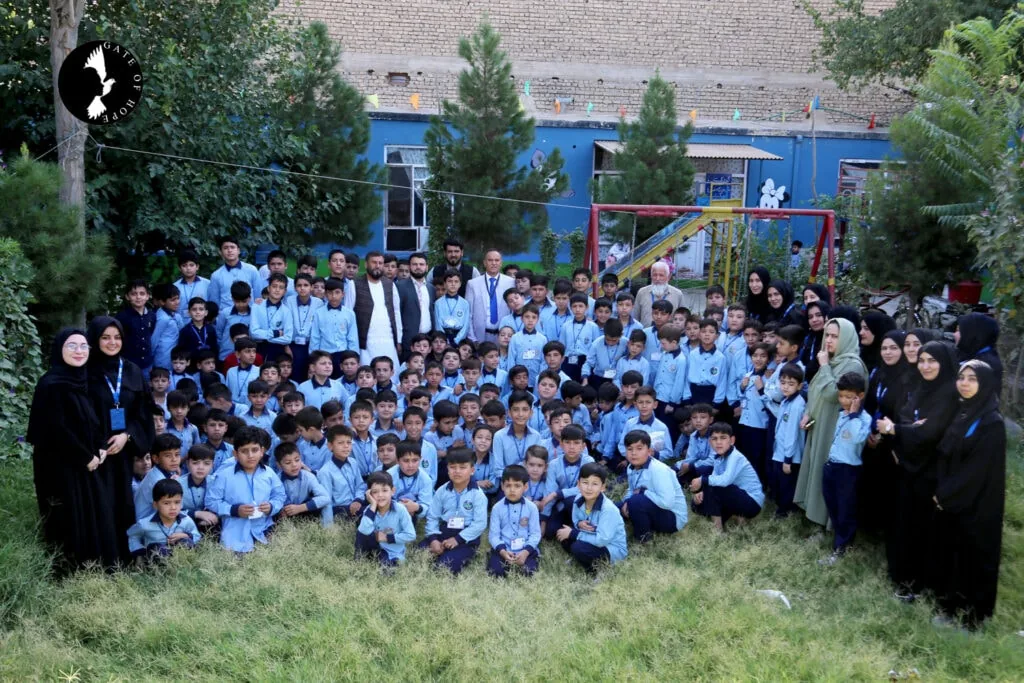
Surrounded by a courtyard full of boys in blue uniforms, Gate of Hope staff gathered for a group photograph that captures something simple and essential — an organisation that shows up, stands alongside students, and believes in the power of education to change lives.
Standing With Students: Gate of Hope Visits Frogh Aria School in Afghanistan
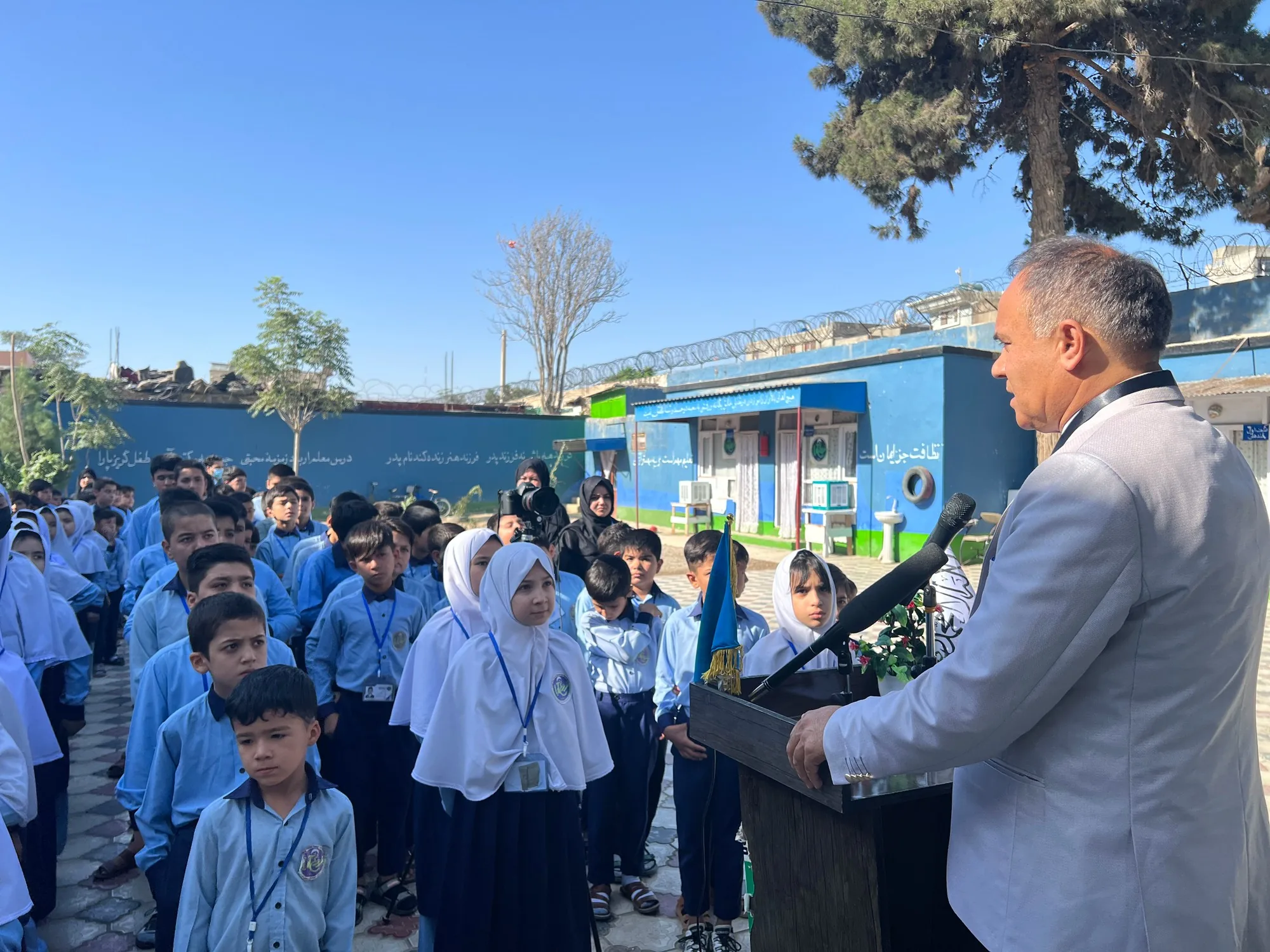
In the spacious courtyard of Frogh Aria School, Gate of Hope staff gathered shoulder to shoulder with over a hundred Afghan schoolboys wearing their light blue uniforms. Behind the group, a colorful school building, young planted trees, and a basic playground structure provided the setting for a moment of organizational solidarity. This group photograph reflects a foundational aspect of Gate of Hope's operational philosophy: showing up directly in local communities, standing alongside young learners, and working to preserve the ordinary infrastructure of childhood that Afghan students deserve. Rather than operating entirely from a distance, the organization emphasizes face-to-face engagement with students, local teachers, and school administrators to build lasting relationships rooted in mutual respect. This direct presence reinforces the simple yet essential truth that Afghan children are not forgotten and that their education remains a vital priority.
Direct Presence in the Courtyard of Frogh Aria School
On-site visits represent a vital mechanism for building trust and establishing genuine partnerships within Afghan communities. By walking through school gates and meeting directly with educational staff, Gate of Hope representatives observe actual classroom conditions, discuss administrative priorities, and evaluate institutional needs in real time. For the boys gathered in the schoolyard, seeing organizational representatives present inside their institution conveys an important institutional message: their dedication to learning is recognized, their ongoing efforts matter, and dedicated advocates are actively collaborating to support their educational environment. These direct interactions allow field teams to assess facility requirements and plan future program interventions effectively while respecting the dignity of local educators and students who work tirelessly under challenging circumstances.
The Broad Educational Environment Across Afghanistan
Educational delivery across Afghanistan takes place within a broader national landscape marked by severe structural constraints and acute infrastructure deficits. Joint humanitarian evaluations by international organizations indicate that over 2.13 million primary school-aged children remain out of school nationwide, with girls constituting approximately 60 percent of this unserved population. Furthermore, educational research reveals that nearly 90 percent of ten-year-old children in the country struggle to demonstrate basic reading comprehension skills. These stark statistics underline the overwhelming systemic pressures faced by primary institutions like Frogh Aria School as they attempt to deliver consistent instruction amidst widespread economic hardship, resource scarcity, and broader social challenges.
Physical infrastructure across the national school network also requires urgent rehabilitation and sustained material backing. National assessments reveal that nearly half of all primary schools in Afghanistan lack safe, durable buildings, while approximately 79 percent operate without regular access to electricity. Many educational facilities additionally lack adequate clean water supply, proper sanitation facilities, or protective boundary walls to keep students safe. In this fragile context, institutional visits by non-governmental entities play a pivotal role in documenting physical facility challenges and helping local administrations identify urgent infrastructural gaps that hinder children's safety, physical wellbeing, and basic academic concentration.
Logistics, Operational Assessment, and Local Partnerships
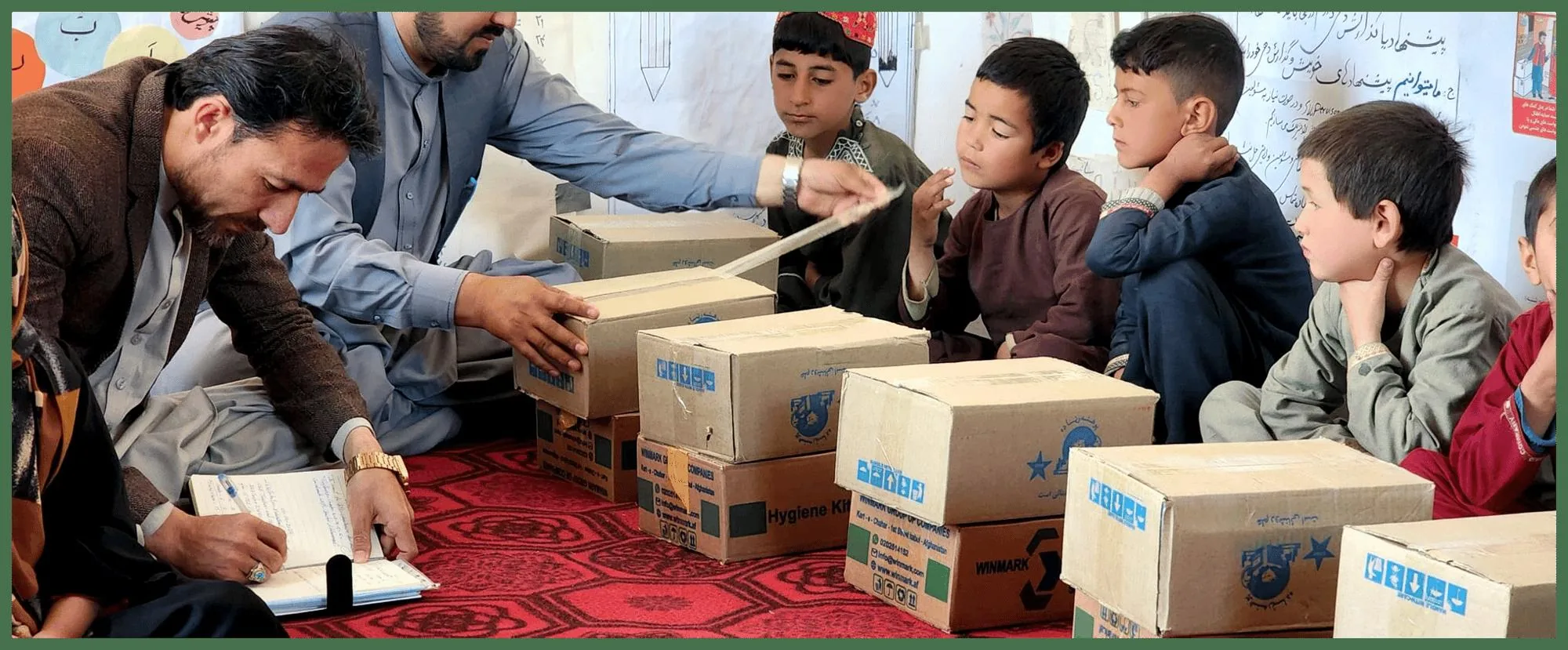
Practical field visits also establish a baseline for potential supply distributions, building repair planning, community engagement, and institutional advocacy. By directly inspecting learning environments—from outdoor recreation areas to indoor classrooms—Gate of Hope gathers verified observational data that informs future resource allocation. Engaging directly with educators allows field officers to celebrate institutional successes while documenting acute shortages in learning materials, desks, or structural boundaries. This methodical approach ensures that programmatic support remains grounded in observed operational reality rather than unverified remote assumptions, ensuring that assistance directly addresses the most pressing school needs.
Evaluating School Facilities and Identifying Needs
Planning and executing formal school visits requires rigorous coordination between field representatives, community leaders, and local academic staff. Before Gate of Hope field personnel visit a facility, organizational teams conduct preliminary planning to clarify the scope of engagement and coordinate with school administrators. During the visit at Frogh Aria School, staff members met with educators and administrative leaders to review ongoing academic activities, discuss material gaps, and observe existing playground and courtyard spaces. This collaborative dialogue helps ensure that future educational assistance is tailored specifically to the unique needs of the student body and school staff, promoting long-term institutional stability.
Responsible Stewardship, Accountability, and Invitation to Support
Maintaining ongoing support for primary schools in Afghanistan demands rigorous accountability, detailed reporting, and ongoing program monitoring. Gate of Hope remains deeply committed to tracking the effectiveness of its school engagements, ensuring that organizational resources directly enhance learning opportunities for Afghan youth. Following initial site visits, field officers document operational findings and integrate local administrative feedback into broader program strategies. While field visits alone cannot solve all systemic obstacles in the national education sector, maintaining a reliable presence helps build dependable operational relationships and ensures aid delivery remains grounded in real community needs and administrative realities.
Sustaining educational outreach across Afghan communities requires persistent financial support and collective action from global donors. Contributions made to Gate of Hope are pooled across essential program areas rather than restricted to isolated line items. Financial gifts of $10, $15, $25, or $50 contribute directly toward pooled resources that fund educational supply procurements, field transport and logistics, equipment maintenance, teacher support initiatives, and structural monitoring visits. Your generous support enables Gate of Hope to maintain an active field presence, stand alongside Afghan students, and promote consistent educational opportunities for children who need them most.
Ways to contribute
All gifts are pooled across the supplies, training, delivery, equipment, follow-up, and maintenance needed to run this work responsibly.
Examples describe pooled program support; they do not guarantee that a specific gift purchases a specific item or produces a fixed result.