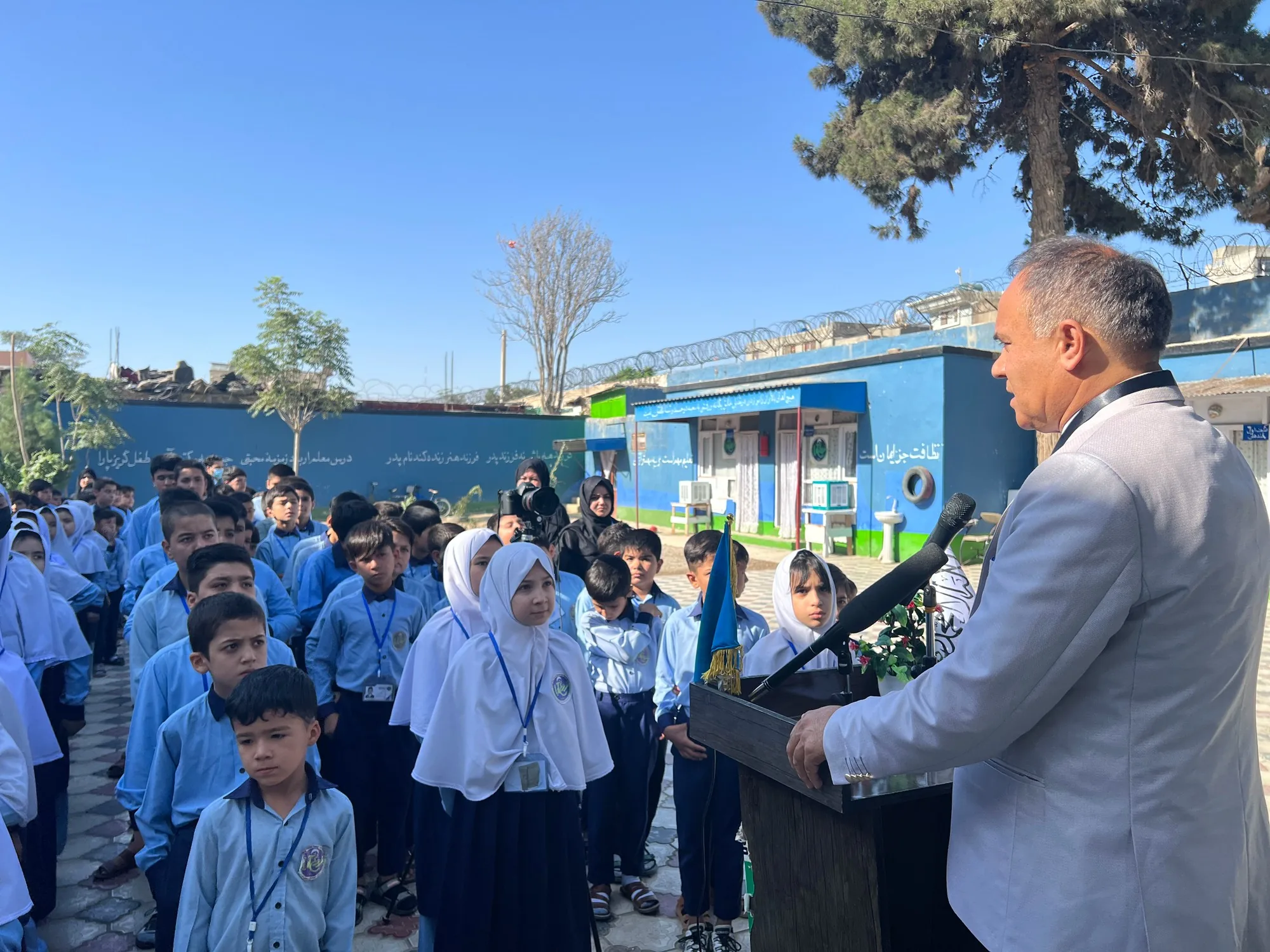
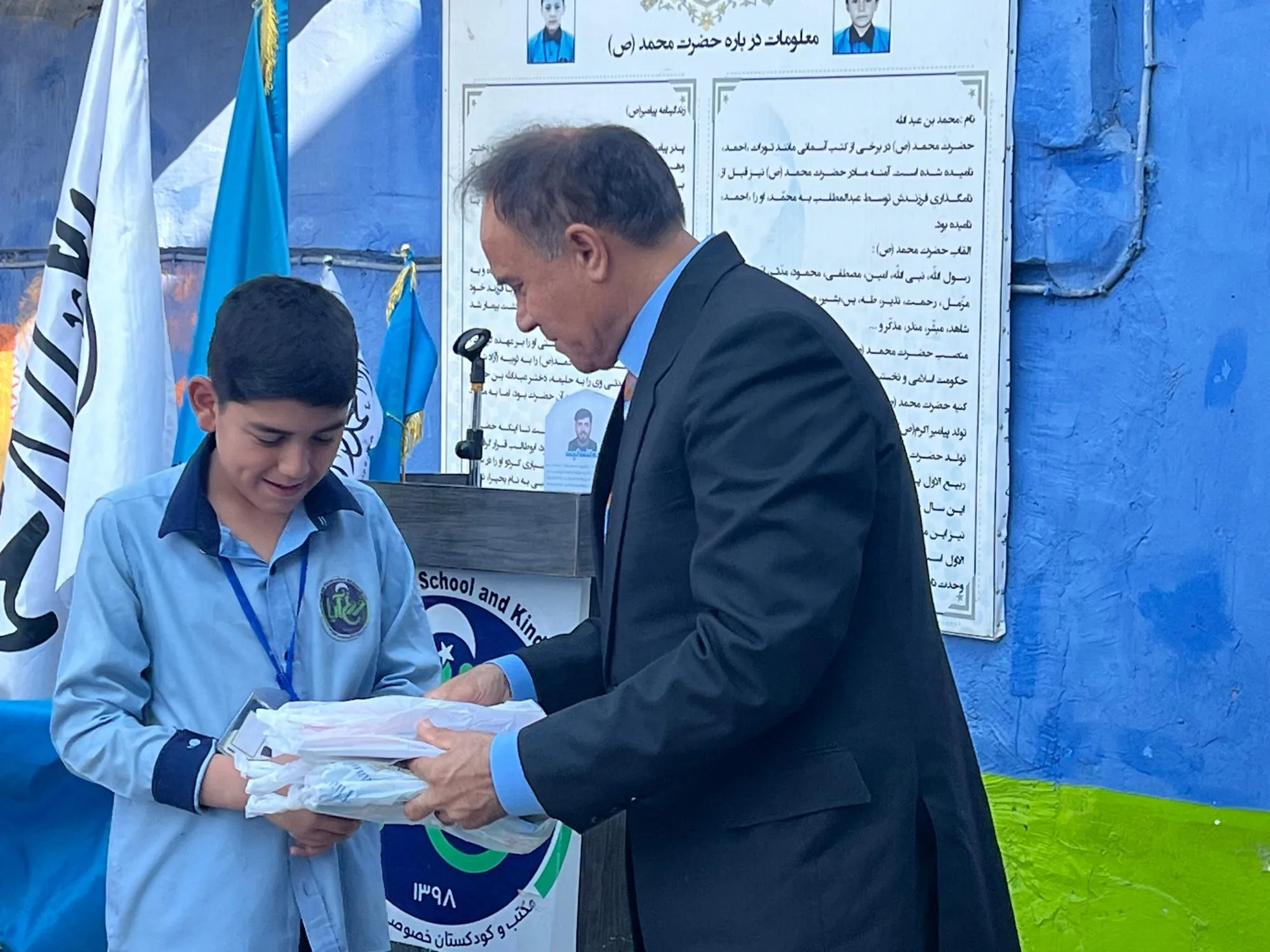
Outside an Afghan school, a Gate of Hope senior representative personally handed a package of learning materials to a young student in uniform — a direct, dignified delivery that ensures every child has what they need to learn.
Gate of Hope Delivers Learning Materials to Afghan Students
Outside the blue perimeter walls of an Afghan school, a senior representative from Gate of Hope met directly with a young student wearing a light blue uniform to hand over a carefully prepared package of learning materials. Positioned in front of official information boards, organizational flags, and attentive school personnel, this personal handover emphasized a direct and respectful model of aid delivery. By placing essential educational tools directly into the hands of the young boy, Gate of Hope demonstrated a practical commitment to supporting individual learning journeys. This deliberate, face-to-face interaction highlights the core approach of the organization: prioritizing direct delivery to ensure that every educational package reaches its intended student recipient without unnecessary intermediary delay.
Dignified Handovers Outside the School Grounds
Conducting supply handovers directly at the school site reinforces the formal educational context of the aid distribution. Rather than distributing packages in non-academic public spaces or distant distribution centers, making the handover on school grounds underscores that the provided materials are dedicated specifically to formal educational progress. The presence of school staff and institutional signage reinforces a collective commitment between the organization, the school administration, and the student body. For the young boy in uniform, receiving learning materials directly from senior field representatives highlights the community's investment in his academic growth and encourages consistent attendance throughout the academic year. Furthermore, conducting distributions on site acknowledges the student's active enrollment and presence within an established educational structure, treating the student as an active participant in their own learning rather than a passive recipient of aid.
Navigating Systemic Challenges in the Afghan Education Sector
Primary education in Afghanistan operates under immense national hardship, with acute socioeconomic crises threatening the basic functioning of community schools. According to humanitarian data published by international agencies, approximately 21.9 million people across Afghanistan require urgent humanitarian assistance, including over 11.6 million children. Educational statistics show that more than 2.13 million primary-school-aged children remain completely out of school nationwide. For those children who are enrolled, significant learning gaps persist, with UN reports documenting that nearly 90 percent of ten-year-old students are unable to read or comprehend a simple sentence, pointing to a severe shortage of learning resources.
School facilities across the country face critical physical infrastructure deficits that compromise daily educational delivery. Data from UNESCO indicates that nearly half of all primary schools lack safe, durable buildings, while 79 percent operate entirely without electrical power. Many schools also lack adequate sanitation facilities, functional water points, or secure boundary walls to protect students. Within this challenging operational context, direct distributions of learning packages provide vital material support to enrolled students, helping families mitigate the costs of schooling and enabling children to remain engaged in formal primary education despite widespread economic fragility. However, material provision alone cannot solve all institutional challenges; it serves as one targeted component within broader efforts to preserve educational access.
Supply Operations, Logistics, and Aid Accountability
Direct delivery mechanisms also enhance institutional accountability and build strong operational relationships with local educational authorities. Conducting on-site handovers allows Gate of Hope personnel to consult directly with teachers and headmasters regarding local attendance trends, structural needs, and supply shortages. These administrative discussions generate reliable observational data that informs future programming without relying on unverified second-hand accounts. By maintaining detailed operational records and direct contact with school leadership, Gate of Hope ensures that program activities remain strictly accountable to both local communities and global donors.
Protecting Resource Delivery Through Direct Distribution
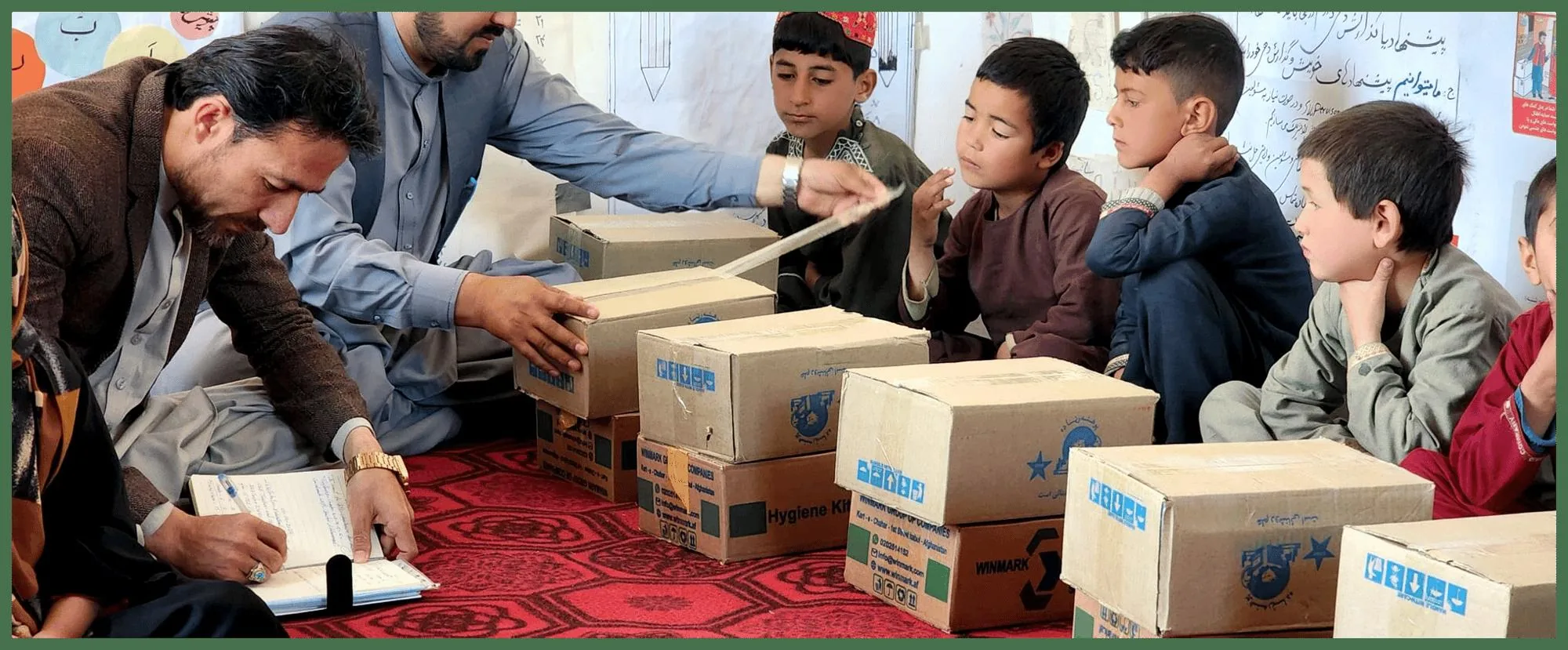
Designing and executing direct supply distributions requires meticulous operational coordination across logistics, procurement, and field delivery teams. Gate of Hope prioritizes direct distribution models specifically to eliminate administrative leakage and prevent material loss during transit. When supplies pass through multiple indirect intermediaries, materials risk being mislaid, delayed, or lost due to logistical complications or neglect. By managing supply chains internally—from initial procurement of books and stationery to final field delivery outside school gates—the organization maintains complete oversight of donor-funded resources. Senior representatives personally oversee distribution events, verifying that each package of learning materials is delivered directly to enrolled students in uniform in the presence of local school authorities.
Programmatic Rationale and Opportunities for Pooled Giving
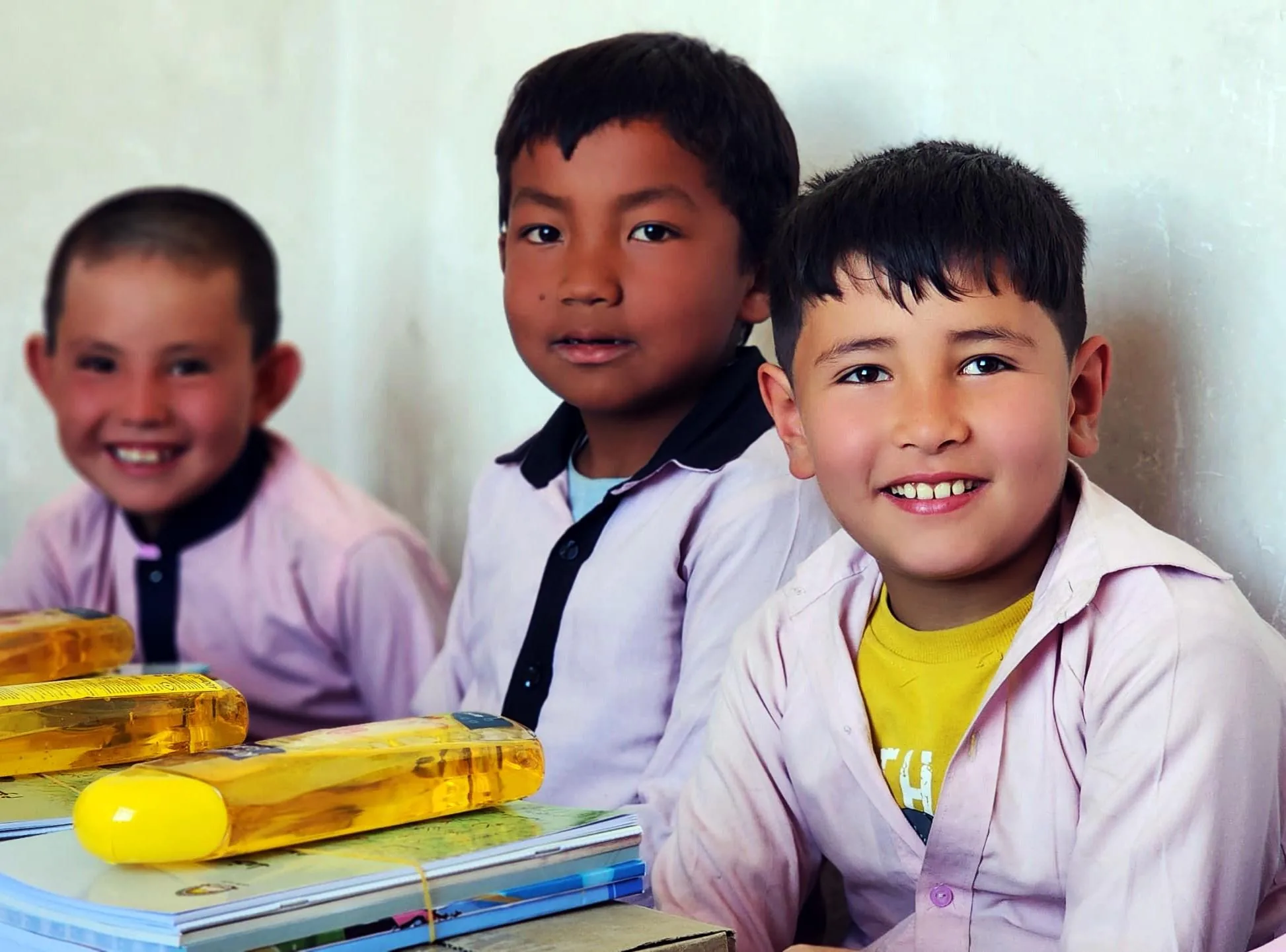
The fundamental rationale behind direct material support is to break down financial barriers that prevent children from remaining enrolled in primary school. When families face acute poverty, the expense of basic educational supplies like exercise books, pens, and reading materials can force parents to pull children out of school. By providing structured supply packages directly to students on school grounds, Gate of Hope aims to alleviate household financial pressure and sustain student retention. While direct distribution cannot resolve all structural or economic barriers facing households, ensuring that students possess basic stationery and books removes immediate material obstacles to daily classroom participation. Ongoing monitoring efforts by field teams assess whether distributed materials are actively utilized in classrooms, helping refine future supply specifications.
Sustaining direct educational deliveries across rural and urban communities in Afghanistan requires consistent, flexible funding. Financial contributions to Gate of Hope are pooled into dedicated program funds to support holistic educational assistance across multiple provinces. Gifts of $10, $15, $25, or $50 contribute directly toward pooled resources that cover supply procurements, fuel and transport logistics, staff travel for monitoring, local institutional coordination, and equipment maintenance. Your generous pooled donation empowers Gate of Hope field teams to continue visiting school gates, delivering essential packages, and standing shoulder to shoulder with Afghan children striving for a better future.
Ways to contribute
All gifts are pooled across the supplies, training, delivery, equipment, follow-up, and maintenance needed to run this work responsibly.
Examples describe pooled program support; they do not guarantee that a specific gift purchases a specific item or produces a fixed result.