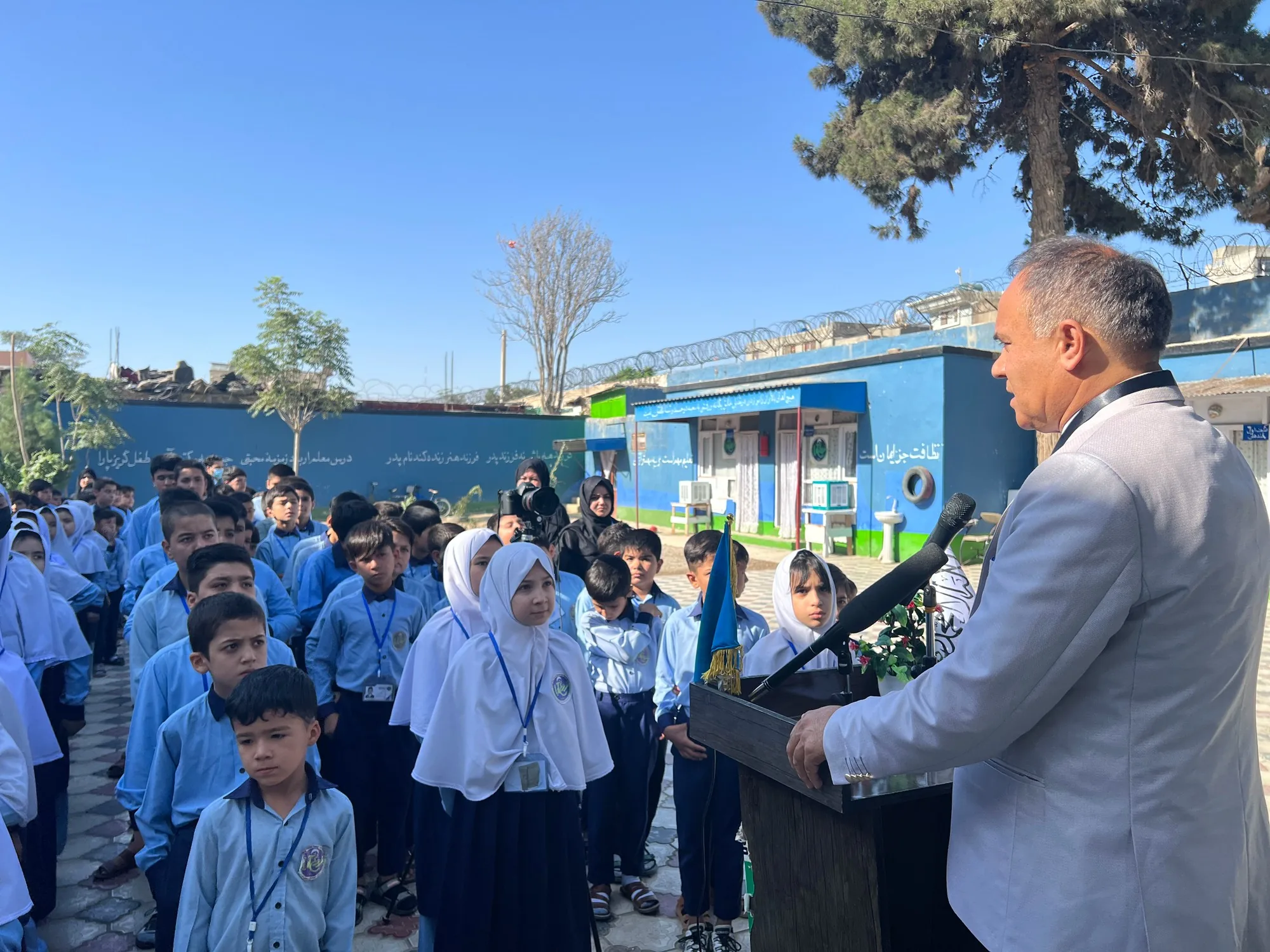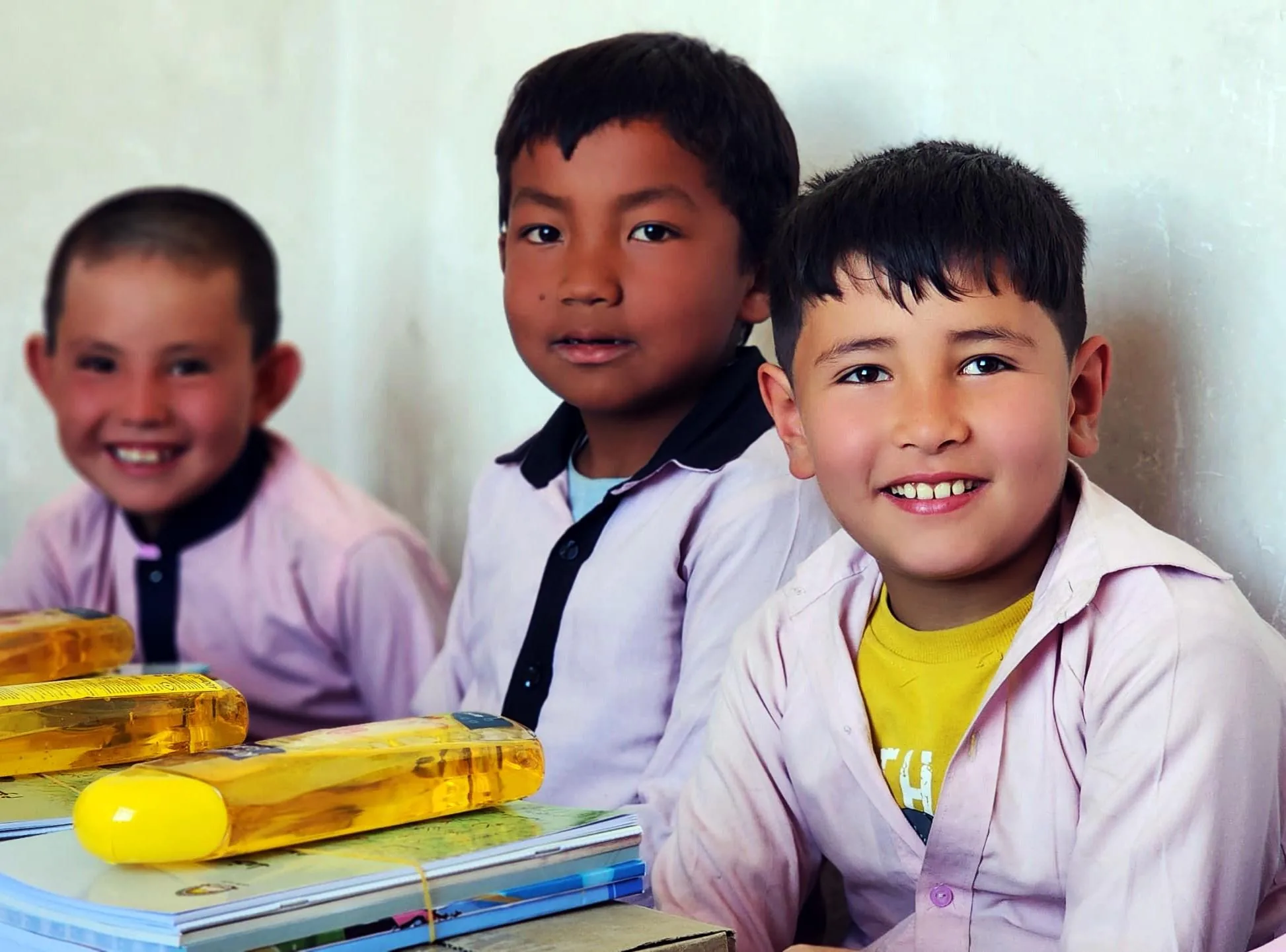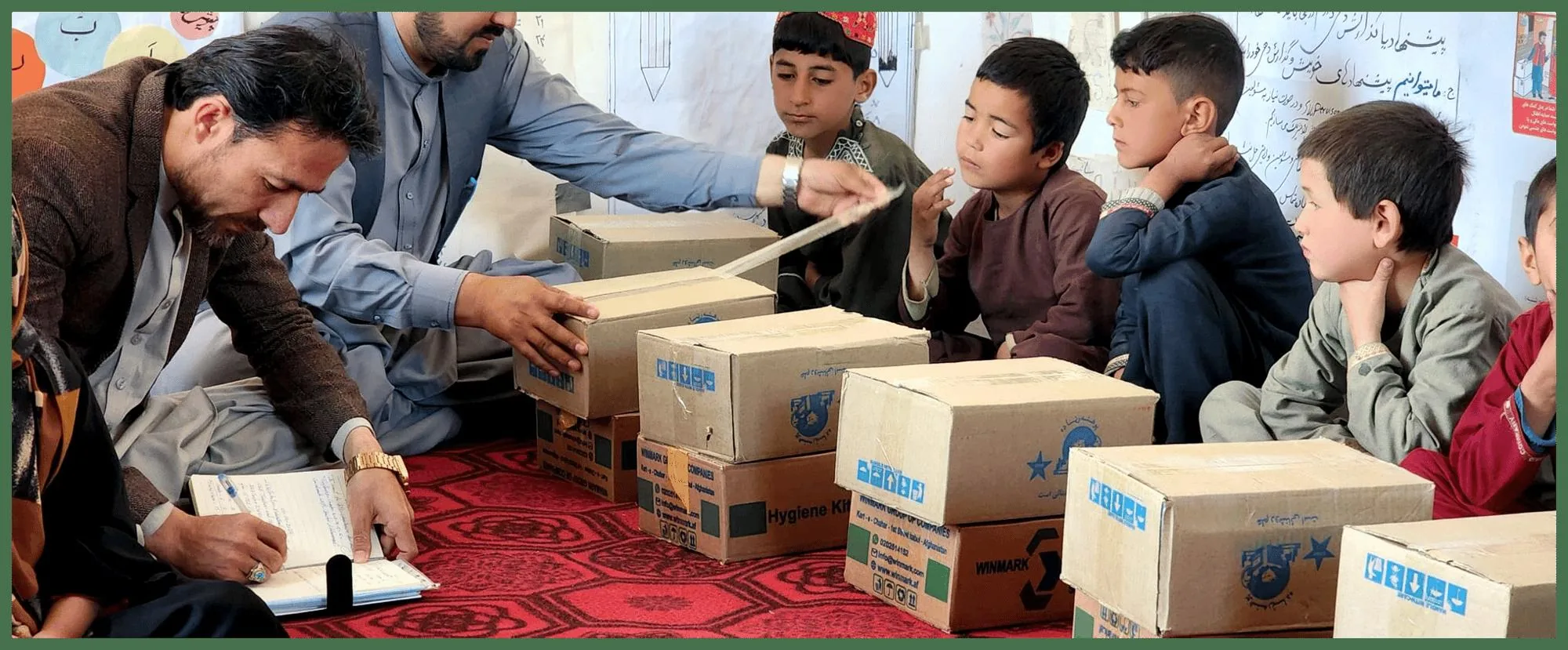
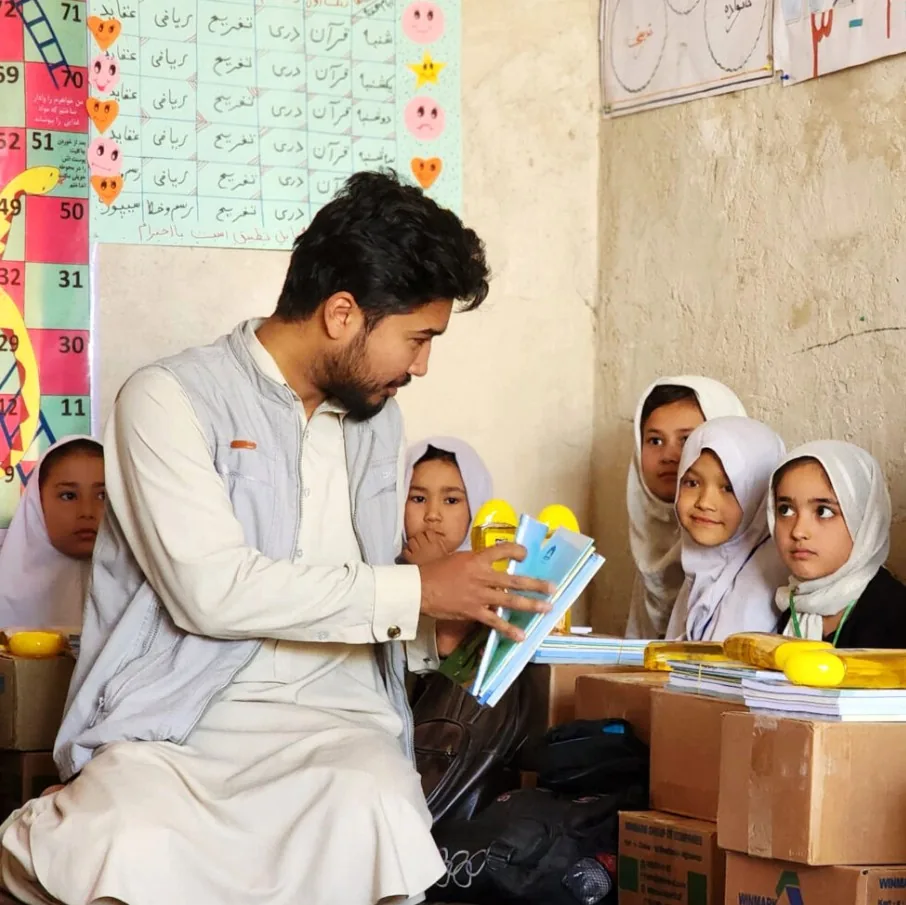
A Gate of Hope volunteer sat among Afghan schoolgirls in their classroom, placing notebooks and stationery kits into their hands — a quiet, powerful act of investment in the education of girls who refuse to stop learning.
Gate of Hope Brings School Supplies to Afghan Girls in Classrooms
Inside a modest Afghan classroom decorated with Dari-language educational charts and colorful learning posters, a Gate of Hope volunteer knelt quietly beside rows of young schoolgirls to deliver essential learning materials. Placing notebooks, pens, and complete stationery kits directly into the hands of attentive students, the volunteer carried out a direct act of educational support. The young girls watched the delivery intently, showing a quiet determination to focus on their lessons despite the severe external challenges surrounding them. This classroom interaction illustrates Gate of Hope’s dedicated effort to equip Afghan children with the physical tools necessary to actively participate in daily instruction.
Direct Supply Handover Within the Learning Environment
Distributing basic learning materials directly inside the primary classroom creates an immediate, dignified connection between educational advocates and young learners. By kneeling at desk level and handing stationery supplies directly to each child, field team members foster a supportive environment where students feel valued and encouraged. Having personal notebooks and functional writing instruments enables children to follow teacher instructions, complete daily assignments, and record critical lessons. For these primary schoolgirls, receiving dedicated supplies removes immediate physical barriers to classroom engagement, allowing them to focus fully on their basic literacy and numeracy exercises without the stigma or hindrance of lacking basic writing tools.
The Critical Status of Girls' Primary Education in Afghanistan
Access to formal learning for female students across Afghanistan remains exceptionally precarious, marked by intense systemic barriers and restrictive national policies. According to educational reports published by international agencies including UNESCO and UNICEF, more than 2.13 million primary-aged children are currently out of school nationwide, with girls comprising over 60 percent of this unserved population. Furthermore, secondary and tertiary educational opportunities for female students face sweeping prohibitions, placing unprecedented pressure on the primary education sector as the main venue where young girls can acquire foundational literacy and numeracy skills before reaching older age brackets.
Severe infrastructure shortages further compound the daily challenges experienced by female students in primary schools across the country. Official data indicates that nearly half of all primary schools lack protective boundary walls, safe structural buildings, or clean sanitation facilities, which heavily discourages attendance and impacts student health and privacy. Additionally, approximately 79 percent of schools operate without electricity. Despite these daunting institutional hurdles, primary-aged girls continue demonstrating remarkable resolve by showing up to classrooms daily. Providing basic educational kits directly inside these primary facilities helps bolster learning resilience within highly constrained community settings.
Logistics, Accountability, and Practical Aid Delivery
In-person supply handovers also provide field personnel with an opportunity to verify operational needs and gather feedback directly from local teachers. Observing classroom settings allows Gate of Hope officers to evaluate whether additional supplies, desk seating, or instructional posters are required to improve the learning environment. Local educators express immediate needs, allowing organizational coordinators to refine procurement schedules and plan future distributions effectively. This operational feedback loop strengthens community partnerships, preserves local ownership of educational spaces, and ensures that aid delivery remains entirely responsive to documented classroom requirements without imposing top-down assumptions.
Ensuring Direct Reach and Minimizing Administrative Loss
Executing effective classroom supply distributions requires careful logistical planning and close coordination with school headmasters and local community leaders. Gate of Hope field personnel manage supply chains by sourcing durable notebooks, pens, and writing utensils, packing them into standardized stationery kits, and transporting them directly to targeted primary schools. By conducting supply deliveries in person inside active classrooms, organizational representatives eliminate intermediary handoffs and ensure that every donor-funded kit reaches the exact child for whom it was intended. This hands-on methodology guarantees direct distribution, minimizes administrative overhead, and maximizes operational reliability.
Program Rationale and Invitation to Support Pooled Giving
The underlying rationale of Gate of Hope's educational programming rests on the firm conviction that providing basic learning materials is an essential prerequisite for educational retention. When children lack simple notebooks or writing pens, they face severe difficulties participating in classroom exercises and risk falling behind academically. By supplying these direct physical materials, Gate of Hope aims to prevent early primary dropout and maintain educational continuity. Regular post-distribution monitoring and school administrative check-ins help field teams track student engagement, address material shortages, and assess the ongoing utility of distributed learning kits over time.
However, distributions are not without limitations; material aid alone cannot resolve macro-level systemic restrictions, broader infrastructural deficits, or teacher wage shortages. Recognizing these boundaries ensures an honest, accountable approach to humanitarian relief. Sustaining direct classroom distributions across Afghan provinces depends upon the ongoing generosity of dedicated supporters. All financial donations to Gate of Hope are pooled into general program funds to address prioritized educational and operational needs across target communities.
Contributions of $10, $15, $25, or $50 help sustain pooled efforts that cover material procurements, secure transport and delivery logistics, monitoring staff travel, local community engagement, and supply storage facilities. Your pooled donation ensures that field personnel can continue walking into primary classrooms, putting essential learning tools directly into the hands of Afghan girls who refuse to give up on their education. Together, pooled contributions enable predictable, responsible assistance where it is needed most.
Ways to contribute
All gifts are pooled across the supplies, training, delivery, equipment, follow-up, and maintenance needed to run this work responsibly.
Examples describe pooled program support; they do not guarantee that a specific gift purchases a specific item or produces a fixed result.