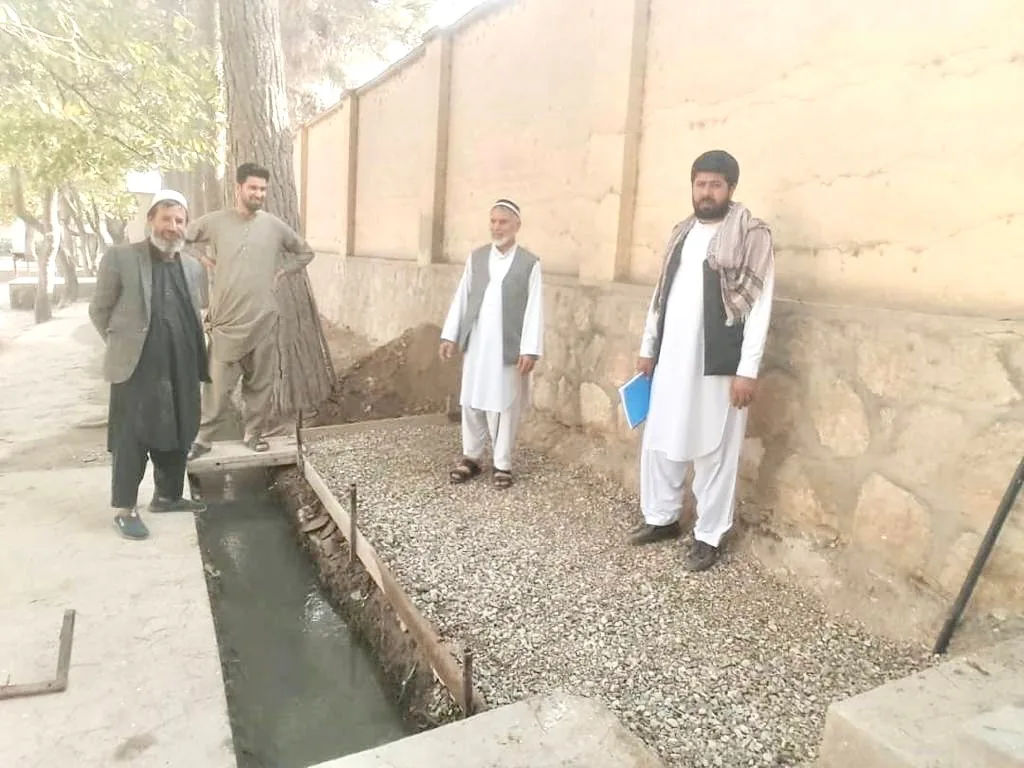
Gate of Hope partnered to repair a school's drainage system and sidewalk — ensuring children can attend class safely, even during heavy rains, by fixing the infrastructure they depend on every day.
Repairing School Infrastructure Through Community Partnership
In partnership with Gate of Hope, a targeted repair project fixed the school drainage system and sidewalk of an educational facility in Afghanistan. For months, dysfunctional drainage channels allowed rainwater to gather into stagnant pools across school courtyards. During heavy rainfall, these flooded grounds transformed pathways into deep mud, creating accessibility challenges for children attempting to reach their classrooms. By addressing these physical impediments, the intervention established a clean, secure, and dignified environment where students can pursue their daily studies without facing unnecessary environmental obstacles or safety hazards.
When educational facilities lack functioning water management systems, routine weather events escalate into major operational disruptions. Blocked drains and eroded footpaths obstruct access to classrooms and threaten building structures over time. Before restoration began, students navigated submerged courtyards and uneven surfaces every morning and afternoon. The collaborative undertaking brought together resources and practical expertise to overhaul school ground infrastructure, clearing clogged passages, reconstructing deteriorated pathways, and establishing proper water flow paths across the campus area.
Contextualizing Educational Infrastructure Deficits in Afghanistan
The physical challenges observed at this facility reflect broader structural issues affecting educational institutions across Afghanistan. According to reports by UNESCO, widespread infrastructure deficits continue to compromise learning environments throughout the country, with nearly half of all schools lacking safe buildings and essential water, sanitation, or boundary infrastructure. When school environments fall into disrepair, waterlogged grounds create disease risks, increase slippery conditions that cause injuries, and interrupt attendance during heavy precipitation. Maintaining functional infrastructure is directly connected to upholding children's basic right to learn in safety.
Investing in physical educational spaces sends a vital message to students and families. When school buildings and footpaths are left unmaintained, it undermines community confidence in formal education. Conversely, visible efforts to repair facilities demonstrate that children's safety and physical well-being are matters of serious concern. Physical improvements provide structural utility while reinforcing community morale, showing families that local learning environments remain worthy of care and protection.
Mitigating Seasonal Risks and Health Hazards
Seasonal rains present constant threats to unmaintained sites in Afghanistan. Without intentional water management, heavy rainfall saturates soil, causing foundation erosion and persistent mud accumulation. Stagnant surface water also poses health risks to young children vulnerable to waterborne illnesses. Reconstructing drainage channels and directing surface runoff away from high-traffic school zones creates a healthier physical sanctuary, reducing exposure to stagnant runoff and minimizing weather-related school disruptions throughout the wet season.
Technical Scope of Drainage Reconstruction and Sidewalk Restoration
The physical execution of the school drainage system and sidewalk restoration involved systematic civil repairs tailored to the school layout. Masons and project teams cleared sediment and blockages from existing drainage paths before reconstructing broken masonry walls and channel linings. Regrading work was conducted across adjacent soil surfaces to establish intentional slopes, ensuring that torrential rainwater naturally flows into reinforced channels rather than accumulating near classroom foundations. These adjustments protect walking surfaces and underlying physical structures.
Simultaneously, the rehabilitation of the surrounding sidewalk provided a safe, stable pedestrian conduit from the school entrance to classroom doorways. Workers removed cracked concrete and backfilled eroded depressions with compacted aggregate before laying smooth, resilient surface materials. Broken, uneven walkways present hazards to active children during arrival and dismissal hours. Engineering a uniform, properly graded sidewalk established an accessible pathway that accommodates all students, including those with physical mobility challenges who previously found submerged terrain impassable.
Sustaining Local Infrastructure and Community Ownership
Long-term sustainability in community infrastructure depends heavily on local engagement and maintenance practicalities. Rather than temporary fixes, the project focused on installing robust, maintainable drainage features that local school caretakers can keep clear with standard hand tools. Engaging local workers in construction activities built familiar knowledge regarding pathway maintenance, helping ensure that minor blockages or wear can be addressed promptly by the community before severe structural damage recurs.
Supporting Essential Infrastructure Through Pooled Community Support
Gate of Hope remains committed to executing practical community projects that deliver immediate benefits to children and families in Afghanistan. Structural improvements—whether repairing a rural drainage network or rebuilding a broken walkway—require continuous logistics, materials, and specialized labor. All financial contributions designated for Gate of Hope programs are pooled into centralized operational funds. This pooled funding structure allows our organization to flexibly allocate resources where community needs are most urgent, ensuring materials, transportation, technical expertise, and monitoring are reliably supplied across various aid initiatives.
Every contribution plays a valuable role in maintaining vital community spaces and protecting access to education. For example, a contribution of $10 helps support pooled resource allocation for essential construction hand tools or basic cleaning supplies needed to maintain clear drainage passages. A gift of $15 contributes to pooled funds for transport and site delivery of raw materials like cement, gravel, and masonry stone. A donation of $25 assists in funding technical assessments, worker stipends, or safety equipment for local repair teams. A larger contribution of $50 supports broader pooled allocations for follow-up site inspections, structural maintenance, and comprehensive community infrastructure projects.
Ensuring that children can walk to school safely and learn in clean, secure environments requires persistent commitment. By contributing to Gate of Hope's pooled humanitarian funds, supporters directly strengthen community resilience and help protect educational opportunities for Afghan youth. We invite partners, community members, and global supporters to join us in sustaining this vital work, helping transform compromised spaces into safe pathways of opportunity and hope.
Ways to contribute
All gifts are pooled across the supplies, training, delivery, equipment, follow-up, and maintenance needed to run this work responsibly.
Examples describe pooled program support; they do not guarantee that a specific gift purchases a specific item or produces a fixed result.