In Hazrat Sultan District, Gate of Hope combines sewing equipment, practical guidance, and local follow-up to help Afghan women pursue home-based livelihoods.
Why vocational support matters for women in Afghanistan
In Hazrat Sultan District of Samangan Province, many women have skills, determination, and responsibilities to their families, yet few realistic paths to paid work. Distance from larger markets, limited household resources, and restrictions on women’s movement and participation can make formal employment difficult or impossible. Home-based tailoring cannot remove every barrier, but it can offer a practical way for a woman to use her abilities within the circumstances she faces.
The wider national context makes this work urgent. UNDP reported that only seven percent of women were employed outside the household in 2024. UN Women has also reported that nearly eight in ten young Afghan women were excluded from education, employment, and training. These figures describe a profound loss of opportunity, but they do not define Afghan women. Across the country, women continue to seek safe, locally appropriate ways to learn, work, and contribute to their households.
Gate of Hope’s women’s empowerment work responds at a practical level: connecting vocational support with tools that can be used close to home. In Samangan, sewing machines and tailoring supplies can help participants develop a home-based livelihood, serve customers in their communities, and strengthen their ability to contribute to everyday household needs. The goal is not a short-lived handout. It is a carefully supported starting point built around dignity, agency, and useful skills.
How the Samangan sewing machine distribution works
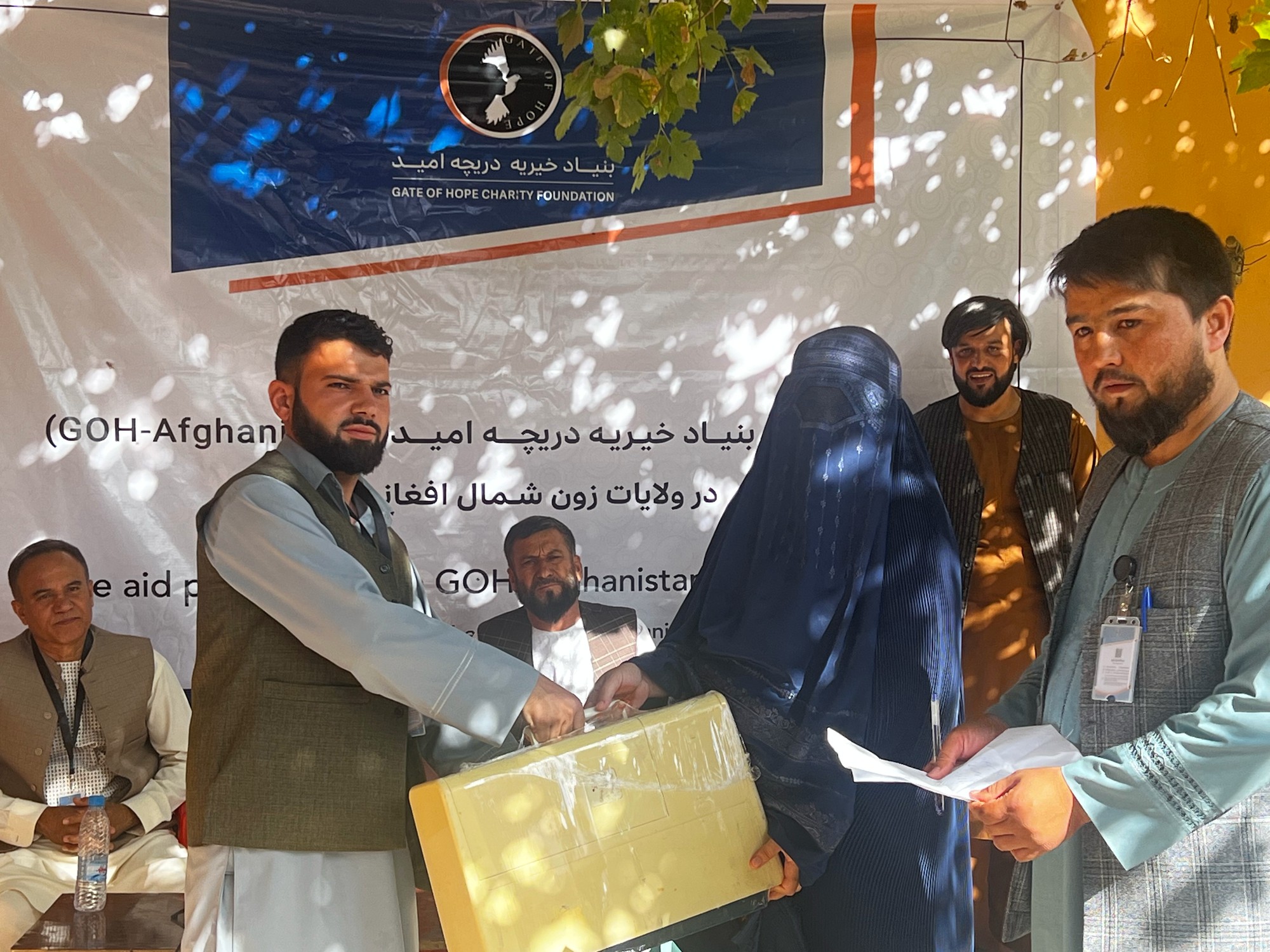
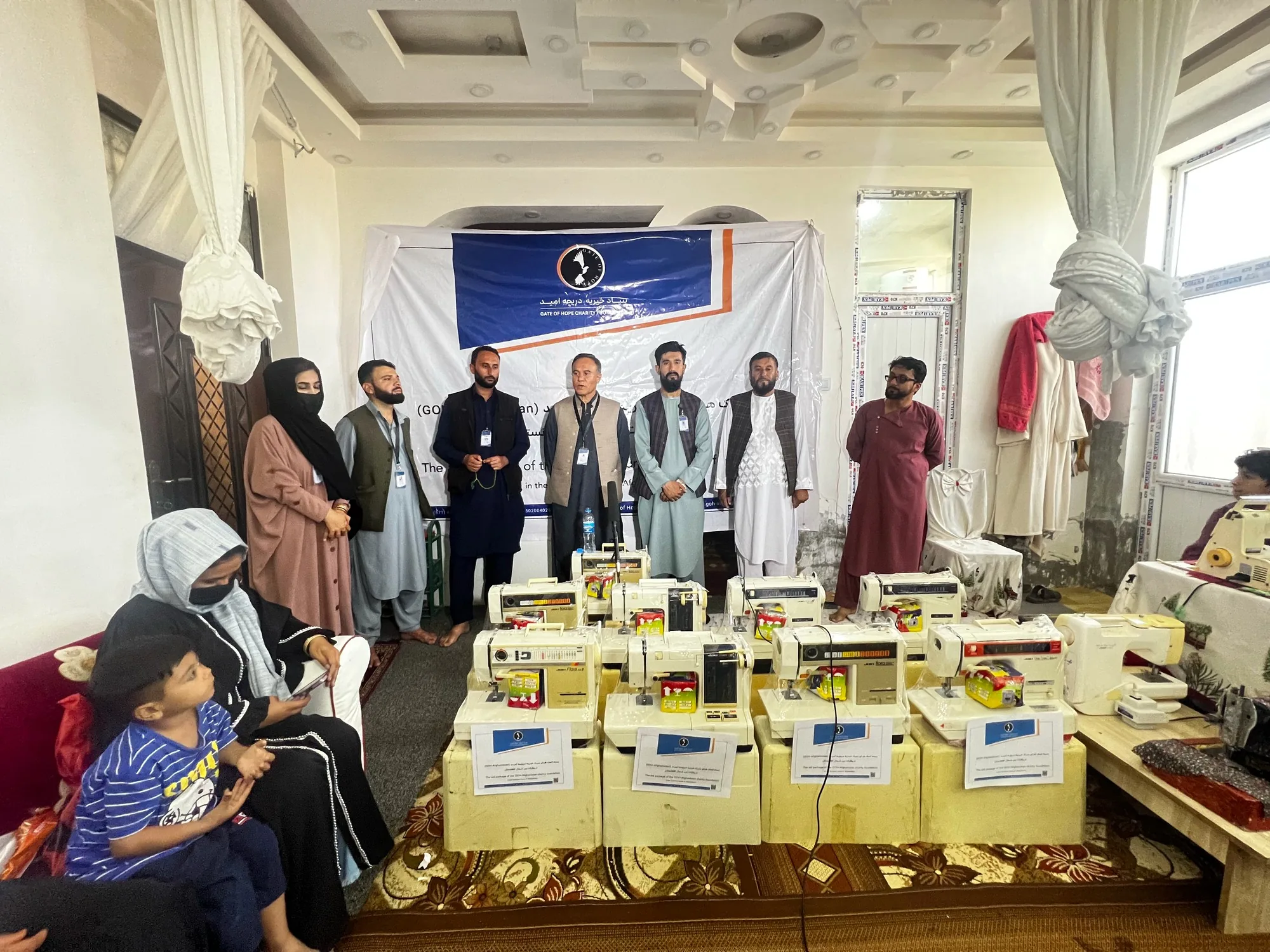
A sewing machine is most useful when it reaches a woman who is ready to use it and has the practical support to begin. Gate of Hope therefore approaches distribution as more than the delivery of equipment. The process considers local circumstances, coordinates with people in the community, and connects machines with guidance and essential supplies. This helps participants move from receiving a tool to putting that tool into productive use.
Local implementation also matters. Hazrat Sultan District includes communities where travel and access can be difficult. Organizing a distribution requires communication, transport, careful handling of equipment, and attention to whether each recipient understands how to operate and care for the machine. Gate of Hope’s local presence makes it possible to work with community knowledge rather than impose a distant, one-size-fits-all model.
From local assessment to follow-up
The work begins by identifying women whose circumstances and interest align with the program. Gate of Hope does not present every sewing machine as a guaranteed business or promise a fixed income. Demand, experience, time, access to materials, and local purchasing power differ from one household to another. Instead, the program provides a useful asset and practical foundation from which a participant can develop her own path.
After distribution, follow-up and accountability help protect the value of the support. Checking whether equipment arrived in usable condition, listening to participant feedback, and identifying maintenance or supply needs are essential parts of responsible delivery. These steps help Gate of Hope learn what is working, address problems where possible, and improve future vocational training and sewing machine distributions in Afghanistan.
What a home-based tailoring livelihood can change
For a woman with tailoring skills, access to her own machine can create room to take local orders, repair clothing, or produce garments from home. That flexibility is important where travel is restricted, formal workplaces are unavailable, or care responsibilities make outside employment unrealistic. Earnings are never guaranteed, but ownership of a productive tool can reduce a major barrier between an existing skill and the chance to use it.
The effect can extend beyond one transaction. Income from tailoring may help a participant contribute toward food, clothing, education, healthcare, or other household priorities according to her family’s needs. Just as importantly, completing valued work can strengthen confidence and decision-making. Gate of Hope centers these women as workers and community members with knowledge of their own lives—not as passive recipients of charity.
Progress measured with honesty and dignity
Responsible humanitarian storytelling must leave room for complexity. One machine does not erase Afghanistan’s economic crisis or the restrictions facing women. Results will differ, and sustainable livelihoods take time, customers, materials, practice, and a functioning local market. Gate of Hope therefore focuses on credible progress: whether a participant can use the equipment, apply her skills, respond to local demand, and pursue income with greater independence.
That approach respects both participants and donors. It avoids turning a woman’s life into a promise that no organization can guarantee. Instead, it recognizes a concrete step forward: a practical resource placed in the hands of someone prepared to work, supported by local coordination and follow-up. In a setting where opportunities for women have narrowed dramatically, that step can carry real value.
Help expand women’s economic opportunity in Samangan
Donations to Gate of Hope are pooled to support the full program rather than assigned as a guaranteed purchase of one specific item. A contribution may help cover tailoring materials, practical training, safe delivery, sewing equipment, follow-up, or maintenance. Pooling funds allows the local team to respond to current needs and use resources where they can support implementation most effectively.
Every level of support can contribute to that shared effort. A $10 gift can join other donations toward essential supplies; $15 can strengthen the pool used for training and local coordination; $25 can help with delivery, materials, or equipment care; and $50 can make a larger contribution toward the combined cost of equipment and program support. These are illustrations of pooled impact, not claims that a set amount buys a particular machine or guarantees an outcome.
Afghan women should have the opportunity to build livelihoods with safety, dignity, and choice. By supporting Gate of Hope, donors help extend practical vocational resources to women who are ready to use them. Give today to help strengthen women’s economic opportunity in Samangan—and to stand behind locally led work that treats every participant with respect.
Ways to contribute
All gifts are pooled across the supplies, training, delivery, equipment, follow-up, and maintenance needed to run this work responsibly.
Examples describe pooled program support; they do not guarantee that a specific gift purchases a specific item or produces a fixed result.