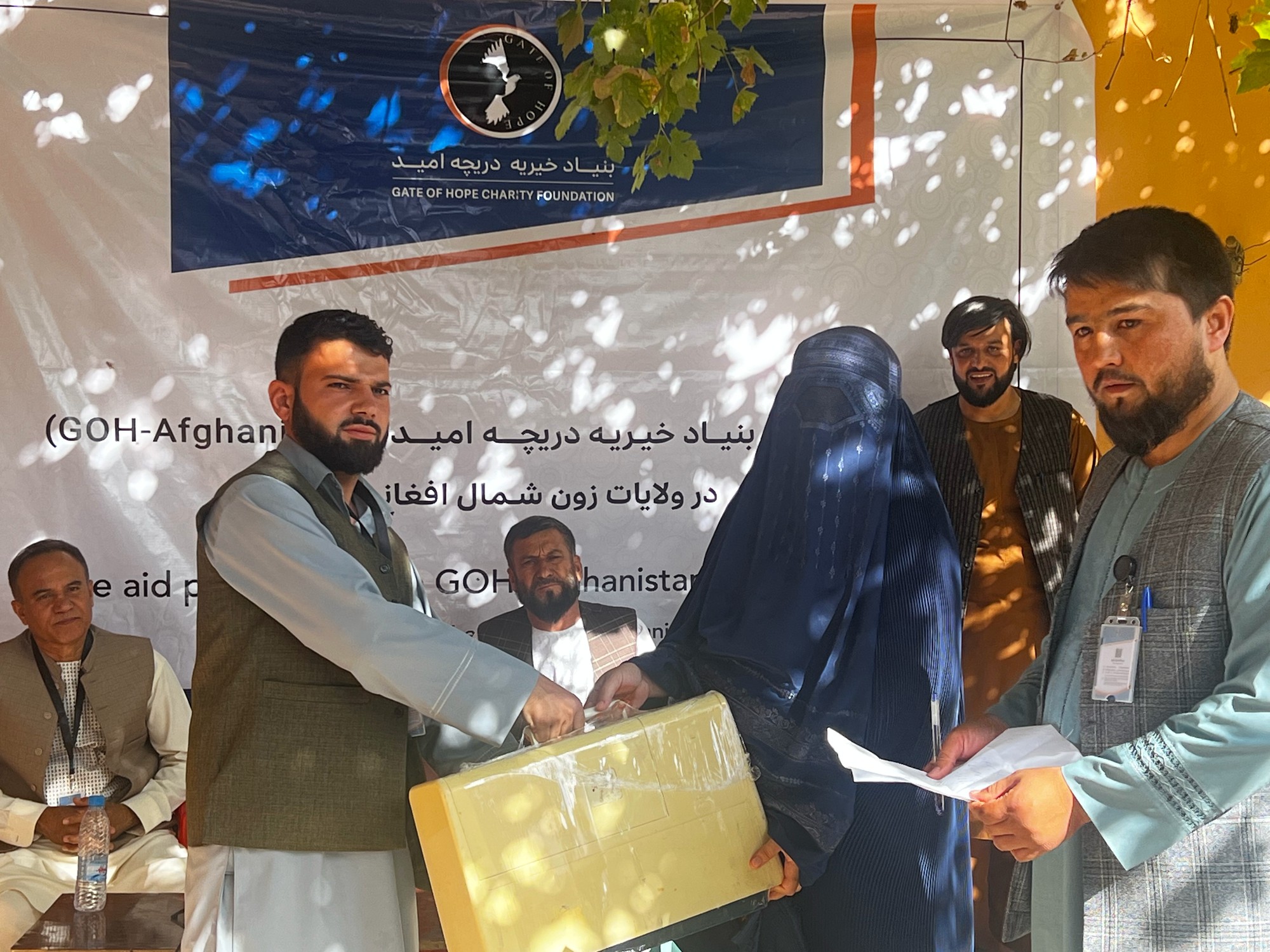
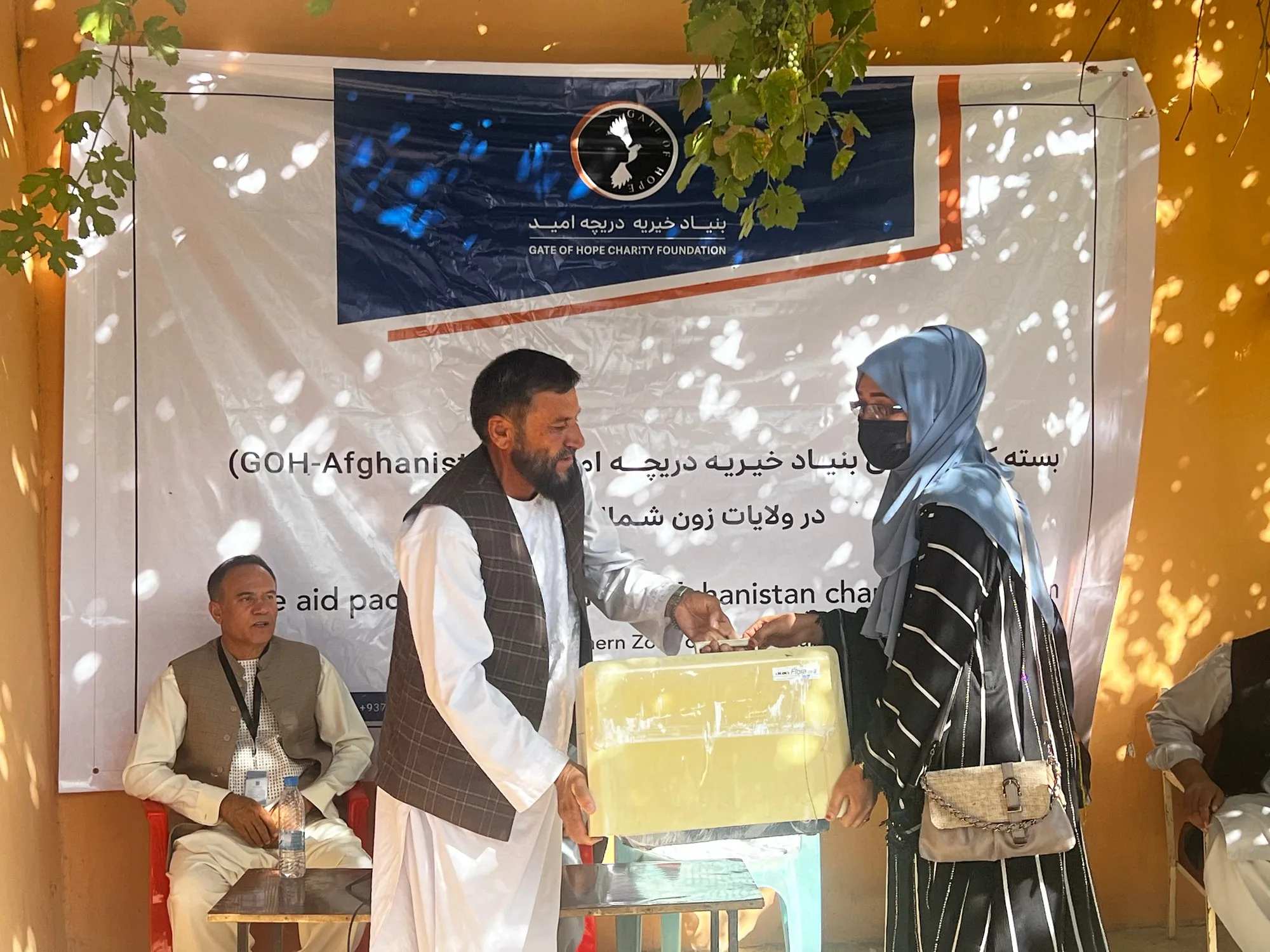
Gate of Hope distributed sewing machines to women in Samangan province, Afghanistan, giving them the tools to build sustainable livelihoods, support their families, and move toward economic self-reliance.
Direct Distribution of Sewing Machines in Samangan Province
In a modest gathering hall in Samangan province, Gate of Hope organized a practical distribution event to deliver essential tailoring equipment directly to local women. During this initiative, women assembled to receive durable sewing machines designed to help them convert existing artisan skills into regular home-based income. For families living across northern Afghanistan, where formal employment opportunities are severely restricted, access to functional, high-quality machinery represents a vital step toward domestic financial stability and economic resilience. Each machine distributed during the event was selected as a long-lasting production tool suited for garment fabrication, clothing repair work, and the creation of traditional textile goods for local commercial sale. Rather than providing short-term emergency aid, this initiative delivers practical capital assets that empower women to earn income directly from their homes while continuing to manage essential domestic and family care responsibilities.
Establishing Domestic Livelihoods Through Practical Equipment
Tailoring and textile production remain among the few viable, culturally accepted economic activities that women in northern provinces can pursue safely within their households or immediate community circles. By distributing sewing machines in Samangan province, Gate of Hope supports women seeking to establish independent domestic micro-enterprises. These sewing machines act as practical revenue-generating tools that transform manual crafting expertise into reliable household income, establishing a foundation for long-term economic participation. The distribution event reflects Gate of Hope’s dedicated focus on practical, dignified humanitarian support that honors the initiative, skill, and agency of Afghan women working to support their households under challenging economic conditions.
Economic Realities and Restricted Opportunities for Afghan Women
To fully understand the significance of distributing sewing machines in Samangan, it is necessary to examine the broader economic landscape currently shaping life for families across Afghanistan. According to economic assessments from the United Nations Development Programme (UNDP), female employment outside the household remains severely constrained, with female labor force participation stagnating at approximately 7 percent, compared to 84 percent among men. In northern provinces like Samangan, economic options for women have been further limited by systemic socio-economic challenges, geographic isolation, and constrained access to formal commercial markets. As a consequence of these factors, many households depend on fragile informal work or uncertain seasonal agricultural labor to secure daily necessities.
In this challenging socio-economic environment, home-based garment production serves as much more than a supplementary activity; it represents a primary mechanism for household economic survival. When opportunities for formal employment and advanced education are constrained, micro-enterprises centered around tailoring, mending, and textile production become vital lifelines for family stability. Generating home-based income enables mothers and caregivers to contribute directly to purchasing essential household items, such as nutritious food, winter heating supplies, basic medicines, and educational materials for young children, helping families withstand persistent economic pressure and widespread poverty.
Program Methodology, Training Rationale, and Local Delivery
Gate of Hope’s approach to women's economic empowerment is built on the core principle that delivering physical equipment must be accompanied by comprehensive community support and practical skill enhancement. Distributing machinery alone cannot create a resilient small business. Therefore, our program strategy pairs the delivery of sewing machines with practical skill refinement, business mentorship, and peer collaboration networks. This integrated approach ensures that recipients are equipped not only to operate their machinery effectively but also to manage daily production schedules, source quality fabrics at fair prices, handle basic mechanical maintenance, and connect with neighborhood markets.
Accountable Program Monitoring and Maintenance Planning
To ensure that distributed machinery produces long-term economic benefits, Gate of Hope integrates transparent program monitoring and regular follow-up visits into its operational framework. Field staff work closely with local participants to observe machine performance, address operational obstacles, and evaluate how tailoring activities contribute over time to household income and well-being. Recognizing that machine wear, technical repairs, and fluctuating fabric prices present ongoing real-world challenges, future program planning emphasizes local maintenance support and sustainable resource sourcing. Honest non-profit reporting requires acknowledging that local market demand and economic conditions naturally influence monthly earnings. Gate of Hope remains committed to monitoring these factors transparently, gathering participant feedback, and continuously improving program delivery to ensure community resources yield maximum impact.
Sustaining Pathways to Independence and Urgency for Support
Sustainable economic self-reliance cannot be fully achieved through a single equipment distribution, but providing functional tools alongside structured community support creates a genuine foundation for long-term independence. The women who received sewing machines in Samangan represent thousands of determined individuals across northern Afghanistan who possess the skill, perseverance, and dedication needed to build self-sustaining home businesses. They do not seek ongoing charitable relief; they ask for practical opportunities, functional tools, and fair market access so they can earn an independent living and provide for their families with dignity.
Expanding these micro-enterprise initiatives to serve more women and families across Samangan and surrounding northern provinces requires sustained community collaboration and international support. Gate of Hope invites donors, advocates, and institutional partners to join us in expanding these practical economic opportunities. Contributions to our economic empowerment fund are pooled to support essential program components, including durable equipment procurement, logistics and safe distribution networks, technical training workshops, and ongoing post-distribution monitoring. By supporting these pooled resources, partners help Afghan women convert their practical skills into sustainable livelihoods, fostering dignified economic independence across entire communities.
Ways to contribute
All gifts are pooled across the supplies, training, delivery, equipment, follow-up, and maintenance needed to run this work responsibly.
Examples describe pooled program support; they do not guarantee that a specific gift purchases a specific item or produces a fixed result.