
The Human Perspective · Environment & Humanity
When Forests Burn, Humanity's Shared Wealth Turns to Ash
Are We Investing Enough to Protect People, Nature, and Future Generations?
By Saboor Kamal
Virginia, United States of America · November 2026
Published
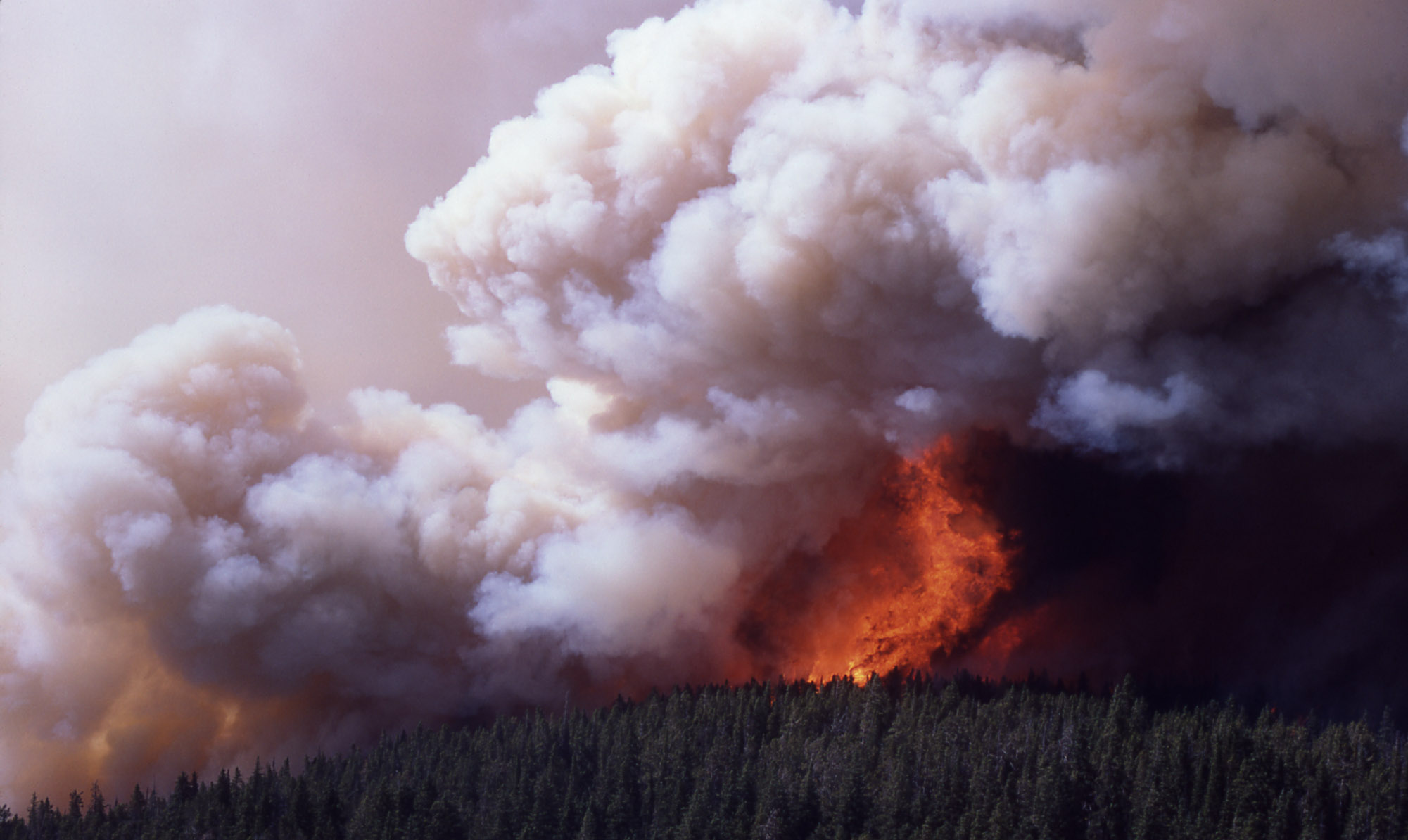
Crown fire and billowing smoke on Mirror Plateau, Yellowstone National Park, 1988. An aerial view of the historic fires.
NPS Photo by Jim Peaco · NPS source, #12146 · Public domain (NPS usage terms)
Visual context: all seven photographs document Yellowstone National Park in 1988. These are historical illustrations, not images of a current wildfire.
An Opening Question for Our Shared Conscience
Imagine a family waking in the middle of the night to an emergency alert. Within minutes, smoke covers the sky, flames move closer, and the parents have time to take only their children, a few essential documents, and a small part of their lives. Behind them, their home, trees, animals, farmland, and the memories of a lifetime may be reduced to ash.
When a forest burns, it is not only trees that disappear. Air is polluted; water, soil, and wildlife habitat are damaged; people are forced from their homes; firefighters put their lives at risk; and future generations lose part of humanity's shared natural wealth.
At such moments, a difficult question confronts the world: with all our scientific and economic capacity, are we investing enough to protect life?
We have traveled into space, built satellites, advanced artificial intelligence, and produced remarkably complex machines. Yet during major wildfires, thousands of responders, dozens of helicopters and aircraft, and hundreds of ground vehicles may struggle for days or weeks to contain the flames. This question is not an accusation against any country or people. It is a human invitation: if we can build powerful technologies, can we direct more of that capacity toward protecting people, nature, and the future?
Wildfires: A Crisis Beyond One Place
Wildfires do not respect political borders. Their smoke can travel hundreds or even thousands of miles, lowering air quality and affecting children, older people, and those with health conditions far from the fire itself. Flames can threaten roads, power networks, water systems, farms, businesses, and homes. Even after the fire is out, communities face the costs of evacuation, medical care, cleanup, and rebuilding.
Forests are not simply collections of trees. They help regulate climate, protect soil, store carbon, and sustain wildlife habitats. Their destruction is not a short-term wound that disappears the next day; nature may need years or decades to recover part of what was lost.
Climate change, drought, extreme heat, and land-use change have increased the risk of severe fires in many places. This does not mean every fire is the same, or that every natural fire can or should be eliminated. In some ecosystems, fire is part of the natural cycle. But there is a profound difference between a fire that an ecosystem can absorb and a disaster that threatens lives, homes, and public infrastructure.
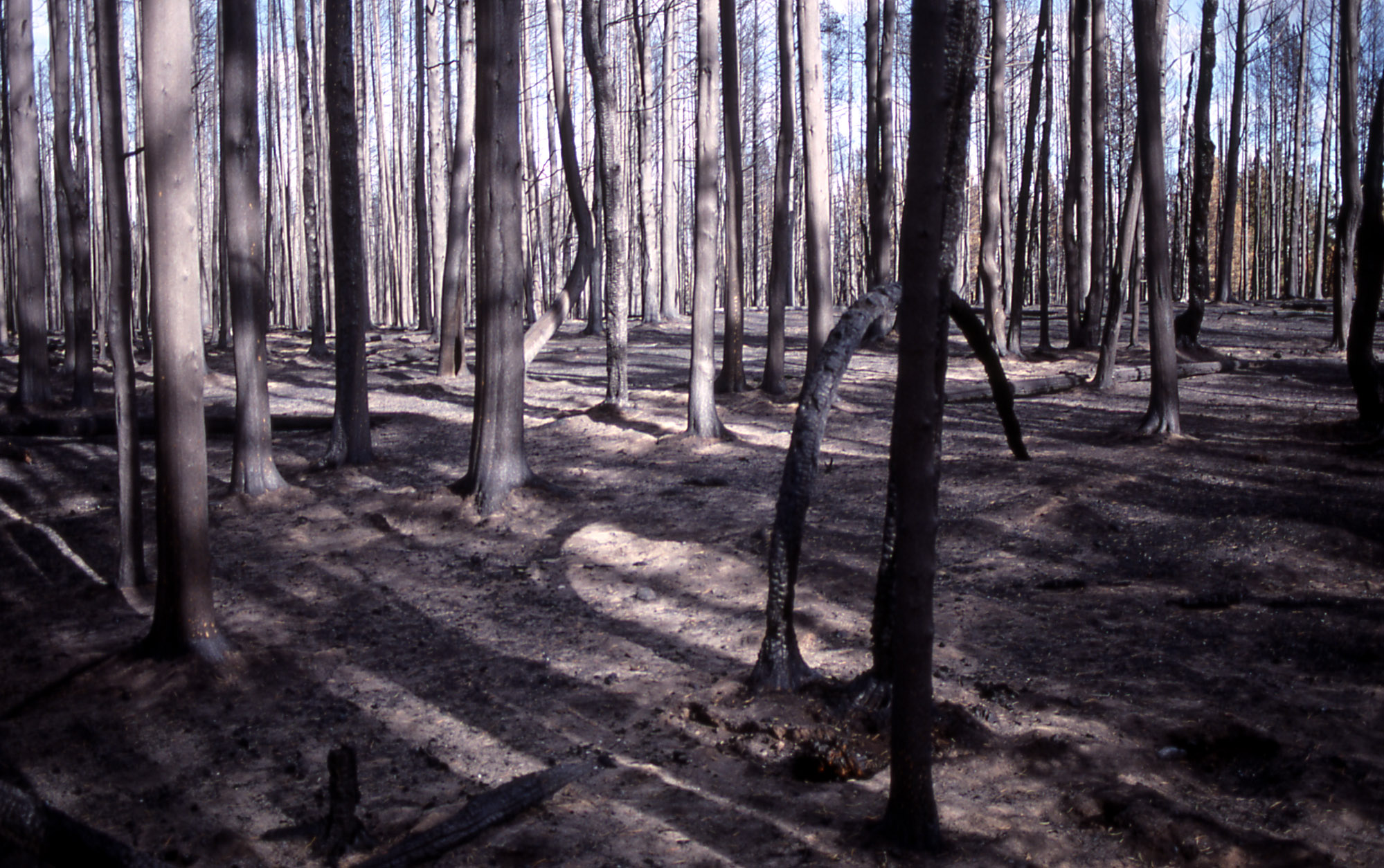
Burned forest in Yellowstone National Park following the 1988 fires.
NPS Photo by Jim Peaco · NPS source, #12897 · Public domain (NPS usage terms)
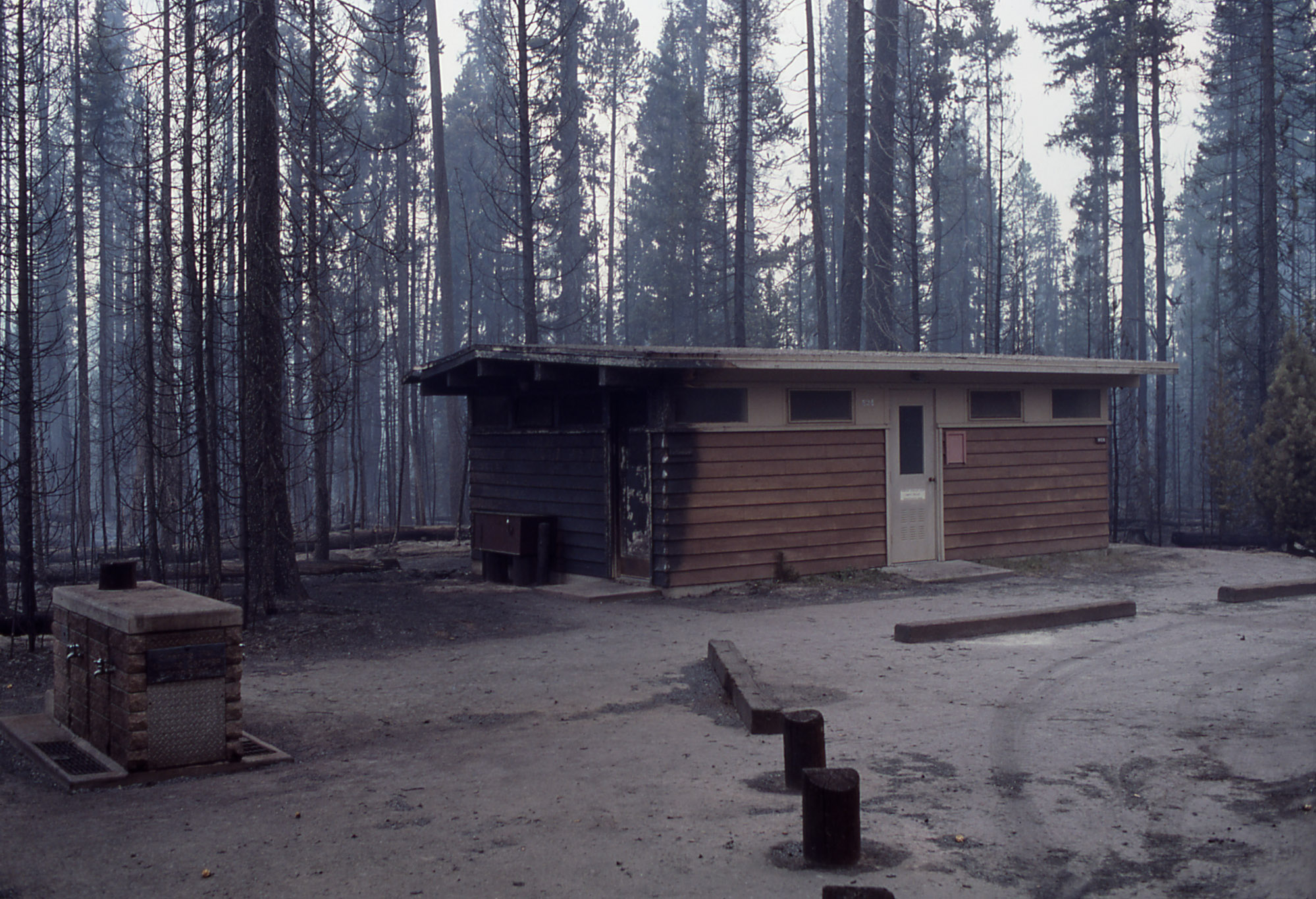
A fire-damaged restroom at Grant Village campground, Yellowstone National Park, 1988. Public facilities were also affected.
NPS Photo by Jeff Henry · NPS source, #13020 · Public domain (NPS usage terms)
What Does Real Progress Mean?
Progress is not only about turning yesterday's large telephones into small handheld computers, or heavy televisions into thin wall-mounted screens. Real progress is the ability to use knowledge and technology to protect life when danger arrives.
Today, a small phone can hold maps, cameras, global communication, translation, information, and intelligent tools. If technology can create such light, precise, multi-purpose devices, why should we not pursue smarter, smaller, and more effective solutions for wildfire response?
The answer may not be one miraculous device. It may be a coordinated combination of early-warning sensors, satellite data, weather forecasting, carefully managed unmanned aircraft, ground robotics, safer suppressants, and stronger coordination between air and ground teams. What matters is that the world does not stop searching for better ways to act.
We must also be realistic. Fighting a fire across a vast forest, under high winds and difficult terrain, is not simple. No small, untested device can remove oxygen from a large open landscape or extinguish every flame on its own. But that difficulty is precisely why serious research, responsible testing, and sustained innovation are needed.
Aerial response
A view of the work above the fireline
An archival illustration of the coordinated air response discussed in the manuscript. Water delivered from above supports the work of crews on the ground.
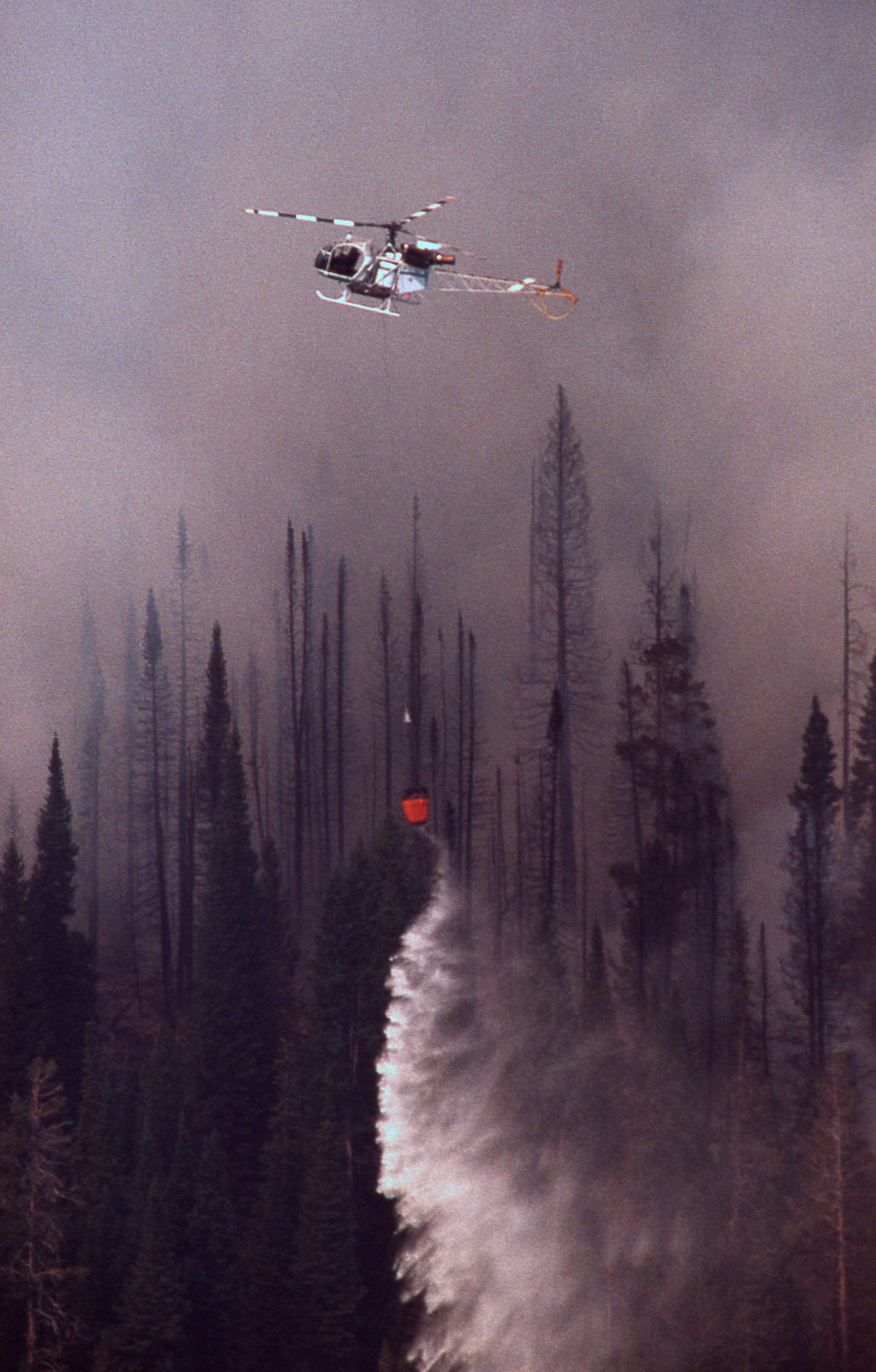
A Lama helicopter drops water from a bucket during the Yellowstone fires, 1988. This is a water drop, not a retardant drop.
NPS Photo by Harlan Kredit · NPS source, #12453 · Public domain (NPS usage terms)
Firefighters: Heroes Who Must Not Stand Alone
Behind every wildfire headline are people who move toward danger so that others can move toward safety. Firefighters and rescue personnel face smoke, extreme heat, falling trees, sudden wind shifts, vehicle accidents, and exhaustion. They risk their own lives to protect homes, animals, colleagues, and communities.
Respecting firefighters means more than calling them heroes. It means providing better equipment, ongoing training, reliable communications, appropriate protective clothing, health support, and technologies that reduce unnecessary exposure to danger.
Technology should not remove the human role; it should help people work with better information, less danger, and greater effectiveness. No aircraft, vehicle, or device is more valuable than the life of a person trying to save others.
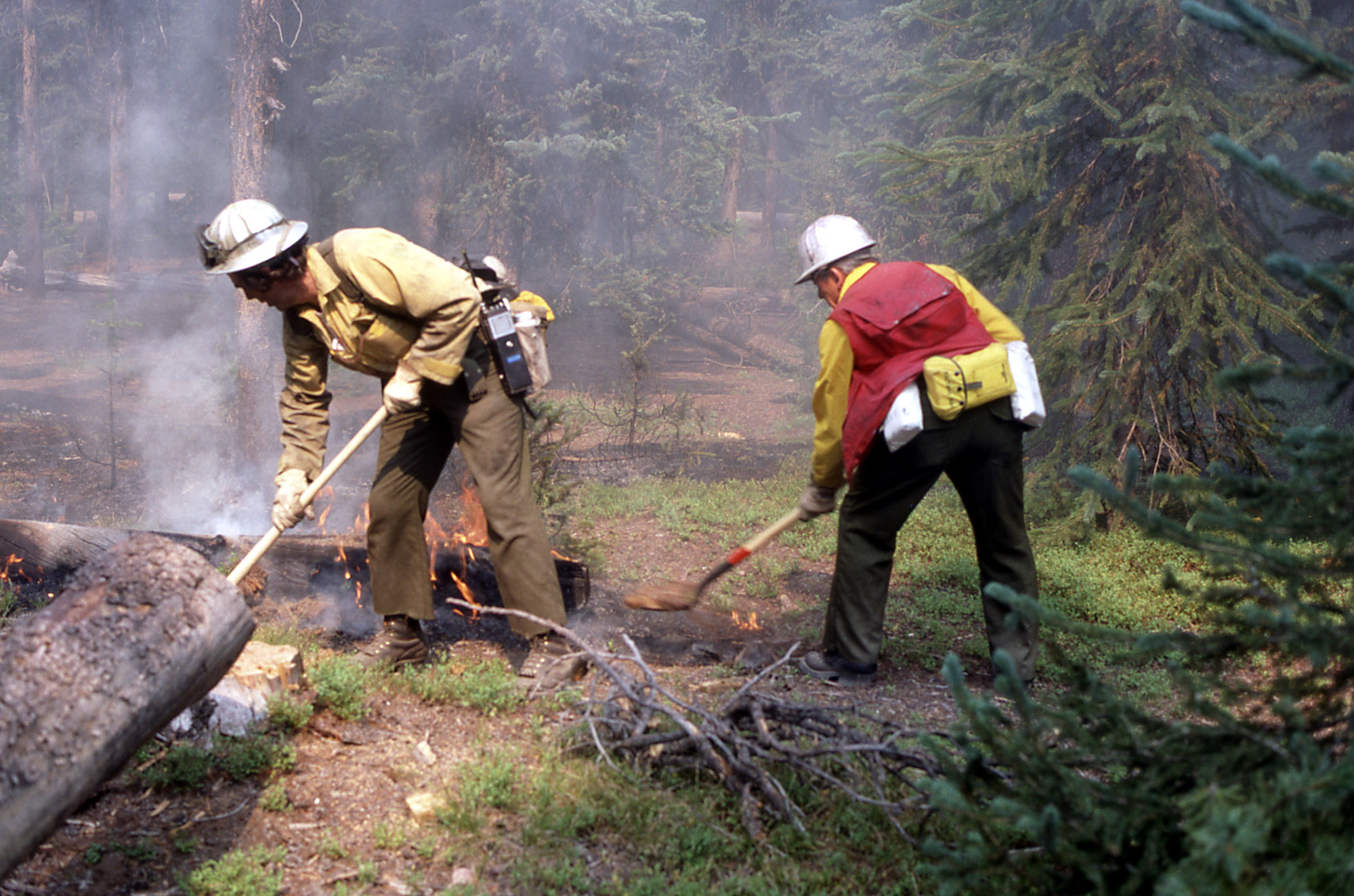
Two firefighters put out a spot fire near Grant Village, Yellowstone National Park, 1988.
NPS Photo by Jim Peaco · NPS source, #12406 · Public domain (NPS usage terms)
Prevention Is Wiser Than Waiting for Disaster
After a devastating fire, many communities discover a shortage of aircraft, fire engines, trained personnel, or access routes. But a prepared society should not wait for flames before it begins to think about readiness.
Prevention can include scientific forest management, clearing dangerous dry fuel from high-risk areas, creating access routes, educating communities, early warning, protecting electrical networks, evacuation planning, and strengthening fire-response centers. These measures are not always simple or inexpensive, but they can reduce part of the enormous human and economic cost that follows a disaster.
Just as a hospital is more than a building - it requires doctors, medicine, oxygen, electricity, and transport for patients - firefighting is more than purchasing a vehicle or helicopter. An effective system needs skilled personnel, water, spare parts, planning, communications, training, and responsible leadership.
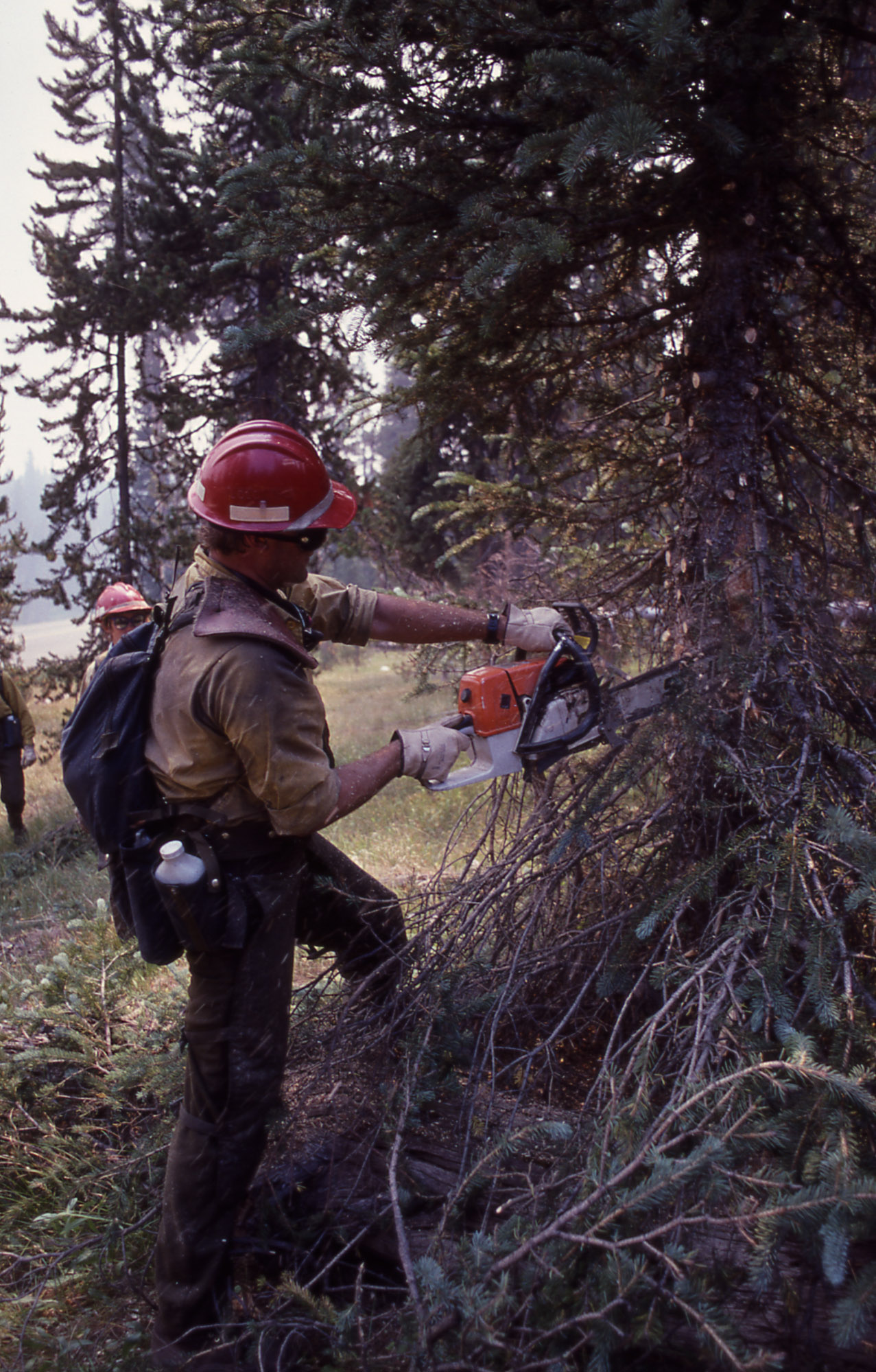
Firefighters use a chainsaw for fuel reduction before an approaching fire in Yellowstone National Park, 1988. This is pre-fire preparation, not a prescribed burn.
NPS Photo by Jeff Henry · NPS source, #12416 · Public domain (NPS usage terms)
Preparedness in practice
Reducing fuel before flames arrive
The NPS identifies this scene as fuel-reduction work ahead of a fire. It is not a prescribed burn and should not be interpreted as one.
From Competition to Global Cooperation
Countries do not have equal resources. Some can purchase advanced aircraft and costly equipment; many lower-income areas face shortages of basic vehicles, protective clothing, training, and communication tools. Yet because wildfire smoke and climate impacts can cross borders, the response should also be built on cooperation.
Global cooperation can take the form of joint training, appropriate technology transfer, satellite-data sharing, regional response teams, shared air capacity, and support for young researchers. This is not charity. It is a shared investment in human security.
Universities, technology companies, international institutions, and investors can work together to build tools that detect fires earlier, show risk more accurately, and coordinate rescue teams more effectively. One of the most important inventions of the future may not be a larger machine, but a more precise system that warns us before a spark becomes a catastrophe.
Real Security Cannot Be Built by Walls and Weapons Alone
No society can live peacefully without security. Countries have the right to protect their people and their borders. Yet security is not only military power. Real security means that a child can breathe clean air; a family has a safe route out during a fire; a patient can reach care on time; and a firefighter can enter the field with the lowest possible risk.
The world has repeatedly shown enormous scientific and economic capacity to build instruments of power. Now it is time to direct more of that same capacity toward protecting life: toward hospitals, education, disaster preparedness, environmental stewardship, and life-saving technology.
Our children should hear school bells instead of gunfire, artillery, and explosions. They should grow up not in fear of war, smoke, and destruction, but in an atmosphere of peace, learning, health, and hope.
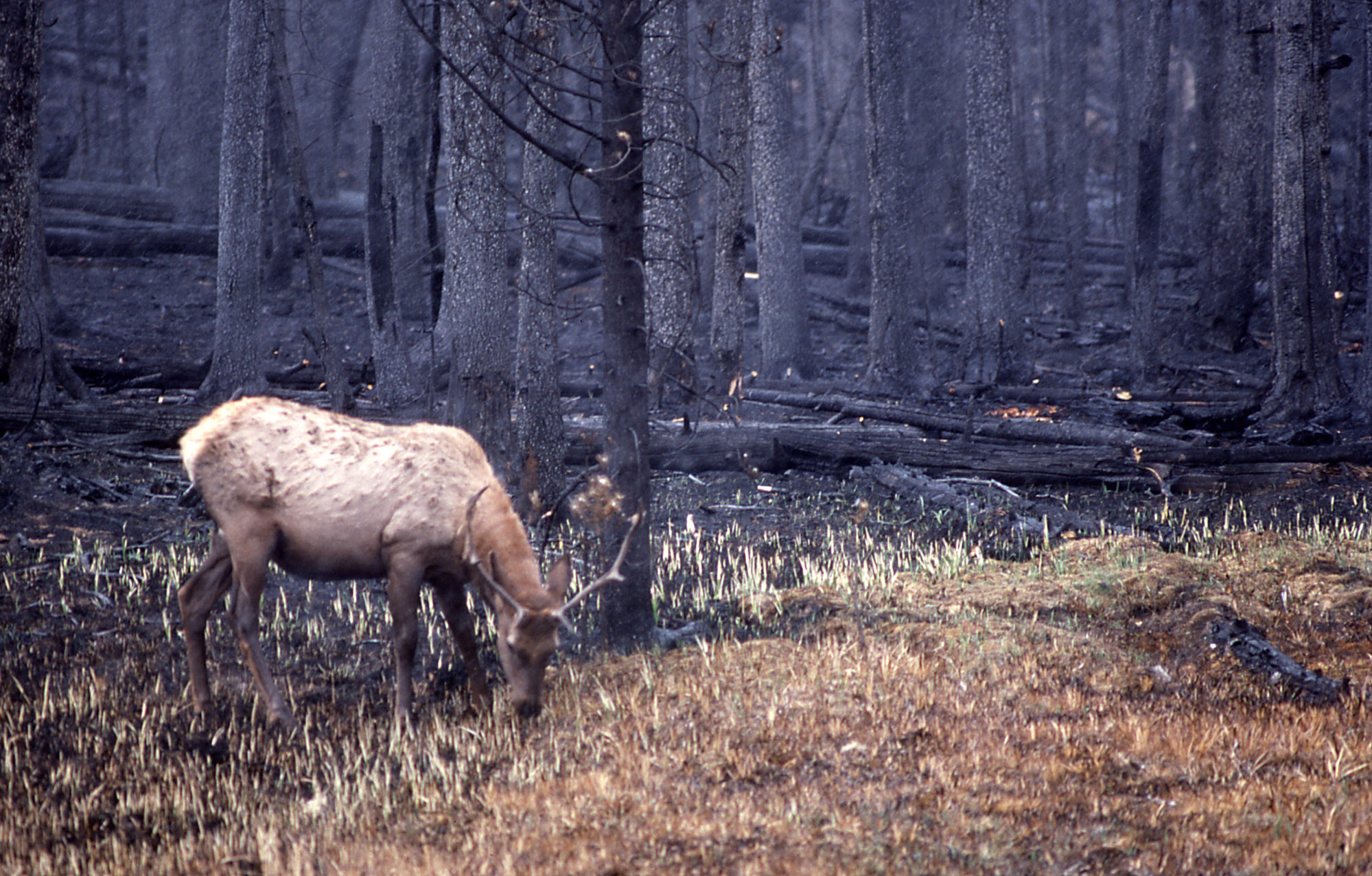
A bull elk grazes on new shoots in a burned area of Yellowstone National Park, 1988. The image illustrates post-fire habitat and regrowth, not animal injury.
NPS Photo by Jeff Henry · NPS source, #12994 · Public domain (NPS usage terms)
Seven Steps Toward a More Prepared Future
- Invest in prevention: Early detection, scientific forest management, and risk reduction must sit at the center of planning, not at the margins.
- Protect rescue personnel: Training, equipment, health support, and technology must be strengthened to reduce risks faced by firefighters.
- Innovate responsibly: Research on sensors, safer suppressants, robotics, and unmanned aircraft must move forward through scientific testing and environmental safeguards.
- Build regional coordination: Countries should create practical systems for shared information, specialist teams, and air capacity.
- Ensure fair access: Lower-income regions also need access to basic equipment, training, and appropriate technology.
- Educate communities: Families and communities should understand fire risks, prevention, and emergency evacuation plans.
- Put life first: Public budgets and private investment should treat the protection of human life and nature as part of what security means.
A Question That Must Stay With Us
When forests burn, humanity's shared wealth turns to ash: trees, animals, homes, public health, family memories, and part of the future of our children.
We may not be able to stop every natural disaster. But we can choose to be more prepared, invest more wisely, and act before catastrophe arrives.
The great question of our time is not only how much humanity can build or destroy. The more important question is how willing we are to use our knowledge, technology, and resources to protect life.
Let us build a world in which forests burn less often, firefighters return home more safely, and children begin their future with the sound of school bells rather than the sound of destruction.
Is it not time to place science, technology, and the world's resources more fully in the service of people, nature, and our shared future?
Saboor Kamal
Virginia, United States of America · November 2026