
THE HUMAN PERSPECTIVE | Ideas, Stories and Reflections by Saboor Kamal
Humanitarian Reflections
The Price of War, The Value of Life
What the Cost of a Tank Reveals About Our Priorities
By Saboor Kamal • October 2026
A tank and an ambulance may both be built from steel, technology, and extraordinary human ingenuity. Yet they embody different missions. One is designed for combat; the other is built to reach a person at the edge of life and death. When we place their prices side by side, we confront a question that reaches beyond economics: what do our budgets say about the value we place on human life?
A world of expanding military budgets
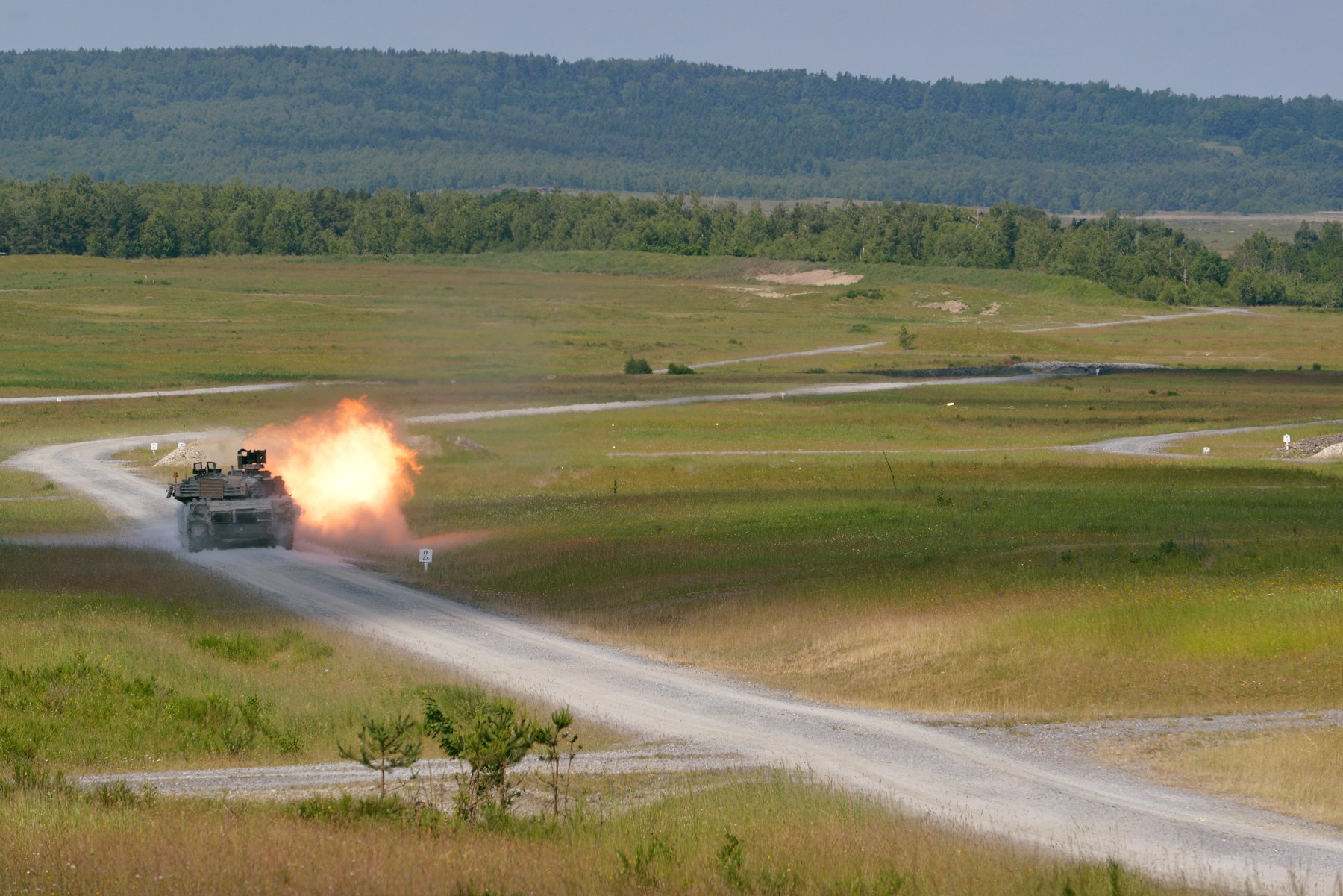
According to the Stockholm International Peace Research Institute (SIPRI), global military expenditure reached approximately US$2.887 trillion in 2025, an increase of 2.9% in real terms from 2024. It was the eleventh consecutive annual increase. These figures are not evidence that every dollar spent on defense is wasteful. Countries face real security threats, and the protection of civilians is a legitimate public responsibility. But the scale of spending makes an equally legitimate question unavoidable: are we investing with comparable urgency in preventing deaths that effective healthcare could avert? [1]
The price of one armored vehicle
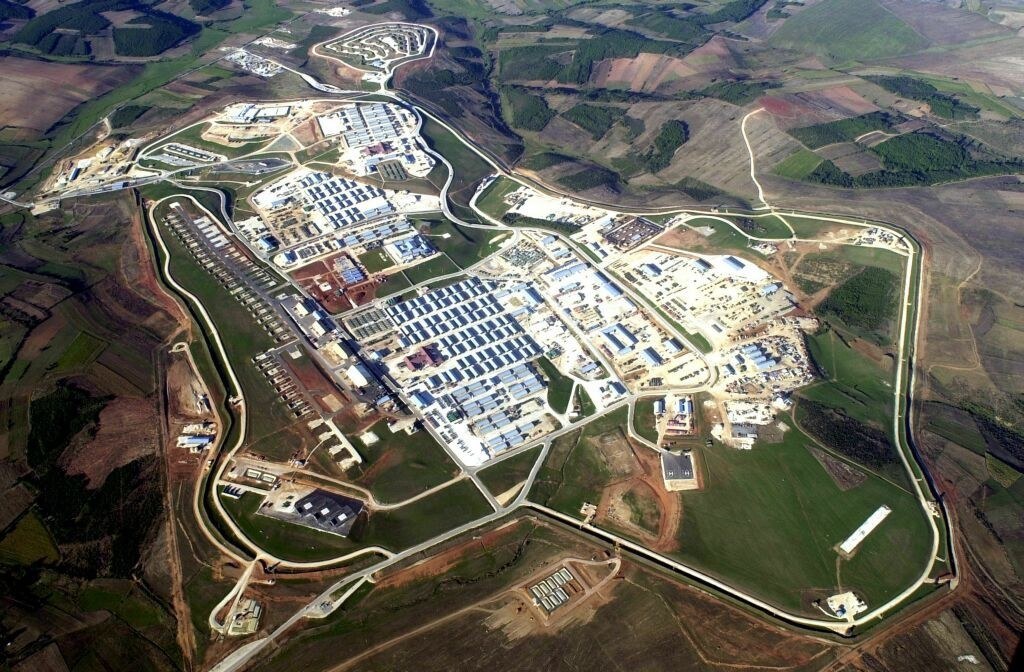
Military vehicles cannot be assigned one universal price. Costs change by model, production volume, modernization package, currency, included equipment, and the accounting method used. A 2024 policy analysis published by Bruegel estimated roughly €4.16 million for a Russian T-90 and €2.31 million for a Chinese Type 99A, while listing much higher figures for some Western variants. Those estimates are indicative, not universally comparable quotations. [2]
An especially well-documented contemporary example comes from the United States Army’s fiscal-year 2026 budget justification: the average procurement unit cost of its M1A2 SEPv3 Abrams upgrade program is approximately $19.577 million for 30 vehicles. Crucially, that number represents a program-specific upgrade procurement measure—not a stand-alone retail price for a newly built tank. [3]
What does an ambulance actually cost?
A promotional manufacturer guide supplied for this article claimed that ambulances in the United States typically cost $45,000–$150,000 and suggested an average new unit at $110,000–$120,000. Such figures may describe selected basic transport or lower-cost configurations, but they should not be used as a general benchmark for a modern, fully capable U.S. emergency-response ambulance without stronger evidence.
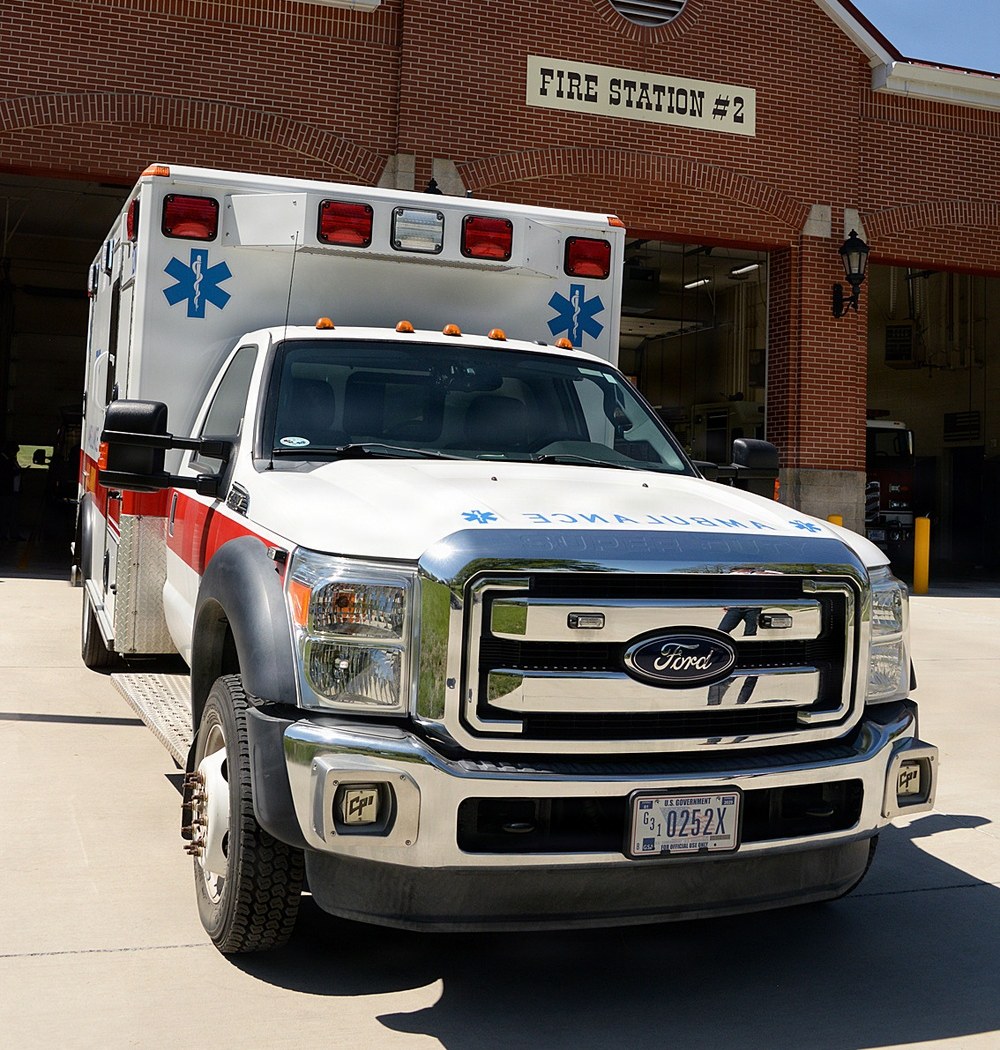
Recent public procurement records tell a different story. In 2025, Finney County, Kansas, evaluated bids of $321,210, $341,124, and $356,477 for a new ambulance, and recommended the $321,210 option. Aberdeen, Washington, listed a planned 2026 ambulance purchase of $288,736 plus tax. Muscatine, Iowa, reported that a new Type III ambulance entering service in 2025 had been approved at $279,772 in 2023. These real-world examples suggest that a practical illustrative range for many recent U.S. municipal emergency ambulances is roughly $280,000–$360,000 before case-specific differences in equipment, tax, and outfitting. This is not a national market average. [4][5][6]
A comparison that makes us think
Consider the $19.577 million U.S. Abrams upgrade procurement figure and Finney County’s $321,210 ambulance bid. Dividing one by the other gives approximately 61 ambulances. That is a mathematical illustration, not a claim that a government could simply exchange one tank for 61 fully equipped, staffed ambulances. The examples cover different procurement systems, and an ambulance requires paramedics, fuel, maintenance, training, dispatch, medicines, and a functioning health network. Yet the comparison still helps us see the human scale of decisions measured in millions. [3][4]
If an ambulance could reach a mother with severe bleeding, a child struggling to breathe, or an older patient experiencing a heart attack, its value cannot be measured by its purchase price alone. The real investment is in the system that makes that vehicle useful—and in the lives and dignity it can protect.
The growing pressure on humanitarian health
At the same time, the World Health Organization warned in November 2025 that external health aid was projected to decline by 30–40% in 2025 compared with 2023. It reported disruptions to maternal care, vaccination, emergency preparedness, and other essential services. In October 2026, the WHO-led Global Health Cluster described how its planned 2025 reach fell from 84 million people to 45 million as funding constraints intensified; ultimately, partners reached 50 million with only 38% of required funding. [7][8]
The figures are not directly interchangeable with military procurement statistics, but together they reveal a difficult imbalance: extraordinary resources are mobilized to confront threats, while basic systems of survival struggle for stable support.

Security and human dignity belong in the same conversation
This reflection is not an argument against the legitimate defense of a country, nor is it an endorsement or criticism of any government, political party, or side in a conflict. It is an appeal to broaden the meaning of security. A secure society is not merely one that can repel danger; it is also one in which a family can call for medical help, a child can receive treatment, and a hospital can keep its doors open.
Military expenditure and public health budgets are shaped by different duties, laws, and circumstances. Even so, leaders, institutions, donors, and citizens can ask whether preventable suffering receives the sustained attention it deserves. Practical choices include financing emergency transport networks, training responders, equipping clinics, maintaining supply chains, and protecting health workers.
The question we should carry forward
Perhaps the most meaningful comparison is not between a tank and an ambulance as machines. It is between the futures those investments are meant to protect. Technology can defend borders; it can also preserve a heartbeat. The challenge before us is not to deny the realities of security but to insist that saving lives belongs at the very center of our priorities.
When history judges our generation, may it find that we took the value of human life as seriously as we took the price of war.
Sources and methodological note
[1] SIPRI, “Trends in World Military Expenditure, 2025” (April 2026):
https://www.sipri.org/publications/2026/sipri-fact-sheets/trends-world-military-expenditure-2025[2] Bruegel, Policy Brief 29/2024, estimated tank costs (November 2024):
https://www.bruegel.org/sites/default/files/2024-11/PB%2029%202024.pdf[3] U.S. Army, FY2026 Procurement of Weapons and Tracked Combat Vehicles, Abrams Upgrade Program:
https://www.asafm.army.mil/Portals/72/Documents/BudgetMaterial/2026/Discretionary%20Budget/Procurement/Procurement%20of%20Weapons%20and%20Tracked%20Combat%20Vehicles.pdf[4] Finney County, Kansas, County Commission agenda, September 2, 2025:
https://d3n9y02raazwpg.cloudfront.net/finneycounty/1eab4144-c546-11ef-a9e2-005056a89546-dd748706-baf6-4ba6-b254-e0dd73d9e213-1756255333.pdf[5] City of Aberdeen, Washington, 2026 Ambulance Purchase:
https://aberdeenwa.gov/AgendaCenter/ViewFile/Agenda/_03262025-303[6] City of Muscatine, Iowa, ambulance announcement, June 25, 2025:
https://www.muscatineiowa.gov/m/newsflash/Archive/Item/4789?arcId=5983[7] WHO, “WHO issues guidance to address drastic global health financing cuts,” November 3, 2025:
https://www.who.int/news/item/03-11-2025-who-issues-guidance-to-address-drastic-global-health-financing-cuts[8] WHO Global Health Cluster, “Lifelines cut,” October 12, 2026:
https://healthcluster.who.int/publications/m/item/lifelines-cut