
Elon Musk: The ‘Iron Man’ of Technology
Innovation, ambition, and the responsibility to improve human lives
Author
Saboor Kamal
The Human Perspective | Ideas, stories and reflections by Saboor Kamal
Prepared and compiled from the manuscript dated October 31, 2026.
Elon Musk’s career brings together electric vehicles, reusable rockets, satellite internet, and artificial intelligence. It is a story of scientific curiosity, migration, financial risk, repeated setbacks, and extraordinary ambition. But it also raises a question that matters far beyond the technology industry: should success be measured only by the machines we build, or also by the difference we make in people’s lives?
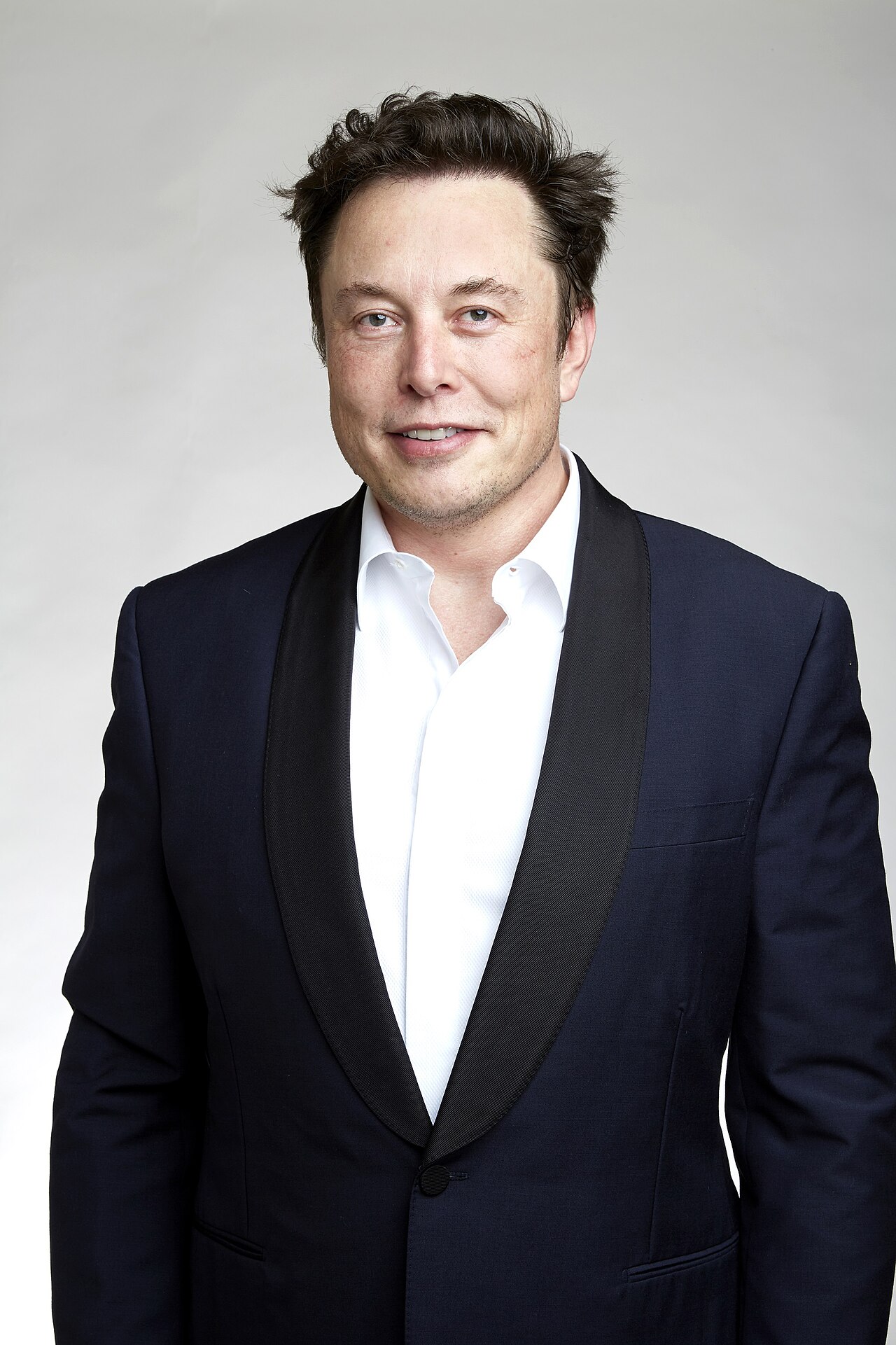
The person behind the ambitions
Elon Musk in a portrait photographed for the Royal Society on July 13, 2018. The image introduces the subject of this article, not an endorsement of its views.
Photo: Debbie Rowe / The Royal Society. Source photograph · CC BY-SA 3.0.
Uncropped source composition; resized for display only. Image and any adaptations remain under CC BY-SA 3.0.
1. Why ‘Iron Man’?
For many people, Musk represents the possibility of turning an improbable idea into an industrial reality. Behind that image, however, are years of trial and error, risky investments, financial pressure, the work of thousands of specialists, and decisions that remain controversial.
The phrase ‘Iron Man’ is used here as a metaphor for persistence, ambition, and a willingness to confront failure. It is not a claim that Musk is flawless, nor an equation between a real person and the fictional Tony Stark. Director Jon Favreau has described consulting Musk while developing the cinematic portrayal of Stark; the fictional character itself predates that encounter. [1, 9]
A balanced assessment should neither promote Musk personally nor seek simply to discredit him. It should consider innovation and risk alongside the contributions of others, legitimate criticism, and the social consequences of technological power.
2. Childhood, Migration, and the Search for Opportunity
Elon Reeve Musk was born on June 28, 1971, in Pretoria, South Africa. Reading, computers, and programming became early interests. As a boy, he wrote a simple video game called Blastar and sold its code. Biographical accounts also describe bullying during his school years. [1, 2]
In the late 1980s, Musk moved to Canada. He attended Queen’s University before transferring to the University of Pennsylvania in the United States, where he studied physics and economics. His early years combined an interest in science with a search for opportunities beyond his country of birth. [2, 8]
Accounts of temporary jobs in Canada include physically demanding industrial and lumber-related work. The details of popular stories about this period vary, however, and should not all be treated as independently established facts.
The useful lesson is not hardship alone. It is the combination of curiosity, migration, learning, and the willingness to pursue opportunity under uncertain circumstances.
3. Zip2 and PayPal: Experience as Capital
Zip2: learning to build a business
In 1995, Musk and his brother Kimbal helped establish Zip2, which supplied online city guides and business information to newspaper publishers. Compaq acquired the company in 1999. The sale gave Musk both financial resources and experience that would shape his later ventures. [1, 2]
X.com and PayPal: a collective achievement
Musk established the online financial-services company X.com in 1999. It merged with Confinity, and the combined enterprise later became known as PayPal. The sale of PayPal to eBay in 2002 provided capital for his next ventures. [1, 2]
This history is often reduced to a single name. PayPal’s development, however, depended on multiple founders, executives, engineers, and employees. Recognizing Musk’s role does not require overlooking theirs.
Musk reinvested much of the proceeds of his early business successes in ventures with a substantial risk of failure. That decision opened new possibilities, but it also exposed him to serious financial danger.
4. The Crisis of 2008: Failure, Survival, and a Turning Point
Three failed launches and a fourth attempt
Musk founded SpaceX in 2002. Its first three Falcon 1 launch attempts failed to reach orbit. On September 28, 2008, the fourth attempt succeeded, making Falcon 1 the first privately developed liquid-fueled rocket to reach Earth orbit. The milestone followed repeated setbacks rather than an uninterrupted sequence of successes. [3, 4]
In December 2008, NASA awarded SpaceX a Commercial Resupply Services contract worth approximately $1.6 billion for 12 cargo-resupply missions to the International Space Station. This was a contract to deliver services under specified terms, not an immediate lump-sum cash gift or a guarantee that every mission would succeed. [3, 5]
Tesla under simultaneous pressure
At the same time, Tesla faced manufacturing difficulties, high costs, and a severe cash squeeze. The original Roadster experienced delays and expensive production challenges. Musk was therefore dealing with pressure at two ambitious companies at once.
The source manuscript discusses reports that some early Roadsters cost around $140,000 to build, alongside accounts of very limited cash reserves. Those figures depend on the specific vehicle, account, and date. They are not presented here as independently verified, audited company-wide figures for 2008.
Musk divided his capital and attention between the two businesses. Their survival and subsequent progress also depended on engineers, employees, investors, customers, and institutional contracts.
The events of 2008 illustrate resilience in the face of failure. They also show why determination alone is not enough: technical expertise, strong teams, access to funding, and timely opportunities all matter.
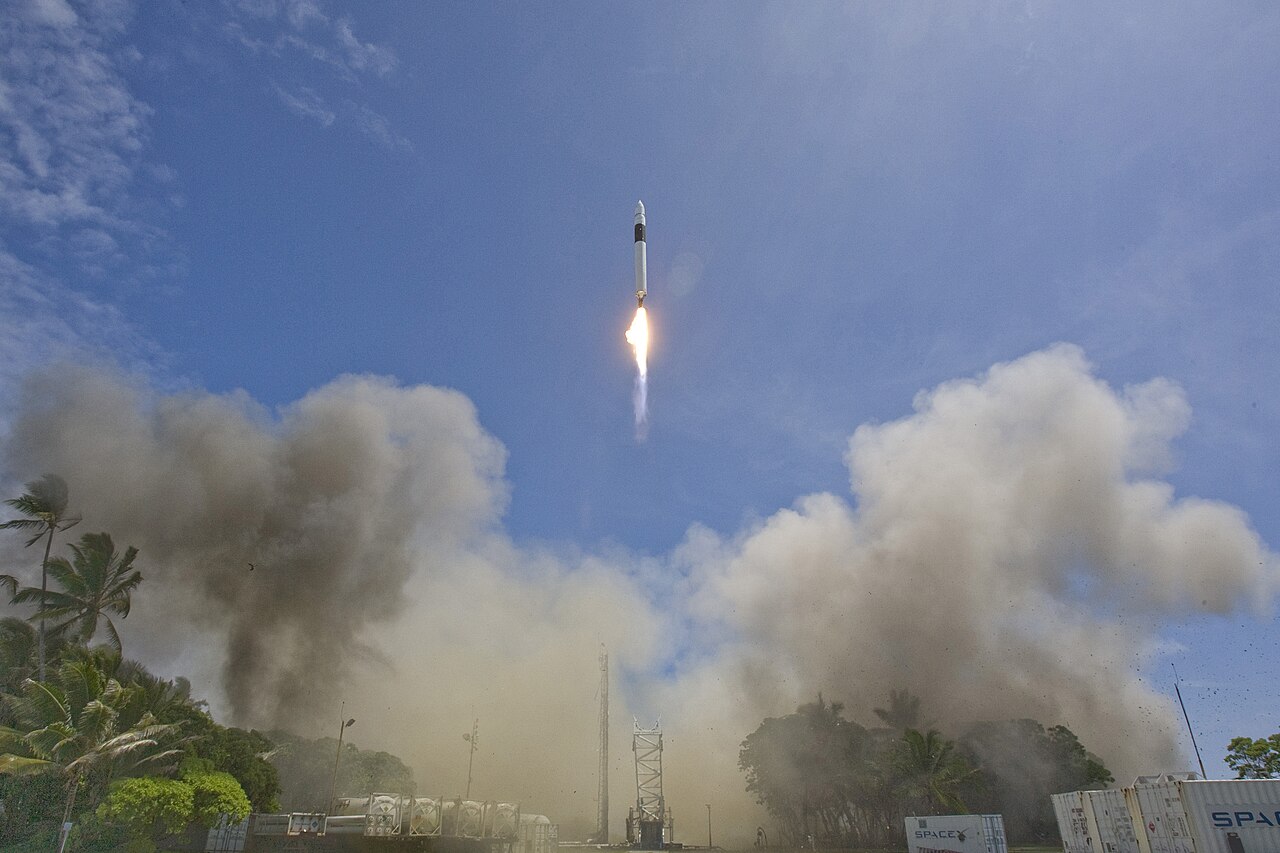
Falcon 1 launches from Omelek Island on September 28, 2008. Its fourth flight reached orbit after three unsuccessful attempts.
Photo: SpaceX. Source photograph · CC0 1.0.
Uncropped source composition; resized for display only.
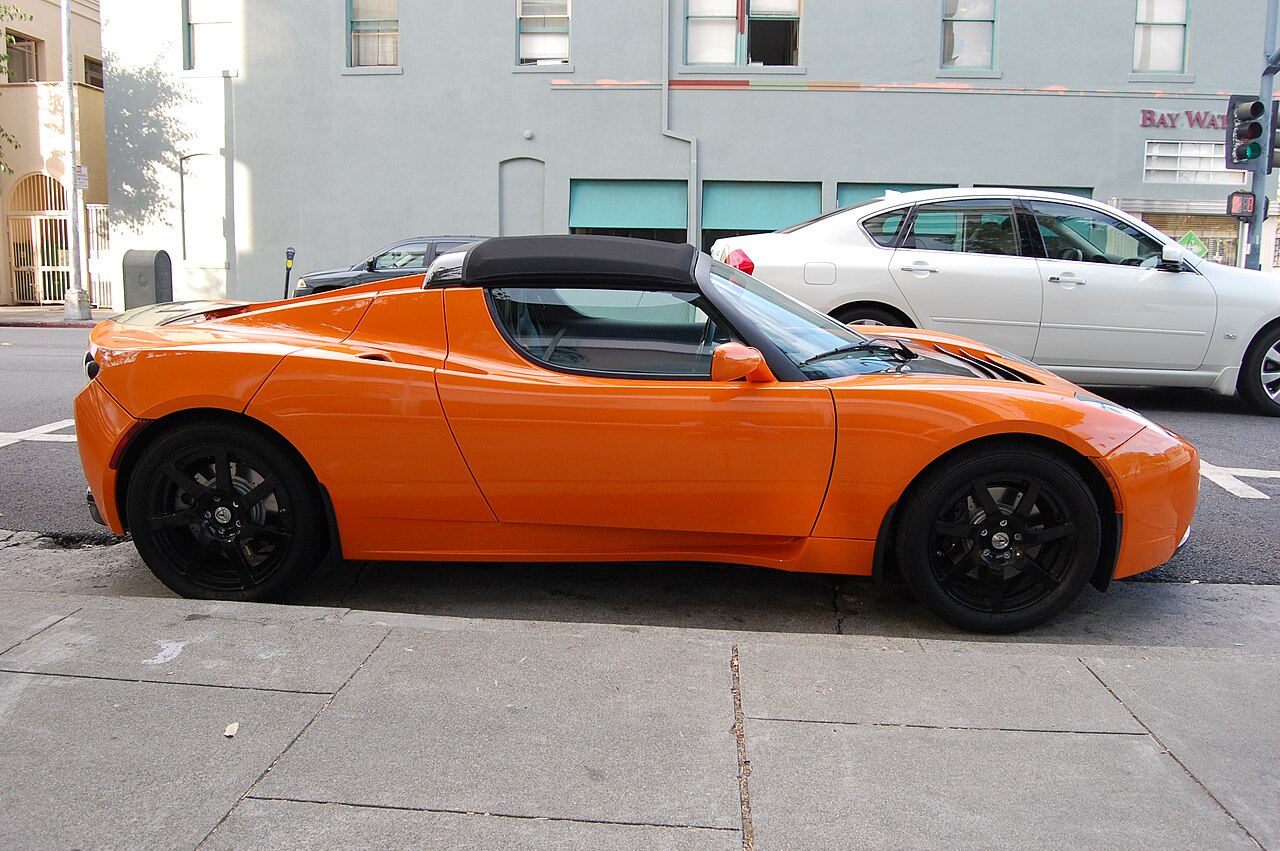
A Tesla Roadster Sport photographed on September 2, 2009. This later photograph illustrates Tesla’s early sports-car era; it does not document the 2008 cash crisis itself.
Photo: Eugene Zelenko. Source photograph · CC BY-SA 4.0.
Uncropped source composition; resized for display only. Image and any adaptations remain under CC BY-SA 4.0.
5. Major Companies: Achievements and Ambitions
SpaceX: changing access to space
SpaceX has played an important role in reusable launch vehicles, cargo and crewed missions, and communications satellites. Its work with NASA illustrates how public institutions and private enterprise can contribute to changes in an established industry. [3]
More ambitious goals, including large-scale human travel to Mars, must be distinguished from achievements already demonstrated. Such plans still involve substantial technical, financial, safety, and environmental challenges.
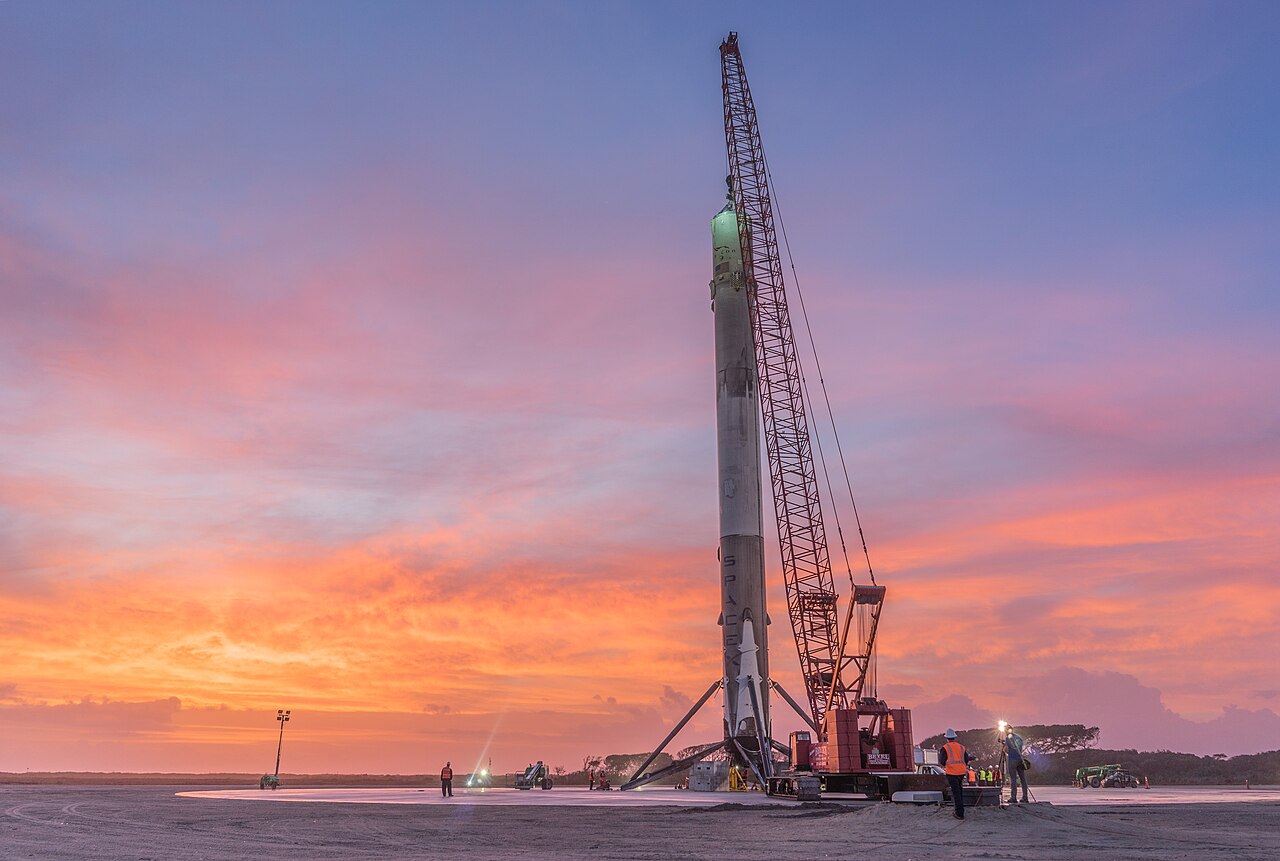
A Falcon 9 first stage at Landing Zone 1 after the December 2015 ORBCOMM-2 mission. Recovering boosters became a defining part of SpaceX’s approach to reusable launch vehicles.
Photo: SpaceX Photos. Source photograph · CC0 1.0.
Uncropped source composition; resized for display only.
Tesla: transportation, batteries, and energy
Musk was an early investor in Tesla and later became its chief executive. He was not its sole original founder: Martin Eberhard and Marc Tarpenning established the company in 2003. Tesla’s subsequent growth has significantly influenced electric vehicles, batteries, and energy storage. [1, 2]
Its scale and its challenges can be seen together in its 2025 results. Tesla reported 1,636,129 vehicle deliveries, approximately 1.64 million. Total annual revenue was $94.827 billion, approximately $94.8 billion, compared with $97.690 billion in 2024. These are full-year company figures, not Musk’s personal income. The revenue decline shows that industrial scale does not remove competitive and market pressures. [6, 7]
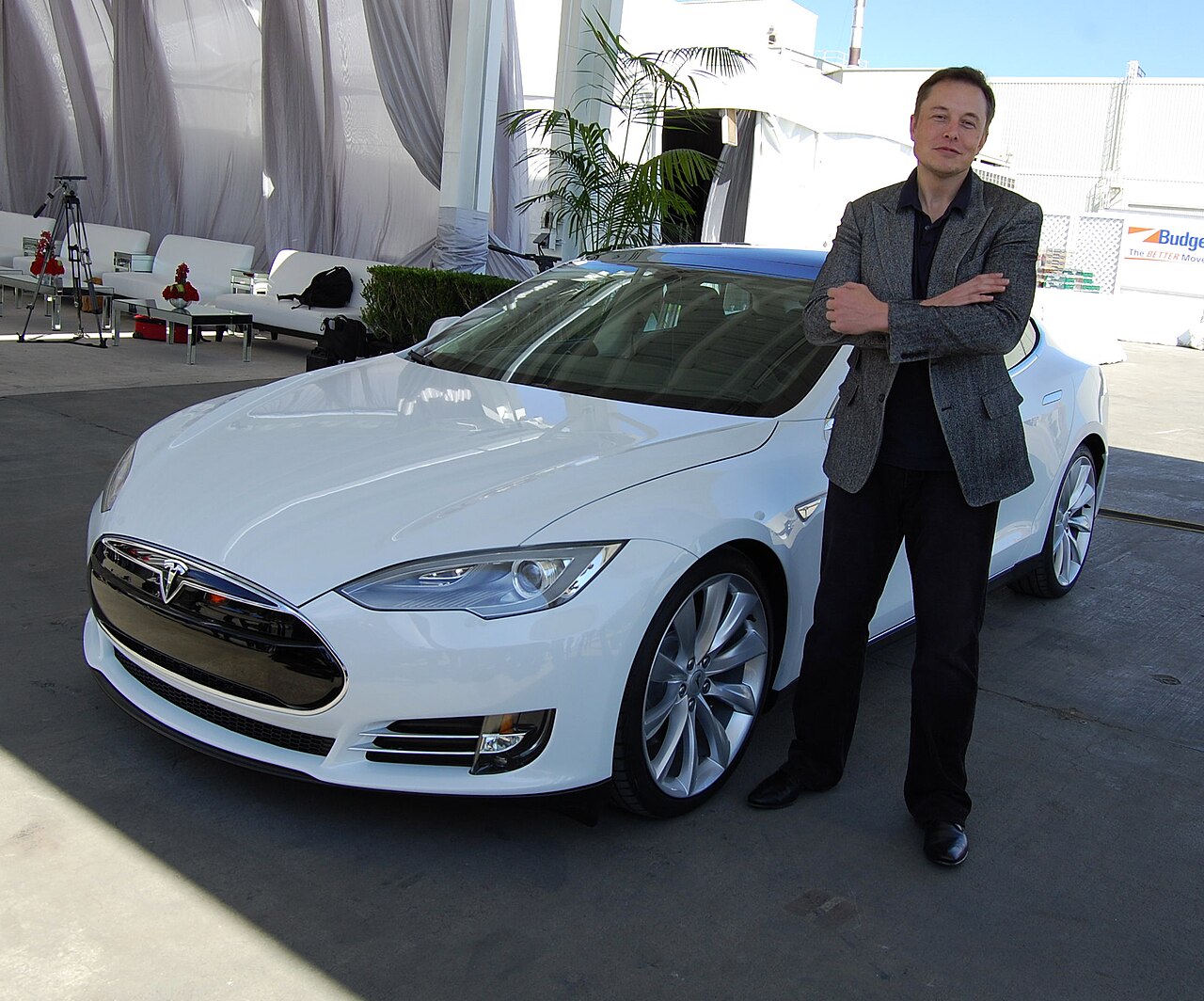
Elon Musk beside a Model S at Tesla’s Fremont factory on October 1, 2011. The photograph captures an earlier stage of the company, not the period of its 2025 financial results.
Photo: Maurizio Pesce. Source photograph · CC BY 2.0.
Uncropped source composition; resized for display only.
Starlink, Neuralink, X, xAI, and The Boring Company
Starlink seeks to extend internet connectivity through a satellite network. Whether a community can use it depends on national laws, authorization, equipment costs, and network conditions, not simply on the presence of satellites overhead.
Neuralink develops brain-computer interfaces, a field with potential medical applications and important questions about safety, consent, and ethics. The Boring Company works on tunnel-based infrastructure and transportation. X is a social-media platform, while xAI develops artificial-intelligence systems.
These enterprises should not be treated as a single measure of success. Each has its own evidence, limitations, risks, and promises, and each should be evaluated on those terms.

Starlink satellites leave trails across a Lowell Observatory image of the NGC 5353/4 galaxy group, Arizona, May 25, 2019. This was shortly after launch, when the satellites were more densely grouped and brighter than at their final orbital altitude. It illustrates an observational impact of satellite networks, not internet service in Afghanistan.
Photo: Victoria Girgis / Lowell Observatory; source: NOIRLab. Source photograph · CC BY 4.0.
Uncropped source composition; resized for display only.
6. Praise and Criticism: A Balanced View
A fair account can acknowledge significant industrial contributions without making its subject immune to scrutiny. It can also take criticism seriously without assuming that every allegation is an established finding.
Reasons for admiration
Supporters point to several aspects of Musk’s career:
- A willingness to take substantial financial risks and reinvest in difficult industries.
- Contributions to competition and innovation in electric vehicles and space launches.
- Long-term goals that help attract scientific, engineering, and entrepreneurial teams.
- A role in expanding public discussion about energy, space, connectivity, and artificial intelligence.
Serious questions and concerns
The same record also raises questions that deserve careful attention:
- Workplace and management: labor disputes, lawsuits, and reporting about demanding management practices raise concerns. Allegations and contested claims must be distinguished from final court findings.
- Promises and timelines: some announced goals for autonomous vehicles and other projects have slipped beyond predicted dates. A future target is not evidence that a capability has already been delivered.
- Social media: decisions at X and Musk’s public statements have prompted debate about misinformation, free expression, and platform responsibility.
- Power and politics: overlapping business and political involvement raises questions about conflicts of interest, accountability, and the influence of one individual.
- Testing new technologies: brain-computer interfaces, artificial intelligence, and very large rockets require appropriate oversight, safety standards, and public accountability.
7. Starlink and Afghanistan: Opportunity Within the Law
Satellite internet could potentially help schools, health centers, and remote communities gain access to educational resources and services. For a country such as Afghanistan, the possibility deserves thoughtful consideration. Technical feasibility, however, is not the same as permission to import equipment or operate a service.
A responsible assessment would begin with a review of the applicable rules and written inquiries to the Ministry of Communications and the relevant regulatory authorities. Any required import and operating approvals would need to be obtained before considering a pilot. This article does not establish Starlink’s current legal authorization or commercial availability in Afghanistan.
Only after those prerequisites were satisfied should a small, carefully defined pilot be considered. It would need a realistic budget, a qualified technical lead, data-security safeguards, and clear measures of educational, health, or community benefit.
This is an area for possible future assessment, not an announcement that Gate of Hope has an approved, funded, or operational Starlink project. Responsible humanitarian innovation starts with lawful access, practical planning, and the needs of the people it is intended to serve.
8. Beyond the Machines: Lessons for Human Progress
Musk’s business career shows that ambitious ideas require risk, knowledge, experimentation, and collective effort. Failed rocket launches and Tesla’s cash crisis in 2008 are central to the story, but so are institutional contracts, employees, investors, and access to capital.
For young people, the most useful lessons are not celebrity worship or imitation without context. They are continuous learning, careful work, a willingness to test ideas, and responsibility for mistakes. Failure can become a source of learning, but only when it is examined honestly.
For charities and social institutions, another question must remain at the center of the discussion: can advanced technology help educate a child, treat a patient, strengthen a family’s livelihood, or expand access for disadvantaged communities?
The strongest measure of technological progress is not the scale of a promise alone. It is the quality of the evidence, the responsibility of the decisions behind it, and the lasting benefit delivered to human lives.
9. Sources and Fact-Checking Notes
The following references provide sources and background for the article. Numbered citations in the text link to these entries. Uncertain anecdotes and contested claims are qualified in the relevant passages.
CNN Editorial Research, ‘Elon Musk Fast Facts’ (the supplied manuscript lists an update of June 17, 2026).
https://kesq.com/news/national-world/cnn-world/2026/06/17/elon-musk-fast-facts-6/Biography.com, ‘Elon Musk’ (the supplied manuscript lists an update of October 5, 2026).
https://www.biography.com/business-leaders/elon-muskNASA, SpaceX CRS-7 press kit, including ‘Key SpaceX Milestones.’
https://www.nasa.gov/wp-content/uploads/2018/07/spacex_nasa_crs-7_presskit.pdfFAA, ‘Commercial Space Transportation: 4th Quarter Report,’ October 2008.
https://www.faa.gov/about/office_org/headquarters_offices/ast/media/4thQtrReport.pdfNASA Office of Inspector General, ‘NASA’s Response to SpaceX’s June 2015 Launch Failure.’
https://www.oversight.gov/sites/default/files/documents/reports/2017-07/IG-16-025.pdfTesla Investor Relations, ‘Tesla Fourth Quarter 2025 Production, Deliveries & Deployments,’ January 2, 2026. Original company disclosure: 1,636,129 deliveries for 2025.
https://ir.tesla.com/press-release/tesla-fourth-quarter-2025-production-deliveries-deploymentsTesla, 2025 Form 10-K, U.S. Securities and Exchange Commission. Total revenue: $94.827 billion in 2025 and $97.690 billion in 2024.
https://www.sec.gov/Archives/edgar/data/1318605/000162828026003952/tsla-20251231.htmQueen’s Alumni Review, ‘Rocket man,’ February 1, 2013. Additional background on Musk’s education.
https://www.queensu.ca/alumnireview/articles/2013-02-01/elon-muskABC News, ‘Elon Musk Might Be the Real-Life Iron Man, Teases Rockets and Virtual Reality,’ August 26, 2013. Reporting on Favreau’s comments about the cinematic Tony Stark.
https://abcnews.com/Technology/elon-musk-aspires-real-life-iron-man-teased/story?id=20068885
About the Author
Saboor Kamal
Saboor Kamal is the Founder & President of Gate of Hope Charity Foundation. His writing explores humanitarian affairs, global developments, health, education, development, peace, and major issues affecting communities around the world.
Share this article
Share The Human Perspective with friends and colleagues.